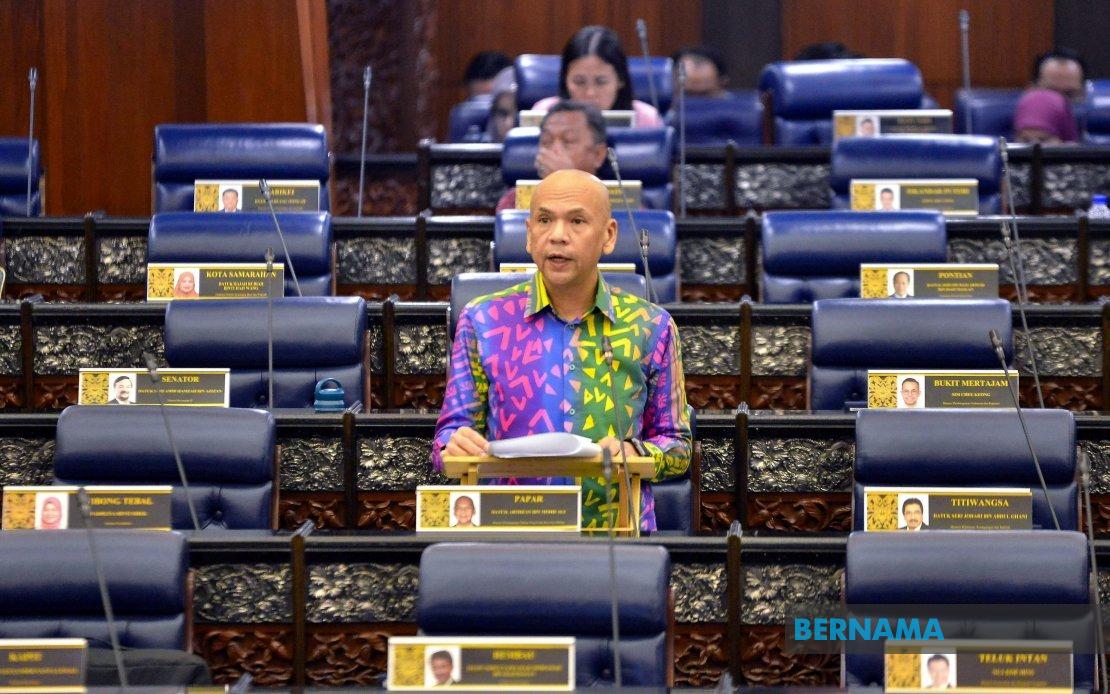
The Malaysia Competition Commission is poised to acquire significantly enhanced enforcement capabilities aimed at dismantling cartel operations across the economy. Under the Competition (Amendment) Bill 2026, which cleared its policy stage at parliament on Tuesday, MyCC will be empowered to offer direct financial incentives to whistleblowers and to provide substantial penalty reductions to companies that voluntarily acknowledge their involvement in anti-competitive conduct at an early stage of investigation. Domestic Trade and Cost of Living Minister Datuk Armizan Mohd Ali outlined the strategic purpose behind these reforms while closing parliamentary debate on the measure, presenting them as essential modernisations that will equip the regulator with tools comparable to those available to competition authorities in developed economies.
The introduction of Sections 64A and 64B represents a watershed moment for Malaysia's competition regime, creating for the first time a dedicated statutory framework governing the protection and financial rewarding of individuals who expose cartel behaviour. This legislative innovation addresses a fundamental gap in the existing protections available to competition whistleblowers, who currently fall outside the scope of the Whistleblower Protection Act 2010. Because competition violations are classified as civil rather than criminal offences under Malaysian law, the 2010 Act—which restricts its coverage to disciplinary breaches and criminal conduct—provides no safeguards for those reporting price-fixing schemes, market allocation arrangements, or other cartel-related misconduct. The amendments will establish absolute legal protections for these individuals while creating a transparent mechanism through which MyCC can distribute financial rewards derived from penalty recoveries or designated budget allocations.
The Settlement Offer mechanism introduced through Section 38A addresses a perennial challenge facing competition authorities worldwide: the resource-intensive nature of cartel investigations. By offering enterprises the possibility of increased penalty reductions—up to 40 per cent—for early acknowledgment of liability, MyCC creates a powerful incentive structure that encourages voluntary disclosure and cooperation. This approach fundamentally alters the calculus for companies suspected of cartel participation, shifting the traditional adversarial dynamic towards negotiated resolution. For MyCC itself, the mechanism promises to reduce the investigative burden associated with building comprehensive evidence of conspiracy, compress timelines for case resolution, and minimise the risk of protracted litigation following final enforcement decisions. The efficiency gains are particularly significant for a regulator operating within budgetary constraints and facing a growing caseload across Malaysia's increasingly complex economy.
The expansion of the definition of "enterprise" under these amendments carries profound implications for the scope of MyCC's jurisdiction. Previously limited to entities engaged in commercial activities, the revised definition extends to all forms of economic activity, explicitly encompassing industry associations and professional bodies. This change directly addresses a longstanding enforcement gap: many cartel arrangements involving price-fixing or market-sharing are coordinated through trade associations, which have argued they operate outside competition law because their activities are not strictly "commercial" in nature. The legislative clarification eliminates this ambiguity and grants MyCC express authority to investigate and prosecute collusive conduct by industry groups, removing what has effectively functioned as a loophole. For sectors like telecommunications, utilities, construction, and professional services where industry associations exercise significant coordinating functions, this expansion materially strengthens the Commission's enforcement reach.
The implications of these reforms extend beyond MyCC's operational capacity to encompass Malaysia's competitive landscape and consumer outcomes. Cartel conduct—particularly horizontal price-fixing and market-sharing—imposes substantial welfare losses on consumers and creates barriers to competitive entry that suppress innovation and productivity growth. By reducing the costs and delays associated with cartel detection and prosecution, and by enlisting private citizens as an additional detection mechanism through financial incentives, the amendments address a fundamental enforcement asymmetry. Companies engaged in illegal coordination can sustain operations across months or years while competing authorities struggle to gather sufficient evidence; whistleblower programmes, which have proven transformative in cartel prosecutions across the European Union, United States, and increasingly in Asia-Pacific jurisdictions, reverse this advantage by giving insiders—typically mid-level managers with direct knowledge of conspiracy—powerful reasons to come forward.
Regional context provides additional perspective on Malaysia's regulatory evolution. Competition authorities across Southeast Asia have incrementally strengthened their enforcement arsenals over the past decade, with Thailand and Vietnam introducing or expanding leniency programmes and whistleblower protections. Malaysia's amendments position the country competitively within this regional landscape, signalling to multinational enterprises and foreign investors that cartel conduct will face robust legal consequences. The enhancements also facilitate international cooperation on cartel investigations, as MyCC gains tools and protections more aligned with those employed by regional and global counterparts, enabling smoother information-sharing and coordinated enforcement operations across jurisdictions.
The parliamentary passage through the policy stage sets the Bill on a compressed timeline toward enactment. The committee stage is scheduled for the following Monday, immediately followed by the second reading of the related Competition Commission (Amendment) Bill 2026, which contains complementary institutional reforms. This sequential processing suggests government determination to move these reforms into law during the current parliamentary session. Once enacted, MyCC will face the practical challenge of implementing these new mechanisms—particularly the whistleblower reward programme, which will require developing administrative protocols for receiving and evaluating tips, determining reward amounts, and ensuring confidentiality. Similarly, the Settlement Offer framework will necessitate clear guidance on settlement negotiations, penalty calculation methodologies, and the conditions under which MyCC will accept early admissions.
Industry stakeholders are likely to scrutinise the implementation details closely. Companies fear that broad whistleblower programmes could invite opportunistic or malicious reports, potentially exposing legitimate business communications to investigative scrutiny. MyCC will need to establish credible filters for evaluating tip quality while maintaining confidentiality that protects genuine whistleblowers from retaliation. Conversely, competition advocates and consumer groups welcome the reforms as overdue measures that finally equip Malaysia's regulator with tools proven effective internationally. The penalty reduction mechanism, while creating incentives for cooperation, also raises fairness questions: companies that admit liability early will pay less than those fully prosecuted, potentially creating the perception that wealth or sophistication in legal defence determines financial outcomes rather than the severity of conduct.
The broader strategic intent behind these amendments reflects recognition that Malaysia's economy, increasingly integrated into regional and global supply chains, faces genuine cartel risks that undermine competitiveness. Malaysian businesses participating in international markets encounter sophisticated procurement practices, compliance regimes, and enforcement frameworks operated by major trading partners. Unilateral weakness in Malaysia's own cartel enforcement—whether perceived or actual—creates asymmetric competitive disadvantages for local firms and misallocates consumer spending toward collusive suppliers. By strengthening MyCC's capabilities, these amendments signal that Malaysia's competition regime is evolving toward international best practices, potentially improving the country's standing in trade negotiations and investment appraisals conducted by foreign entities evaluating Malaysia as a jurisdiction for regional operations and headquarters functions.

