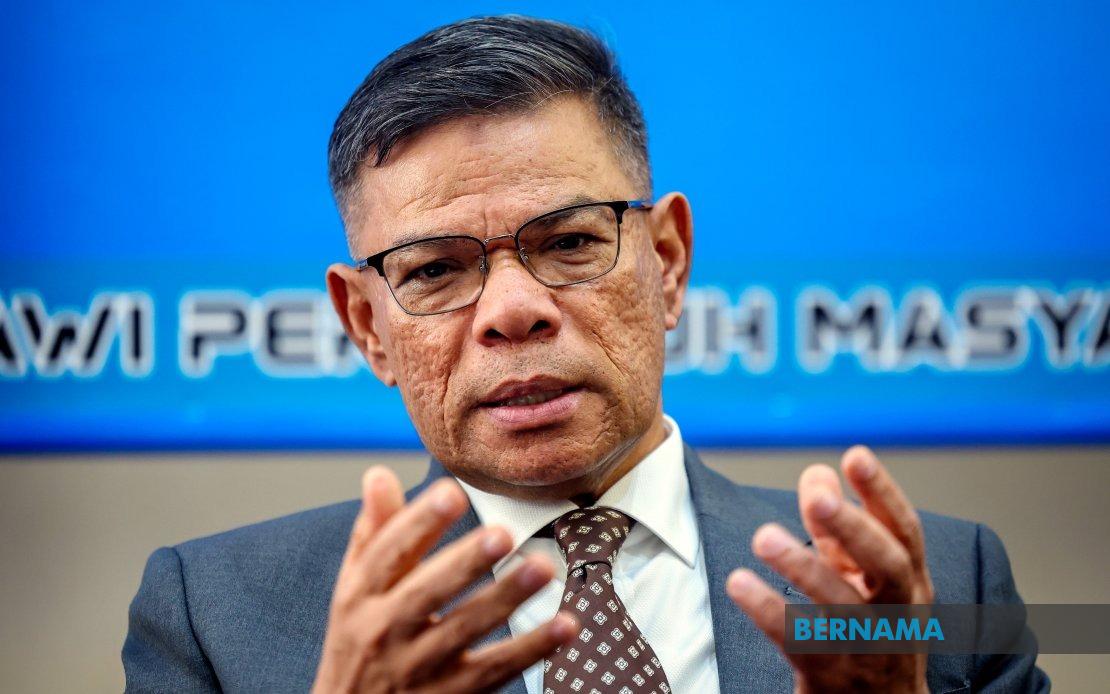
The National Integrated Immigration System (MyNIISe) has become an increasingly central fixture at Malaysia's busiest border checkpoints, with Home Minister Datuk Seri Saifuddin Nasution Ismail announcing that the platform has processed 19.48 million QR code transactions since its rollout at the Sultan Iskandar Building (BSI) and Sultan Abu Bakar Complex (KSAB) in Johor. The figures, disclosed on July 2, represent a significant stride in the government's push to modernise immigration procedures and alleviate congestion that has long plagued these critical entry and exit points.
The adoption metrics underscore the growing public embrace of digital-first immigration services. MyNIISe has accumulated 2.4 million downloads across major mobile platforms and established 1.27 million active registered users. These numbers illustrate a meaningful shift in traveller behaviour, with an expanding segment of Malaysian citizens and residents now preferring the convenience and speed of QR-based digital lanes over traditional manual immigration counters. For frequent travellers, particularly cross-border commuters who regularly transit between Malaysia and Singapore, the digital option represents a tangible quality-of-life improvement during their daily routines.
The Johor Causeway has been a perennial pressure point in Malaysia's transport infrastructure, with news cycles regularly featuring reports of multi-hour queues during peak periods. Saifuddin Nasution framed MyNIISe as a direct technological response to this longstanding issue, positioning the system as delivering concrete results that extend beyond government announcements. The minister's emphasis on the application's stability and increasing user adoption suggests that earlier technical challenges may have been resolved, addressing potential concerns about the reliability of digital systems at high-volume border facilities. For Malaysian travellers and those working in Singapore, this represents a meaningful pathway to reduced transit times and decreased frustration during immigration procedures.
The system's expansion extends well beyond the two Johor gateways that constitute Malaysia's primary land crossings with Singapore. MyNIISe has been deployed across five major airports nationwide, where it has already facilitated 5.59 million transactions over the same period. This broader rollout indicates the government's confidence in the platform's technical foundations and reflects a strategic vision to integrate digital immigration processing across all significant points of entry. International visitors arriving via Kuala Lumpur International Airport, Penang International Airport, and other major aviation hubs can now bypass traditional immigration queues using the QR system, potentially reshaping Malaysia's image as a traveller-friendly destination and enhancing its competitive positioning within the Southeast Asian tourism and business sectors.
The MyNIISe initiative fits within the MADANI government's broader digitisation agenda, which emphasises translating policy objectives into tangible service improvements rather than merely announcing initiatives. Saifuddin Nasution explicitly linked MyNIISe to this performance-driven philosophy, arguing that successful digital transformation requires demonstrable delivery of citizen benefits rather than rhetorical commitments. This framing acknowledges persistent public scepticism about government digital projects, some of which have experienced delays or technical shortcomings. By highlighting concrete usage statistics and operational expansion, the minister attempted to build confidence that MyNIISe represents a functionally sound investment in public infrastructure rather than another pilot programme destined for gradual abandonment.
From a regional perspective, MyNIISe's success has implications for how Malaysia positions itself within competitive Southeast Asian travel and logistics ecosystems. Singaporean workers crossing daily into Malaysia, international business travellers, and regional logistics operators all benefit from streamlined border procedures. As other ASEAN nations develop parallel digital immigration systems, Malaysia's progress with MyNIISe helps establish technological parity with regional counterparts. The system's integration across airports and land borders demonstrates comprehensive thinking about passenger journeys, potentially enhancing Malaysia's attractiveness as a transit and business hub within Southeast Asia's increasingly interconnected economic landscape.
The technical architecture supporting MyNIISe reflects contemporary mobile-first design principles. Availability across the Apple App Store, Google Play Store, and Huawei AppGallery ensures accessibility regardless of users' smartphone operating system preferences, a particularly important consideration in Malaysia where diverse device ecosystems are prevalent. The inclusion of Huawei's platform is noteworthy given the company's significance in the Malaysian technology market and broader Southeast Asian smartphone penetration. This design choice demonstrates sensitivity to actual user device distributions rather than assuming dominance of a single ecosystem.
The system's performance metrics warrant scrutiny beyond headline transaction volumes. The ratio of downloads to registered users (2.4 million downloads versus 1.27 million registered users) suggests that approximately 53 percent of individuals who download the application complete registration and maintain active accounts. This conversion rate is meaningful but indicates that substantial proportions of initial downloaders either encounter barriers to registration, experience technical difficulties, or determine the system does not meet their needs. Understanding these conversion dynamics could inform incremental improvements that further enhance user retention and expand the proportion of border crossers leveraging the digital pathway.
For Malaysian policymakers, MyNIISe's expansion into airports reflects recognition that immigration experiences shape international perceptions of Malaysia. Business visitors and tourists arriving by air form impressions during their first interactions with Malaysian authorities. Efficient, technology-enabled immigration processing contributes to positive travel experiences and can influence decisions about Malaysia as a business destination or repeat tourist location. In competitive regional tourism markets where international traveller perceptions drive destination selection, such operational efficiency improvements constitute meaningful soft power assets.
The implementation of MyNIISe also generates valuable data about cross-border movement patterns, traveller demographics, and peak-period congestion dynamics. Over time, the transaction records generated through the system could inform evidence-based policy decisions regarding infrastructure investment, staffing allocation, and procedural optimisation. This data advantage distinguishes digital systems from purely manual immigration processing, potentially enabling increasingly sophisticated traffic management and capacity planning at Malaysia's busiest border facilities.
Moving forward, the government appears committed to sustaining MyNIISe expansion and integration. The minister's emphasis on continued strengthening of digital transformation initiatives suggests additional functionality or geographic expansion may follow. Potential enhancements could include integration with customs and quarantine procedures, enabling comprehensive end-to-end digital border crossing experiences, or expansion to secondary land crossings beyond the Johor Causeway. Such developments would further consolidate Malaysia's technological modernisation of immigration administration while continuing to reduce friction for legitimate travellers.
The MyNIISe statistics ultimately reflect broader global trends toward digital-first government services and border management procedures. Malaysia's implementation, now operating at meaningful scale with millions of monthly transactions, positions the nation among Southeast Asian leaders in immigration system digitisation. For Malaysian citizens and frequent travellers, this represents tangible progress in daily convenience and efficiency. For policymakers, it demonstrates that sustained investment in government digital infrastructure can yield measurable improvements in service delivery and citizen satisfaction, validating the continued pursuit of technology-enabled governance transformation.

