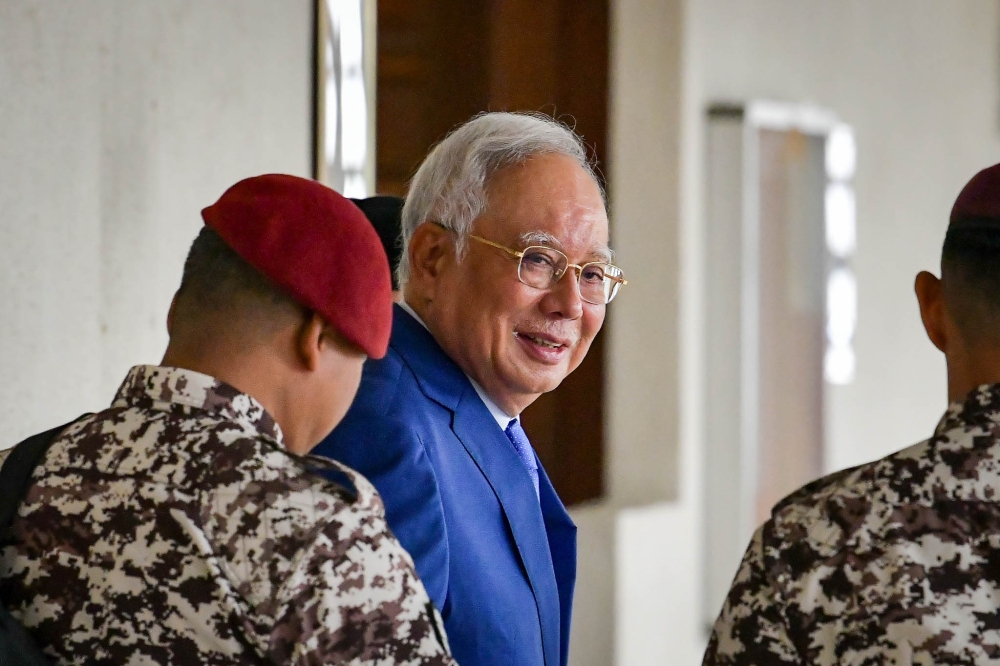
Malaysia's High Court has commenced proceedings in one of the nation's most significant financial crimes cases, examining allegations that former Prime Minister Najib Razak betrayed the confidence of the rakyat through his involvement in a massive fraud scheme centred on 1Malaysia Development Berhad (1MDB). The trial, which opened in Kuala Lumpur on August 3, involves assertions that approximately US$5.64 billion was misappropriated from the controversial state investment vehicle and its four subsidiary entities, representing one of the largest wealth embezzlement cases in global history.
The court proceedings represent a critical juncture in Malaysia's ongoing efforts to recover lost public funds and hold senior figures accountable for their stewardship of national resources. Lawyers for 1MDB and the four subsidiary companies presented their case that the former premier bore responsibility for orchestrating or enabling the systematic diversion of billions in public money. The allegation strikes at the heart of governance and executive accountability, touching on fundamental questions about how senior officials are expected to discharge their fiduciary duties to the state and its citizens.
The 1MDB scandal emerged gradually into public view beginning in 2015, initially dismissed as minor accounting irregularities before investigators uncovered a sprawling network of shell companies, suspicious fund transfers, and unexplained wealth accumulation by individuals connected to the scheme. What began as a domestic controversy evolved into an international investigation involving authorities in the United States, Singapore, Switzerland, and other jurisdictions, each uncovering evidence of systematic financial crimes. The sheer scale and sophistication of the alleged fraud demonstrated how vulnerable even institutional safeguards could be when undermined by those occupying the highest echelons of political power.
The legal proceedings carry profound implications for Malaysia's commitment to the rule of law and transparency in governance. Since the 2018 change of government, successive administrations have signalled their determination to prosecute those implicated in the 1MDB scandal, viewing recovery and accountability as essential to restoring public confidence in institutions. The High Court case represents the culmination of years of investigation, evidence gathering, and legal preparation by prosecutors and investigating agencies seeking to build an airtight case against the former premier.
For ordinary Malaysians, the 1MDB affair has become a cautionary tale about the consequences of unchecked executive power and weak institutional oversight. Billions in funds that could have benefited infrastructure development, education, healthcare, or poverty alleviation were allegedly siphoned away through elaborate schemes designed to conceal their true destination. The scandal exposed gaps in Malaysia's anti-corruption frameworks and prompted calls for strengthened governance mechanisms, including greater transparency in sovereign wealth fund management and enhanced parliamentary scrutiny of major government investments.
The international dimensions of the case underscore how financial crimes committed at the national level ripple across borders and implicate foreign financial institutions, intermediaries, and officials. American authorities have pursued charges against various individuals involved in transporting and laundering 1MDB funds through the United States financial system, recovering billions of dollars through settlements and forfeitures. This cross-border cooperation has become essential in an era when sophisticated financial criminals exploit jurisdictional boundaries and the complexity of international banking networks to hide the origins and destinations of illicit wealth.
The court's examination of whether the former prime minister specifically intended to defraud the public or acted with gross negligence in overseeing the fund will likely hinge on documentary evidence, witness testimony, and financial records tracing the movement of funds. Legal experts have noted the prosecution faces the challenging task of establishing intent and direct causation, particularly given the multilayered corporate structures and numerous intermediaries through which funds flowed. The defence, conversely, will probably emphasise the accused's claims of delegating management responsibilities to professional operators and his assertions that he was misled by subordinates.
Regionally, Malaysia's handling of the 1MDB case influences perceptions of Southeast Asia's capacity and willingness to address grand corruption within its borders. Neighbouring countries grappling with their own governance challenges look to Malaysia's example when evaluating whether political systems can genuinely hold even the most powerful figures accountable. A credible prosecution and conviction would signal that no individual, regardless of rank or former position, stands above the law—a message particularly resonant in a region where political patronage networks have historically sheltered elites from legal consequences.
The financial repercussions of 1MDB have extended well beyond those directly involved in the alleged scheme. Malaysian taxpayers have borne the burden of debt contracted in the fund's name, whilst other development priorities have gone unfunded. The sovereign wealth fund's collapse damaged Malaysia's international reputation for financial governance, affecting foreign investor confidence and complicating diplomatic relationships. Recovery of remaining assets, whether through asset seizures, litigation settlements, or international cooperation agreements, remains an ongoing priority for Malaysian authorities seeking to recoup losses for the national treasury.
As the High Court proceedings unfold, each hearing will incrementally construct the prosecution's narrative of systematic fraud, abuse of authority, and betrayal of public trust. The evidence presented, cross-examinations conducted, and judgements rendered will collectively determine not only the fate of the individuals charged but also send powerful signals about Malaysia's institutional capacity for accountability. The case has already absorbed countless hours of investigative work, legal argument, and administrative effort, representing a substantial commitment of national resources to achieving justice and transparency.
The trial's outcome will reverberate far beyond the courtroom, potentially reshaping public discourse around executive accountability, institutional reform, and the mechanisms necessary for protecting public assets from predatory schemes. For a nation still processing the shock and betrayal inherent in the 1MDB scandal, the High Court proceedings offer both an opportunity for reckoning and a test of whether Malaysia's justice system can effectively address crimes committed at the highest levels of government.

