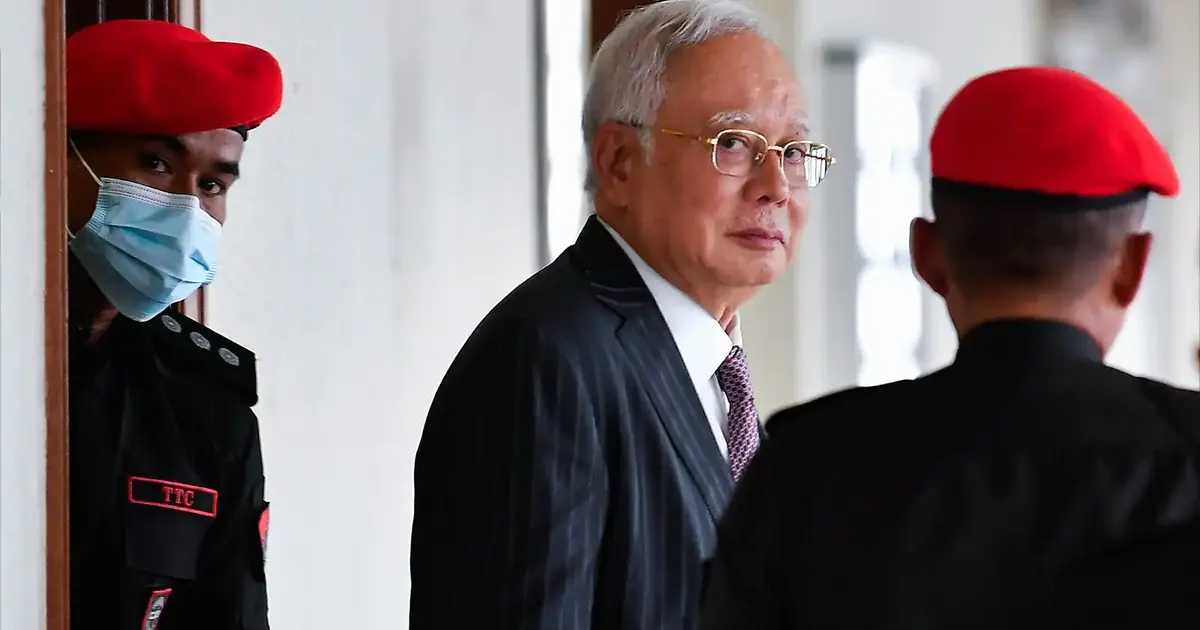
Najib Razak's ongoing legal battle took a fresh turn as his senior counsel Shafee Abdullah mounted a vigorous challenge to the investigative process underpinning fraud allegations centred on the movement of US$620 million in 1MDB funds. The crux of the defence argument centres on the temporal proximity between 1MDB's decision to pursue legal action against the former prime minister and the subsequent launch of a formal investigation by Kroll Advisory Ltd, suggesting a potential conflict in the independence and objectivity of the inquiry.
Shafee specifically targeted Richard Templeman, the investigations director at Kroll Advisory Ltd, highlighting that the formal probe commenced approximately two months after 1MDB filed its lawsuit against Najib. This timing raises substantive questions about whether the investigative mandate was designed with the express purpose of supporting 1MDB's civil claims rather than conducting a neutral, fact-based examination of the disputed fund movements. In legal proceedings of this magnitude, establishing the impartiality and independence of expert witnesses and investigators becomes paramount, as any appearance of bias can undermine the credibility of their findings when presented in court.
The US$620 million in question represents a significant portion of 1MDB's overall financial irregularities that have become the subject of multiple investigations across different jurisdictions. For Malaysian observers, this development underscores the complexity of the 1MDB scandal, which has already resulted in multiple convictions, corporate penalties, and substantial international settlements. The case remains a defining event in Malaysia's recent political history, with implications that continue to resonate through the nation's institutional framework and public confidence in governance.
Kroll Advisory's investigation was commissioned as part of 1MDB's attempts to recover misappropriated funds and establish culpability in various transactions that ultimately depleted the state investment fund. However, the defence's line of questioning suggests that the investigative brief may have been circumscribed by the plaintiff's interests rather than guided by a comprehensive, impartial examination of all available evidence. When investigators are engaged by parties to litigation, questions inevitably arise about whether the scope and direction of their work reflect genuine inquiry or become an extension of one party's legal strategy.
For Southeast Asian financial markets and Malaysia's regional reputation, the continued litigation around 1MDB remains significant. The scandal has prompted extensive regulatory reforms within Malaysia and influenced how international investors perceive governance standards in the country. Each development in Najib's legal proceedings attracts scrutiny from international observers monitoring Malaysia's commitment to addressing financial crime and corruption. The credibility of investigative processes supporting these cases therefore carries implications beyond the courtroom.
Shafee's challenge represents a standard element of defence strategy in complex financial cases: scrutinising the methodology, timing, and potential biases in expert investigations. By establishing reasonable doubt about Templeman's investigative impartiality, the defence aims to create space for alternative interpretations of the US$620 million transaction. This approach is particularly relevant in cases involving sophisticated financial manoeuvres, where the same transaction can be characterised in multiple ways depending on the evidentiary framework applied.
The broader context involves 1MDB's evolution from a sovereign wealth fund into a symbol of institutional failure and misappropriation. Investigations spanning multiple countries—including the United States, Singapore, Switzerland, and the United Arab Emirates—have uncovered complex networks of money movement designed to obscure the ultimate beneficial ownership and deployment of funds. Against this backdrop, establishing the reliability of investigative procedures becomes essential for maintaining public confidence in the accountability mechanisms designed to address such financial crimes.
Courts must ultimately determine whether Kroll Advisory's investigation meets the standards for admissibility and weight in proceedings against Najib. The challenge raised by Shafee represents an important mechanism for testing the robustness of evidence presented against the former prime minister, ensuring that Malaysian judicial processes remain rigorous regardless of the prominence of the defendant. As trials progress, such procedural scrutiny can substantially influence how courts assess complex financial evidence and expert testimony.
The timing question also reflects broader concerns about investigation sequencing in major financial cases. When external investigators are engaged by parties already in litigation, establishing clear protocols for investigative independence becomes crucial. International best practices emphasise the importance of securing investigative firms before disputes crystallise, thereby insulating the investigative process from accusations of partisan motivation. The 1MDB case's evolution illustrates these challenges in a particularly high-profile context.
For Malaysian legal practitioners and governance observers, this challenge illuminates how defence strategies in complex financial litigation operate at the procedural level. Rather than exclusively contesting substantive facts about fund movements, defendants can effectively challenge the investigative foundations supporting allegations against them. This approach forces courts to examine not merely what investigators concluded, but how impartially they reached those conclusions—a distinction with profound implications for the integrity of Malaysia's judicial process and the fairness of outcomes in cases of national significance.

