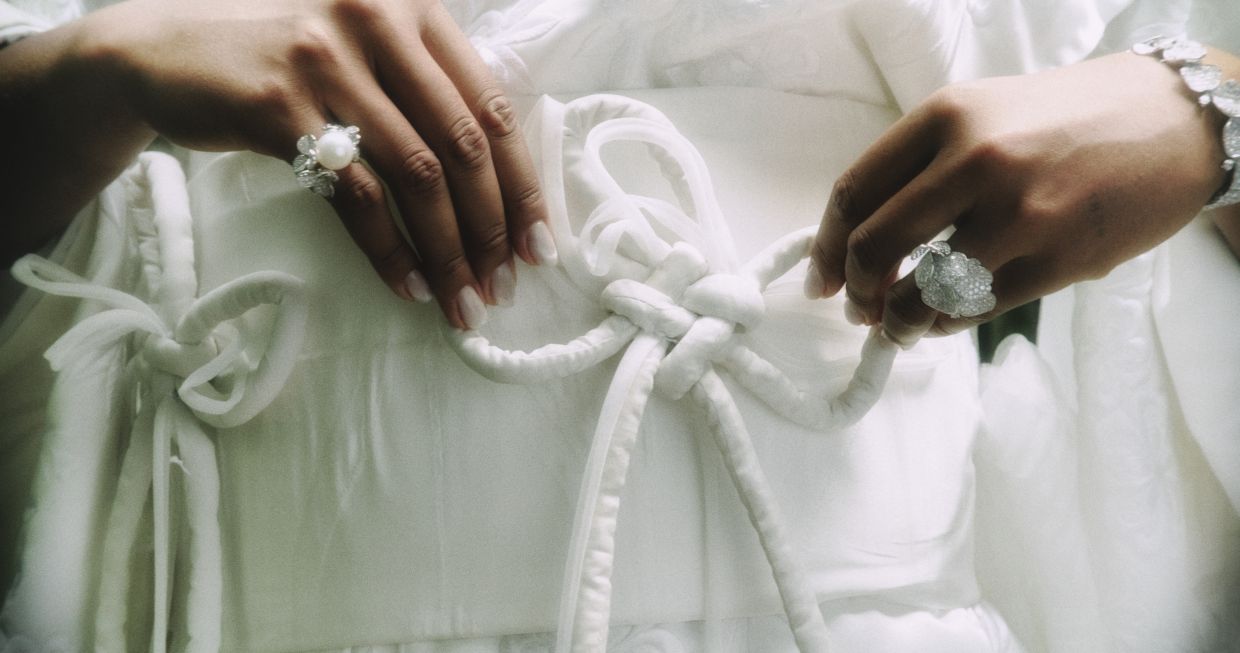
Naomi Osaka has transformed the walk-on at major tennis tournaments into something far more significant than a simple warm-up routine—it has become a carefully orchestrated moment of fashion theatre. At Wimbledon on June 29, the former world number one and current 14th-seeded player emerged onto centre court in an all-white ensemble by Japanese designer Hana Yagi, a statement piece titled "Evolving Ceremony" that demonstrated once again her commitment to reimagining how athletes present themselves at the sport's most prestigious stages.
The design itself represented a masterclass in cultural storytelling layered with technical sophistication. Drawing inspiration from both the traditional kimono and the junihitoe—the elaborate 12-layer formal dress worn by noblewomen during Japan's Heian period from 794 to 1185—the gown ingeniously wove together seven different textiles sourced from vintage kimonos, a traditional shiromuku wedding dress, and a deconstructed Western wedding gown. This fusion of Japanese historical dress codes with contemporary fashion sensibilities created something genuinely innovative, a look that honoured Osaka's heritage whilst signalling a deliberate shift away from conventional sports fashion homogeneity.
The accompanying performance piece, a Nike dress featuring Japanese kirigami-inspired floral appliques and micro-pleated details, complemented the broader narrative while maintaining functionality. Both garments sold out almost immediately, underscoring how Osaka's influence extends beyond sporting audiences into mainstream fashion markets. She completed the ensemble with jewellery from Mikimoto, the legendary Japanese pearl manufacturer, ensuring every element reinforced her cultural vision. As Osaka herself stated, the design achieved something simultaneously "powerful and delicate," whilst being fundamentally "designed around movement"—a recognition that sports fashion must serve performance requirements without sacrificing aesthetic ambition.
This Wimbledon appearance represents the third chapter in an ambitious fashion arc that commenced at the Australian Open in January. That initial statement came through a jellyfish-inspired Robert Wun gown that subtly referenced her identity as a young mother, complete with a butterfly hat suggestive of transformation and new beginnings. The garment was stripped away to reveal competition wear once play commenced. The French Open then followed with a black corset and ballgown skirt by Kevin Germanier, deliberately designed to evoke the Eiffel Tower whilst utilising upcycled materials from Osaka's previous Nike collections. These three tournaments, when examined collectively, reveal deliberate thematic preoccupations that extend well beyond mere aesthetic preference.
Sustainability emerges as the first unifying principle. Each bespoke creation intentionally incorporates upcycled materials, vintage fabrics, and repurposed textiles rather than demanding entirely new manufacturing. This approach directly challenges the fashion industry's traditional consumption model whilst positioning Osaka as an athlete genuinely committed to environmental responsibility. The second theme involves amplifying emerging designers and independent creative voices. Yagi herself, still in her twenties, founded her company in Tokyo after earning finalist status at the International Talent Support competition in Italy in 2019. By featuring her work on one of tennis's greatest stages, Osaka provides transformative global exposure to designers who lack the conventional pathways to mainstream recognition. Her stylist Marty Harper frames this explicitly as an effort to "give voices to new kids on the block."
The third element operates at the level of personal brand architecture. Whilst modern sport increasingly recognises the tunnel walk and pre-match presentation as crucial components of athlete identity, few competitors have weaponised fashion quite so strategically as Osaka. The garments function as portable art installations, generating viral social media engagement, merchandise sales, and cultural conversation entirely divorced from match outcomes. This represents a sophisticated understanding of how contemporary celebrity operates—the entrance has become the performance itself, with the tennis match functioning almost as secondary content.
The technical execution underlying these creations demands far greater complexity than casual observers might recognise. Yagi faced extraordinary constraints: the Wimbledon ensemble needed to function simultaneously as a couture-level visual statement readable from the stadium's highest rows whilst remaining completely removable within the time required for other players to unzip warm-up jackets. Harper revealed the logistical nightmare plainly: "We really only have three minutes to dress her, and she has less than one minute to undress" before competitive play commences. Yagi's ingenious solution involved making nine separate dress segments entirely detachable through velcro fastening, allowing rapid transformation without compromising structural integrity or visual impact.
The dress ingeniously incorporated additional practical features refined through experimentation. The garment includes an adjustable ten-foot train that can be modified depending on court location, since Wimbledon's outer courts sit far enough from player facilities that a full-length train would suffer damage during the walk from preparation areas. These technical considerations reveal how contemporary sports fashion demands engineering expertise alongside aesthetic vision. The designer worked through numerous iterations to ensure the transformation would occur naturally and seamlessly, creating what amounts to a couture puzzle solved through meticulous problem-solving. Each component serves dual purposes: visual impact and functional necessity.
The broader implications for how elite athletes approach self-presentation extend significantly beyond Osaka herself. She demonstrates that sporting prowess and fashion innovation need not exist in tension; rather, they can enhance one another when approached with genuine intentionality. The extraordinary media attention generated by these entrance pieces suggests audiences are hungry for athletes who treat pre-competition moments as opportunities for substantive cultural expression rather than corporate sponsorship displays. Osaka's approach implicitly critiques the conventional sports fashion industrial complex, where athlete wear primarily serves as billboards for established luxury conglomerates.
For Malaysian and Southeast Asian readers, Osaka's strategy holds particular relevance. She represents an Asian athlete leveraging her platform to celebrate Asian design heritage and support emerging Asian creative talent on the global stage. Her consistent elevation of Japanese designers and aesthetics pushes back against entertainment industry narratives that typically privilege European and American design perspectives. By featuring Yagi at Wimbledon, Osaka signals that world-class fashion innovation emerges from Tokyo independent studios no less than Paris or Milan design houses. This carries subtle but meaningful implications for how Asian creative professionals perceive their own market value and global visibility.
The commercial dimensions merit serious consideration as well. Osaka's entrance pieces have generated substantial retail momentum—the Nike performance dress sold out before the tournament even began, whilst the couture outer garments attracted significant collector interest. This success creates market incentives for other athletes to invest similarly in bespoke fashion collaborations, potentially elevating the entire ecosystem of independent and emerging designers. Strategic sponsorship that supports emerging talent alongside established brands could become an attractive positioning for athletes building long-term personal brands beyond their competitive careers.
Ultimately, Osaka's approach transforms what might otherwise be mere pageantry into something approaching substantive cultural statement. Whether or not she advances through Wimbledon's rounds, the entrance ritual ensures her presence registers across multiple cultural registers—sports media, fashion journalism, sustainability discourse, and discussions about Asian creative talent on global platforms. She has effectively won what might be termed "the attention championship" before competitive play even commences, demonstrating that in contemporary sports entertainment, the narrative surrounding athletic performance often carries equal weight to the performance itself. This represents a profound shift in how elite athletes can claim agency over their professional identities.

