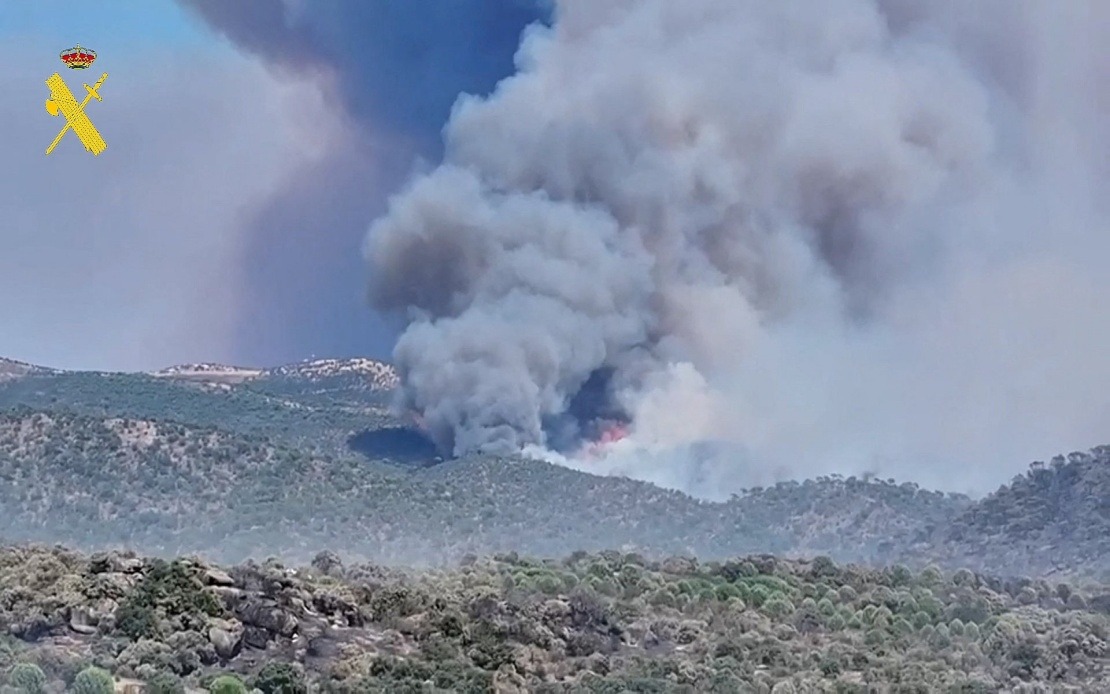
Spain's escalating wildfire crisis reached NASA's doorstep on Friday when a fast-moving blaze threatened the Madrid Deep Space Communications Complex, compelling authorities to evacuate the facility and temporarily interrupt one of the world's most strategically important space communications hubs. The complex, situated in hills approximately 65 kilometres west of Madrid, forms a cornerstone of NASA's ability to maintain contact with its most distant spacecraft and probe humanity's understanding of the cosmos.
The Deep Space Network represents an extraordinary feat of global infrastructure, functioning as Earth's primary mechanism for communicating with robotic explorers venturing billions of kilometres into space. Three strategically positioned facilities—the Madrid complex in Spain, the Goldstone Deep Space Communications Complex in California, and a third installation in Australia—work in concert to provide uninterrupted coverage around the clock. As Earth rotates, these stations hand off communications responsibilities seamlessly, ensuring that no spacecraft ever loses contact with ground control. This geographic distribution means that regardless of where a probe travels or where Earth's rotation positions the receiving stations, at least one facility maintains line-of-sight contact with distant missions.
The Madrid station's sudden unavailability created an immediate operational challenge for NASA, with dozens of active missions potentially affected by any prolonged outage. The agency demonstrated considerable resilience in responding to the emergency. Within hours, NASA had smoothly transitioned all ongoing mission support to the Goldstone facility in California, ensuring that the temporary loss of the Spanish complex did not cascade into communications failures for spacecraft currently operating across the solar system and beyond. This redundancy, built into the Deep Space Network's fundamental design, prevented what could have been a catastrophic disruption to multiple missions simultaneously.
The incident underscores the vulnerabilities of critical space infrastructure to terrestrial hazards. While spacecraft operate in the vacuum of space beyond Earth's atmosphere, the ground stations that command them remain vulnerable to weather events, natural disasters, and environmental crises. Spain has been grappling with an unprecedented surge in wildfires throughout the summer, driven by record-breaking heat waves and drought conditions that have created tinderbox conditions across much of the Iberian Peninsula. The Madrid complex's location in elevated terrain, while offering advantages for signal transmission, places it directly in the path of rapidly advancing fire fronts.
NASA's immediate statement prioritized personnel safety above all other considerations, reflecting evolving corporate responsibility standards in handling emergencies. The agency acknowledged not only the impact on its own operations but also expressed solidarity with families and communities directly affected by the broader wildfire crisis consuming parts of Spain. This humanitarian dimension gained particular relevance given that Spain's wildfires have displaced thousands and threatened residential areas across multiple provinces, making the evacuation of a single facility a relatively minor element of a much larger national emergency.
The assessment of potential damage to the Madrid facility remains pending until firefighting efforts secure the area and conditions stabilize sufficiently for personnel to conduct a thorough inspection. Any physical damage to sensitive communications equipment could extend the outage considerably beyond the immediate evacuation period. Deep Space Network facilities house extraordinarily sophisticated and irreplaceable equipment, including massive parabolic antennas, cryogenic amplifiers, and specialized receiver systems tuned to detect the faintest signals from the most distant probes. Rebuilding or replacing damaged infrastructure could require months and considerable investment.
For Southeast Asian space agencies and institutions following developments in deep-space exploration, this incident carries particular relevance. Regional space programs increasingly collaborate with NASA and international partners on deep-space missions, meaning disruptions to the Deep Space Network can indirectly affect Malaysian, Indonesian, and other regional scientific initiatives. The Madrid facility has provided critical support for European Space Agency missions and various international collaborative projects, making its temporary unavailability a matter of concern across the global space community.
The incident also highlights broader climate-change implications for critical infrastructure globally. Intensifying heat waves and prolonged droughts are creating conditions favourable for larger, faster-moving wildfires that threaten facilities never previously considered at significant risk. Governments and organizations worldwide are increasingly recognizing the need to reassess infrastructure vulnerability to climate-related disasters and invest in resilience measures. For a facility designed decades ago, the current threat environment differs substantially from historical patterns.
NASA's Space Communications and Navigation programme, which manages the Deep Space Network alongside the Jet Propulsion Laboratory, has faced increasing pressure to modernize aging facilities while simultaneously expanding capacity to support a growing constellation of missions. The Madrid complex represents not only operational capability but also institutional knowledge accumulated over decades of space exploration achievements. Ensuring its continued functionality remains important for maintaining America's leadership in deep-space exploration and fulfilling commitments to international space exploration partnerships.
Looking ahead, the situation will evolve as Spanish authorities continue battling the broader wildfire crisis. The agency has committed to providing updates as conditions change and as it becomes safe to conduct damage assessments. If the Madrid complex emerges unscathed, operations can resume relatively quickly once evacuation orders are lifted. However, any significant damage would trigger extended recovery periods and potentially necessitate operational adjustments across the broader Deep Space Network until full functionality returns. For now, NASA's redundancy planning has prevented immediate crisis while Spain confronts the urgent humanitarian and environmental challenges of its wildfire emergency.

