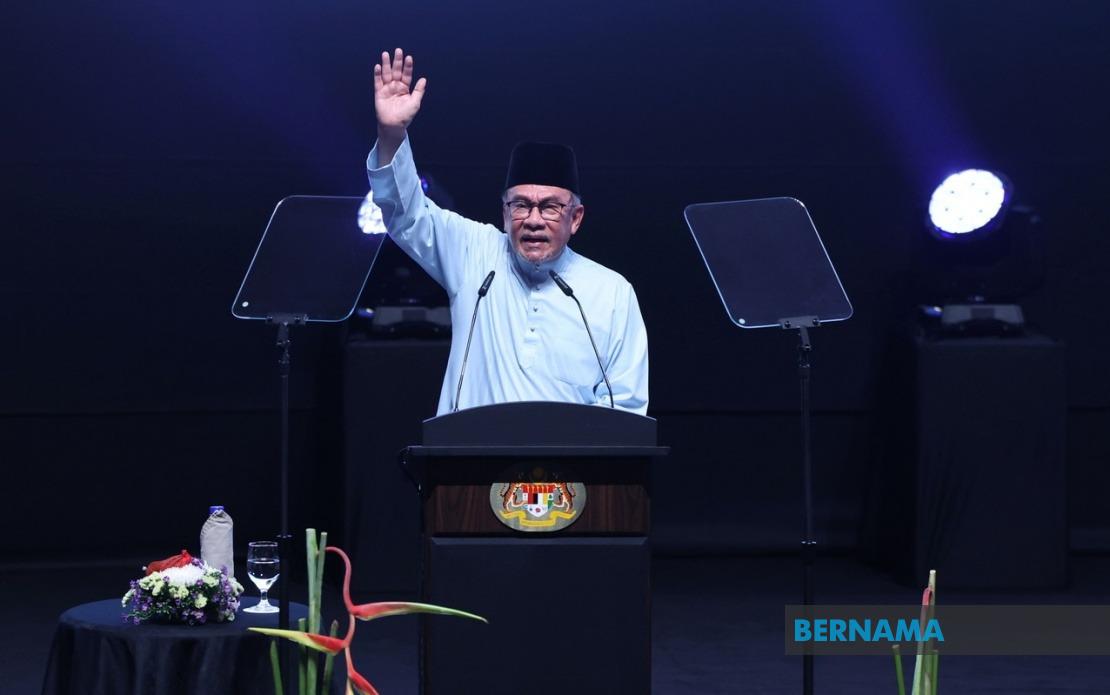
The ceremonial address by the Prime Minister at next year's National Day celebrations will be held at the Putrajaya International Convention Centre (PICC) starting at 2 pm, the Ministry of National Unity announced on Thursday. The timing and venue adjustment represents a significant shift from the original plan, which had called for the event to take place at Dataran Merdeka in Kuala Lumpur, Malaysia's historic independence square.
The ministry's decision to relocate the event away from the nation's capital reflects mounting concerns about air quality across the Klang Valley and other populated regions. Malaysian Meteorological Department officials had warned that haze concentrations would remain elevated in Johor, Melaka, Negeri Sembilan, Selangor, Kuala Lumpur and Putrajaya through the end of August, whilst Sabah faced the prospect of hazardous conditions developing imminently. Rather than proceeding with an outdoor ceremony that could have exposed dignitaries and members of the public to poor air quality, authorities opted for a controlled indoor environment that would mitigate health risks.
The relocation to PICC, an indoor convention facility in Malaysia's administrative hub, provides organisers with climate-controlled conditions and shelter from atmospheric pollution. This pragmatic shift underscores how seasonal haze—a recurring challenge in Southeast Asia triggered by transboundary smoke from forest fires in Indonesia—has become a significant factor in national event planning. The timing adjustment to 2 pm further demonstrates official attention to public welfare, as organisers balance the ceremonial importance of the occasion with practical considerations about guest comfort and safety during outdoor or semi-outdoor periods.
Official statements characterise the 2026 National Day address as a pivotal moment for the MADANI government to articulate its vision for the nation. The ceremony will serve as a platform for the Prime Minister to reinforce core national values including independence, patriotism, and civic responsibility. By maintaining the event's significance despite the venue change, the government seeks to preserve the symbolic weight of this annual address whilst demonstrating responsive governance in response to environmental challenges beyond immediate control.
The Ministry of National Unity has extended an invitation to all Malaysians to participate in the celebrations, framing National Day 2026 as an opportunity to strengthen social cohesion. Organisers emphasise that the gathering represents more than ceremonial formality; it functions as a unifying moment for diverse communities to reaffirm shared commitment to national progress and prosperity. The emphasis on mutual understanding, respect for diversity, and collective responsibility reflects broader policy objectives around building inclusive national identity in an increasingly pluralistic society.
The National Day and Malaysia Day 2026 Celebration Working Committee, operating under the Ministry of Communications, made the final determination to relocate following coordination with meteorological authorities and public health advisors. This inter-agency collaboration illustrates how modern event management in Malaysia requires integration of environmental data, public safety protocols, and ceremonial considerations. The decision-making process demonstrates that even high-profile state occasions must adapt to environmental realities, particularly when public health could be compromised by proceeding as originally planned.
For Malaysian observers, the relocation carries implications about climate vulnerability and transboundary air pollution as increasingly routine challenges to national governance. The haze situation underscores Southeast Asia's persistent struggle with seasonal smoke from forest fires across borders, a phenomenon that disrupts everything from routine life to major ceremonial events. Malaysia's experience managing this year's air quality issues provides a template for how future administrations may need to plan around predictable environmental hazards.
The shift from Dataran Merdeka to PICC also represents a symbolic change in how Malaysia stages its most important national observance. Dataran Merdeka carries profound historical resonance as the location where independence was proclaimed in 1957, making it the traditional venue for major patriotic ceremonies. Relocating to Putrajaya, the purpose-built administrative capital, signals how Malaysia's institutional geography has evolved, though it may disappoint those who see ceremonial continuity with the independence narrative as important to national identity.
Organisers emphasise that the venue change does not diminish the occasion's importance or the government's commitment to celebrating national identity. Instead, they frame the adjustment as a responsible decision that prioritises attendee welfare whilst preserving the event's core purpose. The 2 pm start time aligns with periods when outdoor temperatures typically reach peak levels, further reinforcing that the indoor venue at PICC offers meaningful advantages beyond air quality management.
For regional observers, Malaysia's approach to relocating a major national ceremony due to haze demonstrates how transboundary environmental challenges increasingly shape governance and public administration across Southeast Asia. The episode illustrates that even wealthy, developed nations in the region cannot fully insulate themselves from air pollution originating elsewhere, creating interdependencies that complicate unilateral environmental policy. As such patterns become more frequent, countries like Malaysia must develop increasingly sophisticated mechanisms for adapting national events and routines to environmental variability.
The government's public invitation to all Malaysians suggests confidence that the PICC venue will accommodate large attendance, though crowd capacity logistics differ markedly from Dataran Merdeka's open-air expanse. Broadcasting and live transmission arrangements will likely become more crucial for reaching Malaysians unable to physically attend the indoor venue, creating a hybrid celebration model that combines in-person ceremony with remote national participation. This technological dimension reflects how modern National Day observances operate across multiple platforms simultaneously.

