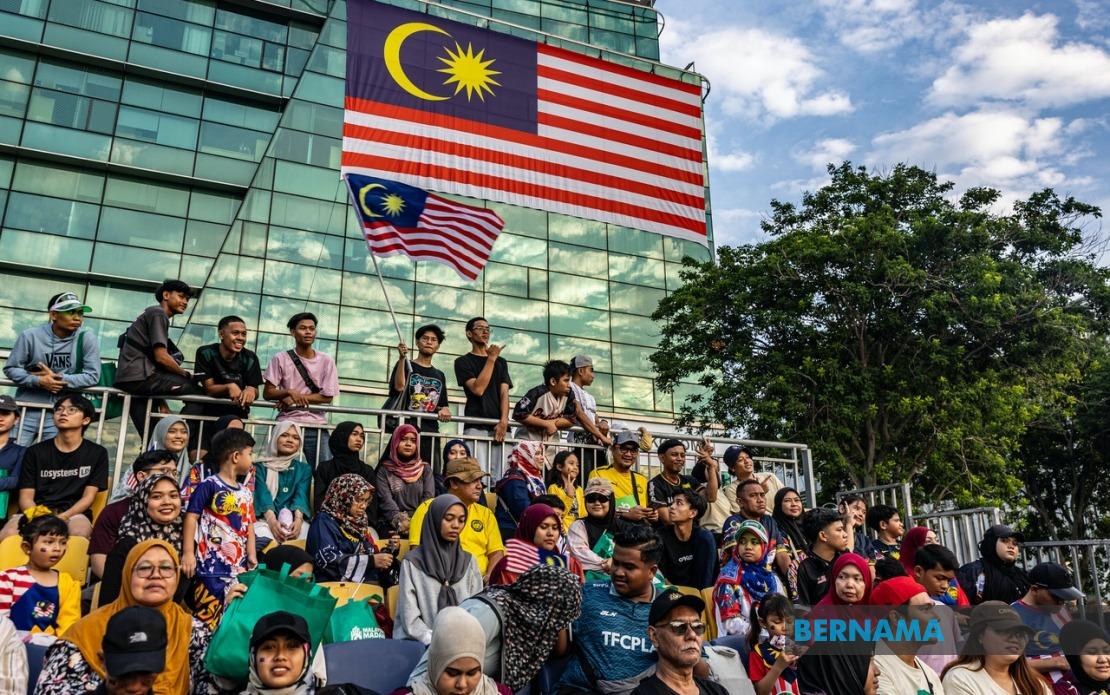
Putrajaya's celebration of Malaysia's 69th National Day on August 31 drew a crowd exceeding 100,000 people, comfortably surpassing the organizing committee's initial projection of 80,000 participants. Communications Minister Datuk Seri Fahmi Fadzil, who chairs the 2026 National Day and Malaysia Day Main Committee, attributed the success to meticulous advance preparation and the absence of any significant incidents throughout the day.
The scale of participation reflected a notable public enthusiasm for the occasion, with attendees journeying from across the nation to converge in the federal administrative capital. Fahmi specifically acknowledged visitors who had travelled considerable distances, mentioning those from Sandakan in Sabah, Johor Bahru in the south, and Jeli in Kedah, highlighting how the celebration had become a genuinely nationwide gathering. This geographic spread underscores the enduring appeal of National Day commemorations and the willingness of Malaysians to travel for such patriotic events, particularly when they feature substantial entertainment and participatory elements.
The seamless execution depended heavily on inter-agency collaboration and environmental preparedness that went largely unnoticed by the general public. The Department of Environment, Malaysian Meteorological Department, and National Disaster Management Agency worked in concert to monitor conditions and remained equipped to deploy cloud seeding operations if necessary. This coordinated approach ensured that weather—traditionally a variable that can derail large outdoor gatherings in Malaysia's tropical climate—posed no obstacles. The cooperation between these bodies exemplifies how meticulous logistical planning and pre-event contingency arrangements create the conditions for successful mass assemblies.
Beyond the central parade and formal proceedings, the celebration extended into an expanded entertainment ecosystem designed to maximize visitor engagement and family participation. The Anjung Floria precinct displayed national defence assets, offering civilians a rare opportunity to interact with military equipment and infrastructure. Simultaneously, the Riuh Merdeka programme at Monumen Alaf Baru provided additional entertainment, while food vendors and recreational facilities ensured visitors could spend extended periods on-site without logistical strain. This multi-faceted approach transformed what might have been a brief ceremonial event into a full-day destination experience.
The parade itself represented a substantial organizational achievement, comprising 76 contingents, 22 marching bands, and 11 decorated vehicles with approximately 10,819 total participants drawn from government ministries, armed forces, uniformed services, government-linked companies, educational institutions, and civil society organizations. This breadth of representation underscored the event's status as a genuinely national undertaking rather than a government-centric exercise. The inclusion of such diverse constituent groups conveyed a message of inclusive national identity, though the heavy weighting toward official and institutional participants remains typical of Malaysian National Day celebrations.
A noteworthy feature was the 2026 edition's incorporation of new contingents and thematic elements that were absent from previous iterations. The Royal Johor Military Force made its debut appearance, reflecting evolving relationships between state and federal security apparatus. The Southeast Asian Games 2027 contingent's inclusion underscored Malaysia's upcoming hosting responsibilities and international sporting commitments, signalling how national commemorations increasingly weave in forward-looking national priorities. The Orange Economy Sustainability cluster contingent similarly reflected government focus on economic diversification and environmental stewardship.
Cultural and artistic expression formed a substantial component of the celebration, particularly through the "Gema Inovasi MADANI" percussion performance that blended traditional and contemporary musical forms. This segment involved 150 percussionists and 1,500 human graphic performers, indicating the substantial resources devoted to the artistic dimension. The deployment of rebana inovasi and kompang inovasi—traditional percussion instruments reimagined for contemporary contexts—symbolically represented the government's stated commitment to honoring cultural heritage whilst embracing modernity, a tension that remains central to Malaysian national identity discussions.
The celebration's closing act, "Rentak MADANI, Paluan Tradisi," mobilized 2,350 participants in a grand finale combining contemporary and traditional performance elements. The aerial component, executed by Royal Malaysian Air Force fighter, transport, and helicopter squadrons, provided a spectacular military dimension that served both entertainment and symbolic purposes—demonstrating national defence capabilities whilst celebrating national unity. Such military displays remain popular features of Malaysian National Day programmes, reflecting both Cold War-era traditions and ongoing emphasis on security and sovereignty.
Fahmi framed the celebration through the official theme "Malaysia MADANI: Kesejahteraan Dinikmati" (Malaysia MADANI: Wellbeing Enjoyed), which articulates the government's development narrative emphasizing shared prosperity transcending sectarian and ethnic divisions. His public comments positioned the event as reinforcing national cohesion and patriotic sentiment, urging citizens to collectively preserve unity and safeguard the nation. Such rhetorical framing reflects how National Day celebrations serve functions beyond ceremonial observance, functioning as platforms for political messaging and legitimacy-building for incumbent administrations.
The successful execution of this large-scale event carries significance for Malaysian governance and civil society organization. The ability to safely accommodate over 100,000 participants in a concentrated venue demonstrates adequate crowd management protocols and security arrangements, factors that remain critical concerns given Malaysia's experience with occasional incidents at large public gatherings. The absence of reported problems suggests that lessons from previous events have been effectively incorporated into operational procedures, potentially offering replicable models for future mass participation events across the country.
For regional observers, Malaysia's National Day celebration reflects broader patterns of Southeast Asian nation-states utilizing commemorative events to construct national narratives and consolidate political legitimacy. The incorporation of development themes, economic modernization references, and inclusive symbolism mirrors similar governmental strategies across ASEAN nations seeking to balance traditionalism with progressive governance narratives. The scale and elaboration of Malaysia's approach, however, positions these celebrations among the region's more substantial and carefully choreographed national observances.

