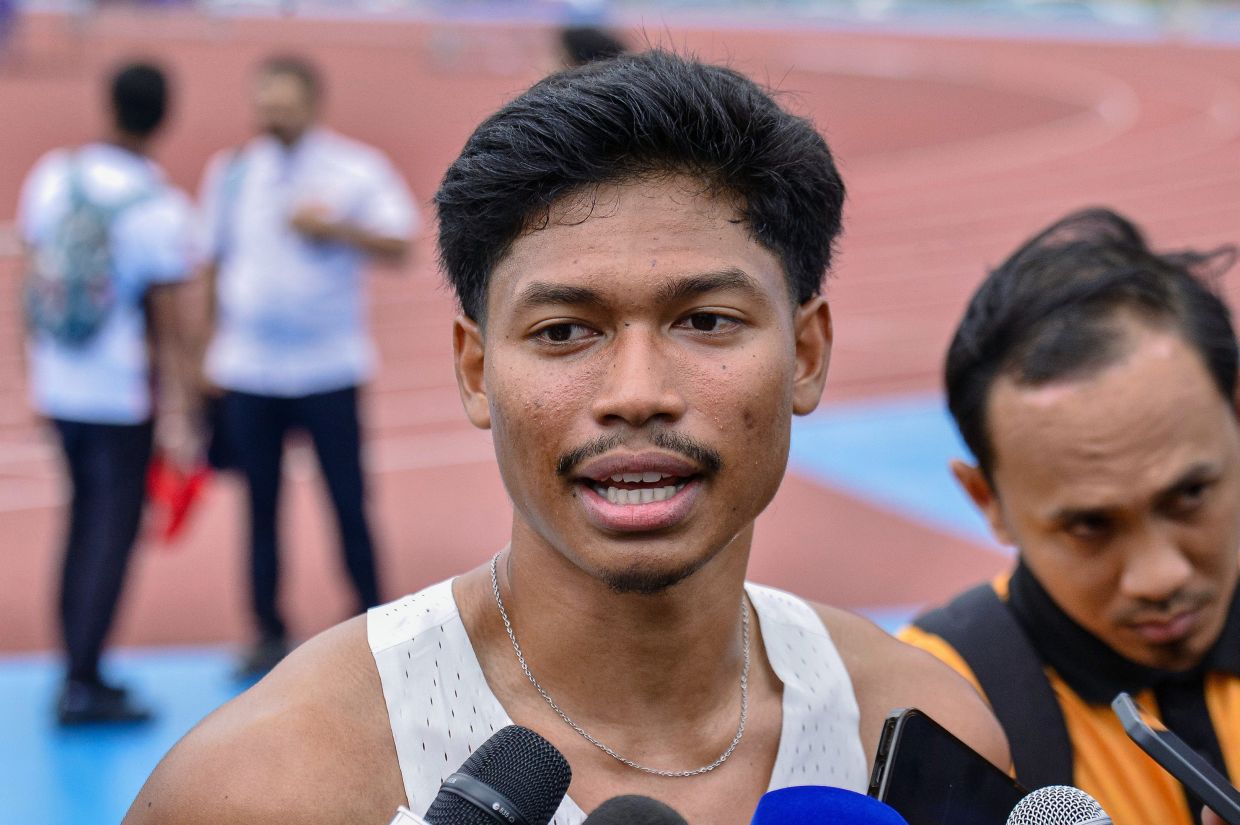
National sprinter Mohd Azeem Fahmi is embarking on the next chapter of his academic journey, committing to postgraduate studies at Universiti Malaya following the successful completion of his undergraduate degree in the United States. The 21-year-old athlete, fresh from his Auburn University tenure, made a formal visit to Malaysia's premier institution where he was greeted by top university officials who pledged institutional support for his enrolment in a master's programme.
Azeem's transition back to domestic soil marks a strategic shift for the young track star, who spent nearly two years training and studying abroad. His recent visit to the university's Kuala Lumpur campus included meetings with vice-chancellor Prof Datuk Seri Dr Noor Azuan Abu Osman, who personally assured the sprinter of comprehensive support structures to enable him to balance rigorous postgraduate coursework with his athletic ambitions. The engagement signals UM's commitment to nurturing athlete-scholars within its academic ecosystem.
The Faculty of Sports and Exercise Sciences, represented at the meeting by Associate Prof Dr Zulkarnain Jaafar, will play a pivotal role in shaping Azeem's postgraduate trajectory. Complementing this institutional backing is the Sports Centre, led by director Afizal Abu Othman, which will provide training facilities and sporting infrastructure essential for an athlete of Azeem's calibre. This multi-departmental alignment demonstrates how UM has evolved to accommodate elite performers seeking to advance both their competitive and intellectual pursuits simultaneously.
UM's track record of developing world-class athletes lends credibility to Azeem's choice of institution. The university boasts a remarkable roster of accomplished sportspeople, most notably Olympic divers Datuk Pandelela Rinong and Ooi Tze Liang, along with their teammate Bryan Nickson Lomas, all of whom built their championship foundations while studying at UM. The university has similarly nurtured badminton excellence, with former national doubles representative Vivian Hoo completing her Bachelor of Sports Science degree there in 2019, demonstrating UM's sustained excellence across diverse sporting disciplines.
Azeem's immediate competitive form augurs well for his return to Malaysian athletics. At the Malaysian Open athletics championships held recently at Universiti Putra Malaysia Serdang, he captured gold medals in both the individual men's 100 metres and the men's 4x100 metres relay. His relay victory came alongside teammates Danish Iftikhar Mohd Roslee, Pengiran Aidil Auf Hajam, and Mohd Armin Zahryl, underscoring his value within the national sprint programme and his capacity to deliver under pressure.
The decision to pursue postgraduate education at UM represents a calculated move for sustained athletic development in the Malaysian context. Prior to returning home, Azeem invested nearly two years at Auburn University beginning in January 2023, where he studied exercise physiology and kinesiology—fields directly aligned with optimising athletic performance. His time in Alabama under the guidance of renowned coach Ken Harnden provided technical expertise and training methodologies that will inform his approach moving forward.
For Malaysian athletics, Azeem's return carries broader implications. The sprinting programme has made considerable strides in recent years, and retaining homegrown talent at domestic institutions while they pursue advanced education benefits the entire ecosystem. Young athletes observing Azeem's journey—balancing elite training with credible academic credentials—may be encouraged to view postgraduate study not as an interruption to their sporting careers but as complementary investment in their long-term development and post-athletic security.
UM's investment in Azeem reflects a sophisticated understanding of athlete welfare that extends beyond immediate competition outcomes. By facilitating a master's programme tailored to an elite performer's schedule, the institution positions itself as a serious competitor for talent among Southeast Asian universities. This approach recognises that world-class athletes require institutional partners capable of providing both cutting-edge training facilities and rigorous academic programmes without forcing false choices between scholarship and sport.
The synergies between Azeem's chosen field of study and his professional pursuits are noteworthy. Exercise physiology and kinesiology—the subjects of his undergraduate preparation—directly inform the science of sprint performance, injury prevention, and biomechanical optimisation. His postgraduate work at UM can therefore deepen his understanding of the physiological mechanisms underpinning his own competitive success, creating a feedback loop between classroom learning and practical athletic application that few athlete-scholars achieve.
Looking ahead, Azeem's trajectory will be closely monitored by both the Malaysian athletics fraternity and regional coaching circles. His success in integrating advanced academic work with competitive excellence could establish a compelling model for other aspiring athletes seeking to build sustainable, multi-dimensional careers. The coming months will reveal whether UM's comprehensive support system enables him to excel in both scholarly and sporting domains simultaneously.

