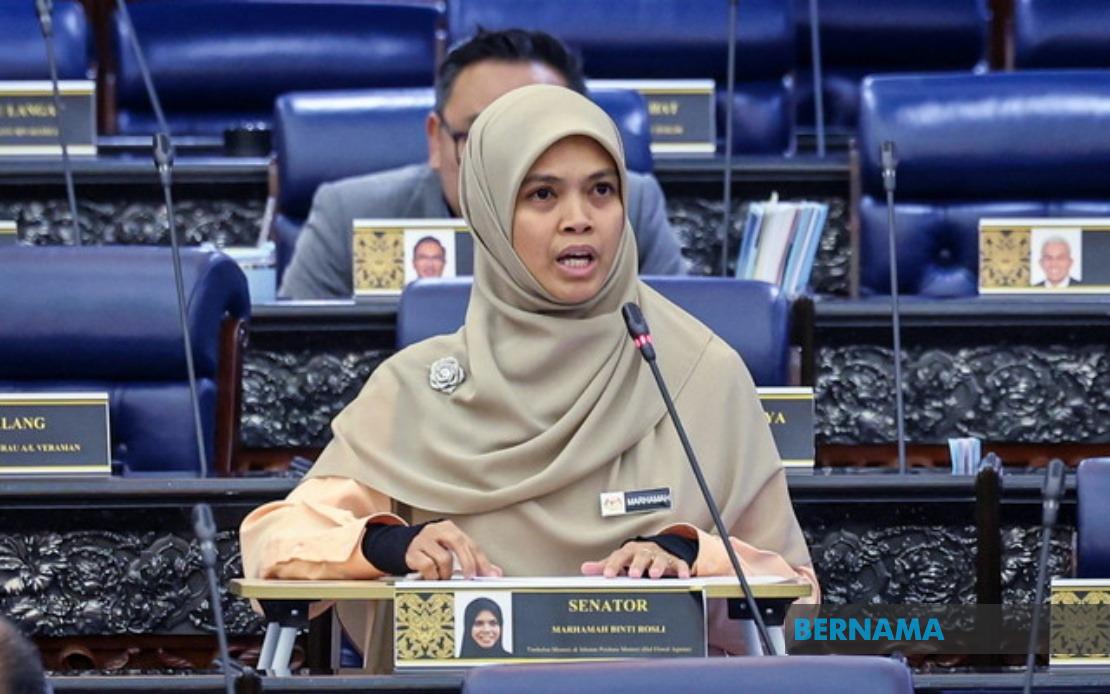
The Malaysian government is pursuing a landmark reform to unify the admission and accreditation of Syariah lawyers across all states, with a formal proposal expected to reach the National Council for Islamic Religious Affairs Malaysia (MKI) in the coming months. Deputy Minister in the Prime Minister's Department (Religious Affairs) Senator Marhamah Rosli revealed during parliamentary Question Time that the initiative, which emerged from the 2026 Syariah Legal Profession Convention, represents a significant step towards modernising the nation's Islamic legal profession.
Under the current federated system, Syariah lawyers operate within state-based frameworks, creating a fragmented landscape that has grown increasingly problematic for practitioners seeking to work across state boundaries. A lawyer admitted to practise in Selangor, for instance, cannot automatically extend that licence to Penang or Johor without undergoing entirely separate admission procedures and assessments specific to each state's requirements. This jurisdictional compartmentalisation, while rooted in Malaysia's constitutional division of powers, has created friction between the principle of professional mobility and state autonomy over Islamic religious affairs.
The fragmentary system has generated a cascade of practical difficulties that burden both individual practitioners and the broader legal ecosystem. Inconsistent qualification standards mean that the benchmarks expected of Syariah lawyers differ from one state administration to another, creating potential gaps in professional competency assurance. Administrative redundancy forces lawyers to navigate multiple bureaucratic processes, submit duplicate documentation, and bear substantial financial costs to gain admission in each new jurisdiction. Beyond the transactional burdens, the absence of mutual recognition mechanisms undermines the profession's cohesion and denies Malaysian litigants the ability to freely engage Syariah counsel of their choice regardless of geographical location.
Marhamah explained that if the MKI approves the proposal during its next gathering, the framework could be further developed through consultative processes and potentially elevated for formal consideration by the Conference of Rulers, given their constitutional role as Heads of Islam in their respective states. This staged approach acknowledges both the need for systematic reform and the delicate constitutional balance between federal coordination and state religious autonomy that characterises Malaysia's Islamic governance structure. The proposal respects the fact that Syariah law administration, including lawyer licensing, remains fundamentally a state responsibility under the Federal Constitution.
The challenge facing reformers is threading the needle between centralised standardisation and constitutional respect for federalism. Malaysia's 13 states maintain distinct Syariah court systems, procedural rules, and professional regulatory bodies, all administered under state jurisdiction. Yet the practical inefficiencies created by this compartmentalisation have become acute enough that even state-level interests may align behind harmonisation. The proposed framework would theoretically allow a single admission process to qualify lawyers for practice nationwide, eliminating the need for repeated applications and assessments.
For Malaysian legal practitioners, the implications are substantial. Syariah lawyers based in smaller states or with limited local client bases could expand their practices significantly if accreditation in one state automatically granted recognition in others. Law firms could develop more efficient interstate operations. Litigants seeking specialist counsel in complex Islamic law matters would no longer be restricted by geography. The profession could also attract and retain more talented practitioners if career mobility improved, addressing any brain drain to common law-focused practices.
The government has committed to pursuing harmonisation in what Marhamah described as a measured, inclusive, and phased manner. This language signals that reform will not be rushed or imposed unilaterally, but rather developed through consultation with stakeholders including state religious authorities, the Malay Rulers, practising lawyers, and Islamic legal academics. Previous attempts to standardise professional regulations across states have occasionally encountered resistance or been diluted through prolonged negotiation, so the emphasis on inclusivity may reflect awareness of potential political sensitivities.
The timing of this initiative reflects broader trends in Southeast Asian legal systems. Singapore, Brunei, and Thailand have consolidated Islamic legal administration at higher governmental levels, while Indonesia's diverse regional Syariah courts function under clearer national coordination frameworks. Malaysia's more decentralised approach has historical roots in colonial administrative structures and post-independence federalism, but modernisation pressures are mounting as inter-state commerce, internal migration, and legal practice evolution accelerate.
Constitutionally, any formalised framework will need to navigate Article 74 of the Federal Constitution, which reserves Islamic law matters primarily to state jurisdiction, though Parliament retains authority over certain aspects of Islamic administration. A national accreditation system might be feasible if structured as a minimum standard that states voluntarily adopt, rather than an imposed mandate. The involvement of the Conference of Rulers suggests that consent-based federalism, rather than hierarchical imposition, will characterise the implementation approach.
The proposal's success will likely depend on demonstrating tangible benefits to state religious authorities and individual states. Revenue generation from lawyer licensing fees, the prospect of improved legal service delivery, and professional prestige could incentivise participation. However, some states may resist what they perceive as erosion of religious autonomy, particularly if implementation involves federal agencies gaining oversight powers.
Looking ahead, the next critical juncture will be the MKI's response to the formal proposal. As the highest body coordinating Islamic religious affairs among Malaysian states and the federal government, the MKI carries sufficient prestige and representation to either catalyse genuine reform or shelve the initiative if consensus proves elusive. For Malaysia's Syariah legal profession, the coming months will likely determine whether the current state-by-state compartmentalisation becomes obsolete or persists for another generation.

