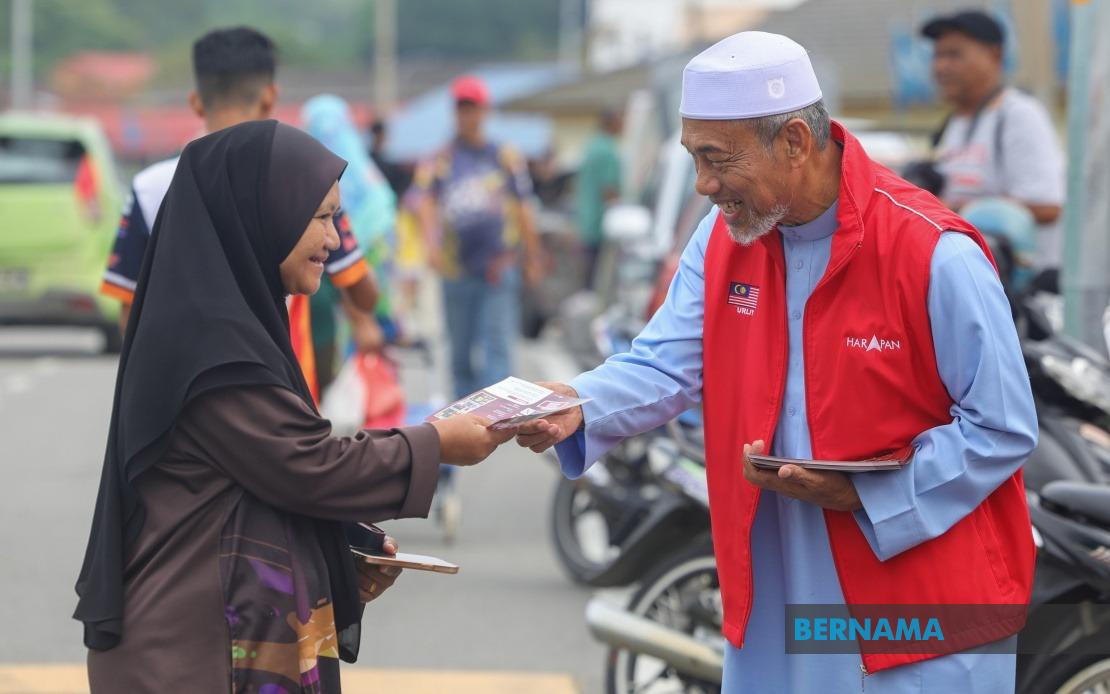
The race for control of Negeri Sembilan is heating up as candidates across the political spectrum shift into high gear with aggressive grassroots engagement strategies. Entering the second day of the campaign period on July 19, contenders are packing their schedules with direct voter contact initiatives, recognising that the remaining 12 days before August 1 polling day offer a critical window to secure public support. Several candidates have committed to running between seven and nine separate campaign programmes daily, each designed to penetrate different voter constituencies and address local concerns at the community level.
Menteri Besar Datuk Seri Aminuddin Harun, who is defending the Linggi state seat under the Pakatan Harapan banner, exemplifies the intensity of this push. The Negeri Sembilan PH chairman and PKR vice-president began his day with congregational prayers at Masjid Jamek Pasir Panjang before moving into a breakfast session with residents. His itinerary then expanded across multiple suburban locations including Pasir Panjang town, Taman Setia, Taman Kekatong, Rumah Rakyat Telok Pelandok and Kampung Telok Pelandok, supplemented by a dedicated community engagement session targeting Indian voters. This methodical geographical sweep reflects a deliberate strategy to ensure no demographic or neighbourhood is overlooked during the campaign.
Aminuddin articulated the philosophical underpinning of this exhaustive approach, framing direct voter contact as fundamental to understanding community priorities. He emphasised that personal encounters with constituents strengthened his commitment to delivering development that serves all residents equitably. The Port Dickson Member of Parliament invoked religious language to reinforce his message, suggesting continuity and progress would flow from sustained public confidence. Such messaging seeks to anchor his campaign in both practical governance promises and deeper appeals to shared values and communal trust.
Within the Pakatan Harapan coalition, other candidates are pursuing similarly ambitious schedules. DAP secretary-general Anthony Loke, who holds the Chennah state seat, commenced his campaign with a market walkabout in central Seremban before transitioning to evening community dinners. This daytime-to-evening rhythm allows candidates to capture voters during both business hours and social gatherings. Kamarul Ariffin Wafa, the PH standard-bearer for Seri Menanti, has lined up eight separate engagements, including visits to weekly markets and residential areas. The consistency of this approach across PH candidates suggests a coordinated coalition strategy emphasising accessibility and personal responsiveness.
Yaacob Mahmood, contesting Serting for Pakatan Harapan, has adopted similarly informal tactics that prioritise unscripted dialogue over formal political theatre. His breakfast meetings in Felda Raja Alias 3 and impromptu visits to business premises in Bandar Seri Jempol create settings where voters encounter candidates in relaxed, conversational environments. Campaign organisers have explicitly highlighted the value of these informal settings, arguing they facilitate genuine dialogue about local grievances and community needs without the stiffness of formal political events.
On the Barisan Nasional side, the incumbent deputy chairman Datuk Seri Mohamad Hasan, popularly identified as "Tok Mat," is maintaining his Rantau assemblyman seat through comparable grassroots work. His engagement at the BN Polling District Centre in Taman Kelab Tuanku, Mambau, signals BN's determination to defend traditionally held territory. Datuk Seri Jalaluddin Alias, the Negeri Sembilan UMNO Liaison Committee chairman, has blended community engagement with sports and cultural events, attending a youth sepak takraw tournament in Pertang before visiting Orang Asli communities in Kampung Utara Putra. This diversified approach indicates BN is attempting to mobilise different demographic segments through tailored engagement strategies.
The intensity of these campaigns reflects the electoral stakes for Negeri Sembilan. The state legislative assembly was dissolved on June 5, with the Election Commission designating August 1 as polling day and July 28 for early voting. A total of 889,490 registered voters are entitled to participate, a figure comprising 867,151 ordinary voters alongside 16,884 military personnel and their spouses and 5,455 police personnel eligible for early voting. The inclusion of security force voters adds a layer of complexity, as these constituencies may respond to different messaging priorities than civilian electorates.
The frenetic pace of campaign activity underscores how Malaysian electoral politics has evolved toward ground-level mobilisation as a primary strategic tool. Rather than relying exclusively on mass media or formal political rallies, contemporary campaigns emphasise personal contact, community listening sessions, and neighbourhood-by-neighbourhood penetration. This shift reflects both the fragmentation of media consumption patterns and the premium voters increasingly place on direct accountability and personal interaction with political representatives. For Malaysia's electoral system, where local constituencies retain significant influence despite national political trends, such grassroots intensity remains essential for mobilising support.
The campaign intensity also illuminates the competitive dynamics within Negeri Sembilan specifically. With both PH and BN fielding formidable candidates with significant political pedigrees, neither coalition can assume victory. The state's demographic composition, encompassing urban centres, new towns, Orang Asli communities, and agricultural settlements, requires tailored messaging that resonates across these diverse constituencies. Candidates recognise that the August 1 polling day will reward those who have most effectively translated campaign rhetoric into sustained community engagement.
Looking forward, these campaign patterns will likely persist through polling day. As candidates continue their relentless schedules over the remaining campaign period, the ultimate electoral outcome will reflect not only party machinery and national political trends but also the effectiveness of these localised grassroots strategies. Voters across Negeri Sembilan will ultimately decide whether the intensity of campaign engagement translates into genuine policy responsiveness or represents the standard theatre of electoral politics. The twelve-day countdown represents both an opportunity and a test of whether candidates can convert their extensive voter contact into substantive electoral mandates.

