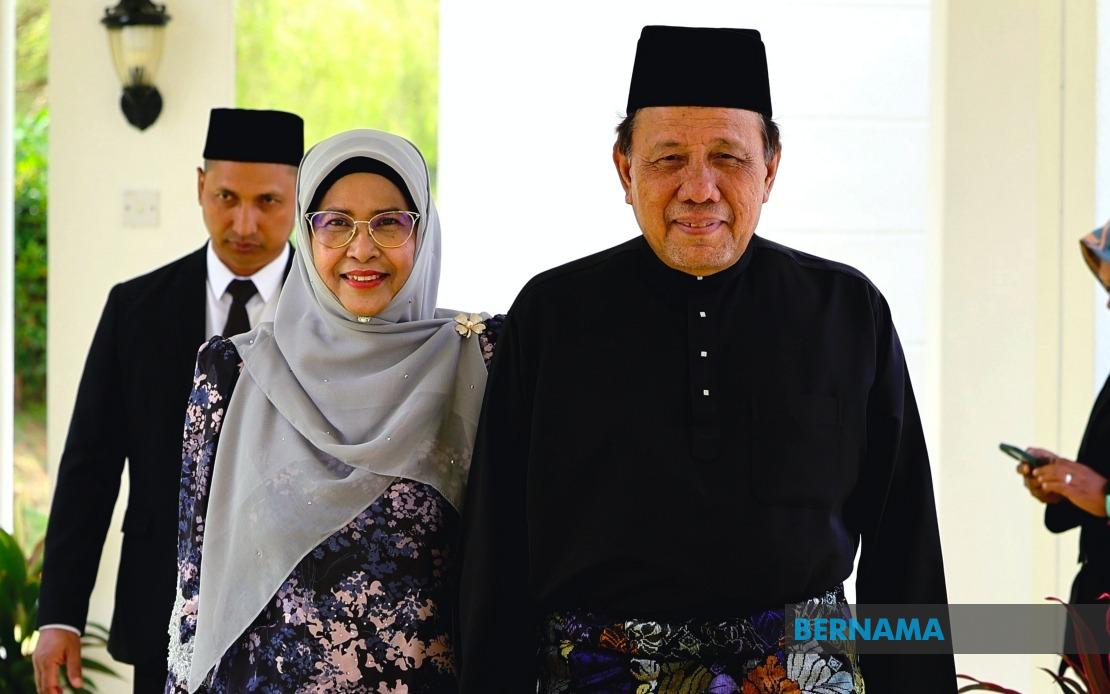
Negeri Sembilan has declared August 3 an occasional public holiday in recognition of the successful completion of its 16th state election held on August 2, with Menteri Besar Datuk Ismail Lasim citing the need to reward public participation and acknowledge the contributions of all those involved in the electoral process.
The decision came following Ismail's swearing-in ceremony before Tuanku Muhriz Tuanku Munawir at Istana Besar Seri Menanti in Kuala Pilah, where he took his oath of office as the state's chief executive. The announcement was made during his first press conference after assuming the position, with the Menteri Besar emphasizing the significance of royal consent in granting the holiday.
Ismail, 67, expressed profound gratitude to Tuanku Muhriz for endorsing both his appointment and the holiday declaration. He articulated that many participants in the electoral process remained fatigued following the campaign period and voting day, making the additional day off a meaningful gesture of appreciation for their involvement in the democratic exercise.
The 16th Negeri Sembilan state election resulted in a significant outcome for the coalition parties that now govern the state. Barisan Nasional captured 18 of the 36 contested seats, while Perikatan Nasional secured seven seats, collectively enabling the two coalitions to command a two-thirds supermajority in the State Legislative Assembly. This strong mandate reflects voter confidence in the combined BN-PN platform presented to constituents.
The electoral contest drew extensive participation from candidates and voters across the state. A total of 103 candidates vied for representation in the assembly across all 36 constituencies, reflecting competitive races in most areas and demonstrating robust democratic engagement in the state. The electoral commission and election workers managed the poll without significant reported incidents.
For Malaysian voters and observers, the Negeri Sembilan outcome carries implications for the broader political landscape in Southeast Asia's most developed state. The strong performance of the coalition government signals voter preference for the combined vision of Barisan Nasional and Perikatan Nasional, potentially influencing national political calculations and coalitional dynamics at the federal level in coming months.
The declaration of the public holiday also serves a practical purpose beyond symbolic appreciation. Election day activities—including campaign culminations, voting logistics, and counting procedures—typically stretch into evening hours or beyond, leaving election workers, poll observers, and many voters requiring recovery time. The additional day allows for restoration of routine government services and provides citizens with space to attend to personal matters that may have been deferred during the pre-election period.
Ismail's emphasis on royal consultation in making the announcement underscores the constitutional framework governing Negeri Sembilan's governance. The Yang Dipertuan Besar retains ceremonial and symbolic authority over state affairs, and securing his consent for significant decisions reflects both constitutional propriety and political protocol that reinforces the legitimacy of executive actions.
The timing of the holiday declaration also demonstrates responsiveness to public sentiment in the immediate aftermath of electoral contests. In Malaysian political culture, such gestures are recognized as goodwill measures that acknowledge collective civic participation and facilitate social cohesion following competitive elections that may have generated significant partisan energy.
Looking forward, the new Negeri Sembilan government faces the practical task of translating its electoral mandate into governance outcomes. With a supermajority, the BN-PN administration possesses substantial legislative capacity to implement its policy agenda, though managing coalition partnership dynamics between the two organizations will require careful coordination and negotiation on key initiatives.
The state election results also reinforce broader patterns observable across Malaysian electoral contests in recent years, where coalition-based governance has become the dominant model. The combination of Barisan Nasional's traditional organizational strength with Perikatan Nasional's emerging political influence reflects evolving coalitional arithmetic in Malaysian politics and the strategic necessity of working alliances in securing governing majorities.

