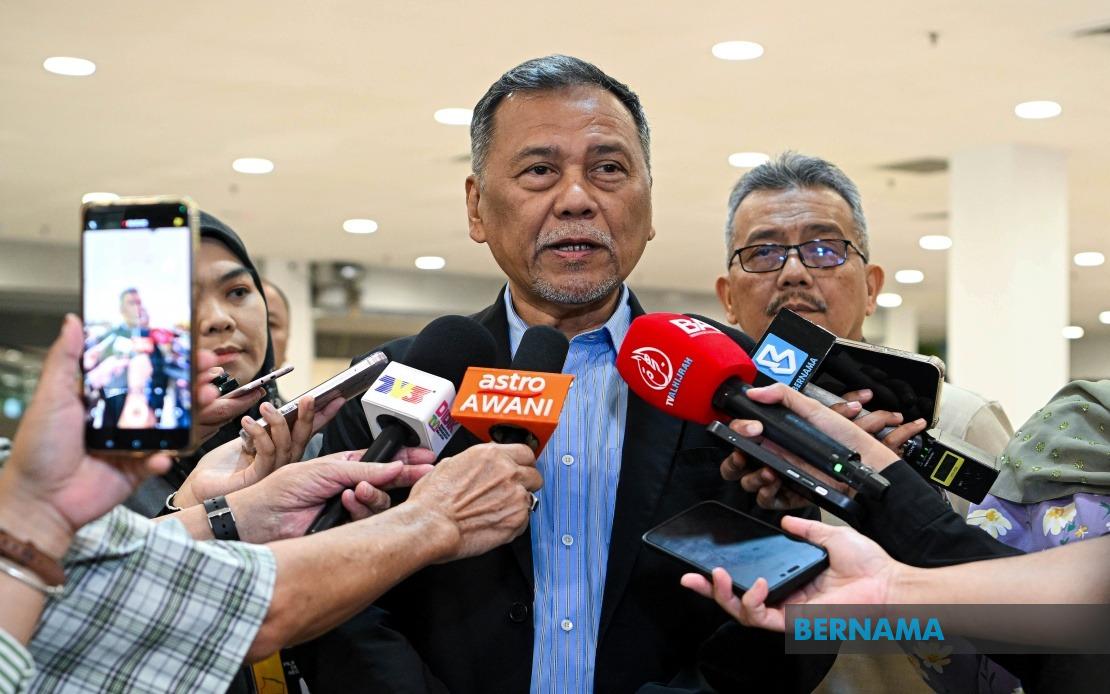
Negeri Sembilan's electoral machinery is moving into its critical final phase, with Election Commission chairman Datuk Seri Ramlan Harun confirming that preparations for the state election are now substantially complete. Speaking in Seremban on July 17, Ramlan revealed that while 464 nomination forms have been sold across the state's 36 constituencies, the actual number of confirmed contestants remains modest—just 70 prospective candidates have so far paid their deposits, the binding commitment required to participate in the 16th Negeri Sembilan State Election.
The relatively low deposit submission figure underscores the tight timeline facing would-be contenders. With the nomination deadline falling at the conclusion of tomorrow's nomination process, the EC chairman has publicly appealed to candidates to settle their financial obligations as soon as possible. This early payment strategy, he explained, would prevent a last-minute rush that could overwhelm administrative systems and potentially compromise the smoothness of candidate registration. The sense of urgency reflects both the compressed campaign calendar and the logistical complexity of managing simultaneous nominations across multiple constituencies.
The scale of the EC's operational footprint for tomorrow's proceedings is substantial. A total of 761 election officials have been mobilised to staff eight centralised nomination centres, each corresponding to one of Negeri Sembilan's parliamentary constituencies. This represents a significant departure from the approach adopted during the recent Johor state election, which had relied on nomination centres organised by individual state constituencies. The shift to parliamentary-level clustering in Negeri Sembilan is deliberate, according to Ramlan, reflecting judgements about local administrative capacity and coordination efficiency within the state's distinct regional contexts.
The centralised framework carries both practical and symbolic implications for candidates and party machinery. Concentration at eight main hubs rather than 36 dispersed locations necessarily changes candidate traffic patterns and party logistics. Some constituencies geographically distant from their designated parliamentary nomination centre will face longer travel times, potentially imposing additional burdens on smaller parties or independent candidates with limited transport resources. Conversely, the streamlined structure should theoretically reduce administrative friction and enable more consistent application of procedures across all submissions.
Rehearsal sessions conducted by the EC at all nomination centres on the morning of Ramlan's announcement revealed no significant operational problems, providing some reassurance that tomorrow's process should proceed without major disruption. These full-scale practice runs, involving the complete workflow from candidate reception through document verification to deposit collection, are standard procedure in Malaysian electoral management and serve both to train frontline staff and to identify any unforeseen logistical bottlenecks before real candidates arrive.
Security considerations loom large in the EC's planning, particularly given the charged political context surrounding state elections. Ramlan has issued explicit warnings to all participating political parties and their supporters against provocative conduct that could inflame tensions during the nomination process itself. The appeal reflects awareness that nomination day, while administratively routine, carries symbolic weight in competitive electoral environments and can become a flashpoint for inter-party tensions. Early arrivals and orderly conduct have been specifically encouraged to minimise congestion that might create friction at crowded nomination centres.
The electoral franchise for this contest comprises a substantial but geographically dispersed electorate. The most recent voter roll, updated to June 4, 2026, identifies 889,490 eligible voters across Negeri Sembilan—867,151 registered as ordinary voters, with 16,884 military personnel and their spouses, and 5,455 police personnel eligible to vote early. This registered electorate provides the denominator against which campaign intensity and eventual turnout will be measured, and the specific composition reflects the state's demographic and occupational character.
The electoral calendar itself is now firmly established. Nominations commence at 9 am tomorrow and conclude exactly one hour later at 10 am, after which returning officers will publicly announce the list of eligible candidates. Polling day has been set for August 1, affording a campaign period of approximately two weeks from the close of nominations. Early voting, a relatively newer feature in Malaysian electoral practice, will occur on July 28, providing a three-day advance voting window for eligible defence force and police personnel.
The dissolution of the Negeri Sembilan State Legislative Assembly on June 5 triggered this entire electoral sequence. That dissolution followed receipt of consent from Tuanku Muhriz Tuanku Munawir, the Yang Dipertuan Besar of Negeri Sembilan, completing the constitutional formalities required to initiate a fresh electoral cycle. The timing of the dissolution and the election's scheduling reflect political judgements made by the state government regarding optimal conditions for securing continued or renewed electoral mandates.
The previous 15th state election in 2023 established a baseline against which this contest will be measured. That poll resulted in Pakatan Harapan securing 17 of 36 seats—a decisive plurality but not an overwhelming majority. Barisan Nasional followed with 14 seats, while Perikatan Nasional captured five seats. Those aggregate figures masked significant variation across constituencies and contained important lessons about voter behaviour in specific local contexts. The question of whether those 2023 patterns will hold, shift, or fracture fundamentally shapes the campaign strategies now unfolding across the state's political landscape.
As nomination day approaches, the machinery of electoral administration has been tested and found ready. The relatively modest number of confirmed candidates—70 out of a theoretically much larger pool of potential contenders—suggests that many political parties and independent candidates may still be finalising their candidate selections or assessing their competitive positioning. The hours remaining before the nomination deadline will likely witness a surge in deposit submissions as strategic calculations crystallise and party hierarchies finalise their candidate slates. Tomorrow's process, meanwhile, will provide the first public disclosure of who actually intends to contest, creating the definitive framework within which the two-week campaign will unfold.

