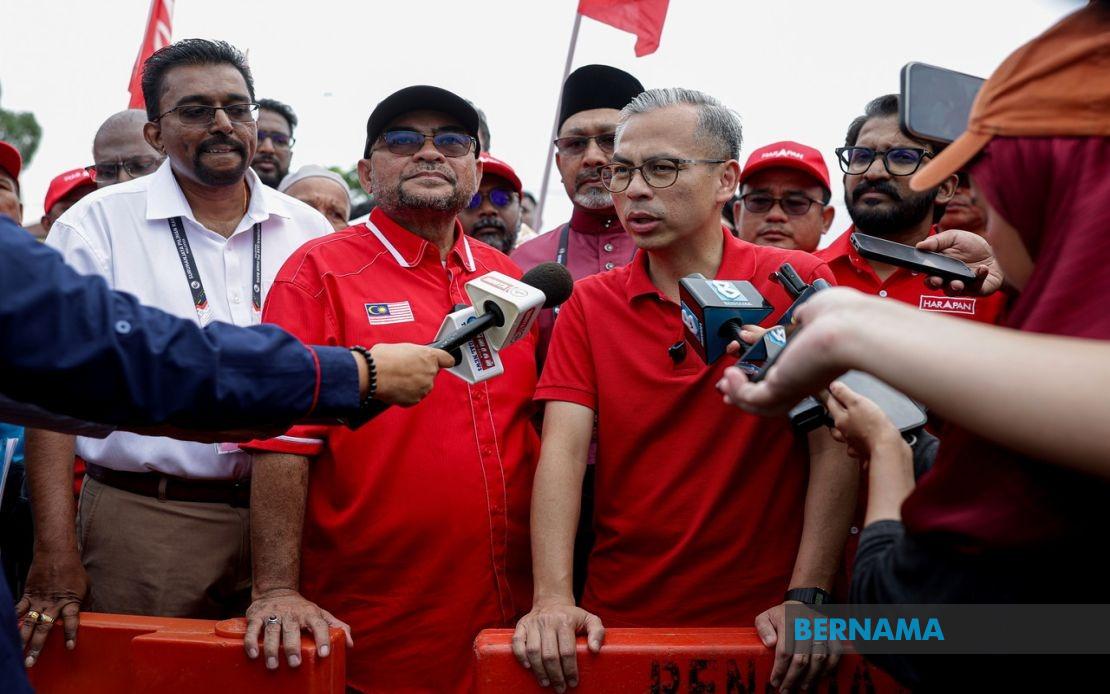
The Pakatan Harapan coalition is staking its fortunes in the Negeri Sembilan state election on a straightforward message: the proven administrative competence of Menteri Besar Datuk Seri Aminuddin Harun has delivered tangible prosperity to the state, and voters should endorse his continued leadership. Datuk Seri Fahmi Fadzil, the PH communications director and federal Communications Minister, articulated this strategy at the conclusion of candidate nominations in Jempol, framing the election as a referendum on whether Negeri Sembilan should maintain the trajectory established since 2018 or risk disruption through a change in government.
This emphasis on continuity represents a shift from personality-driven or opposition-focused campaigning towards a performance-based narrative. Fahmi highlighted concrete indicators that PH intends to brandish throughout the two-week campaign period: a notable expansion in zakat collections, strengthened revenue streams for the state treasury, and sustained foreign direct investment flows that have culminated in major infrastructure projects including a new port facility. These metrics, party strategists believe, provide quantifiable evidence that governance under Aminuddin—whom supporters affectionately call Tok Min—has generated measurable economic benefits beyond mere political rhetoric.
The framing carries particular significance for a coalition that has governed Malaysia federally since 2018, weathered internal tensions, and faced persistent challenges in maintaining voter confidence. By anchoring the Negeri Sembilan campaign to a state-level success story, PH seeks to demonstrate that its administrative competence extends beyond the federal sphere and translates into improved living standards and economic opportunity at the grassroots level. This narrative becomes especially important when the coalition confronts questions about governance effectiveness or faces criticism from rival coalitions.
The four-seat battleground in the Jempol parliamentary constituency—encompassing Serting, Jeram Padang, Bahau, and Palong—will test this message across constituencies with varying demographic profiles and economic priorities. In Jeram Padang, where PH candidate G. Manivannan will face a four-way contest, the coalition intends to concentrate on youth employment concerns, a perennial grievance that resonates particularly among younger voters seeking meaningful economic pathways. Manivannan, a lawyer serving as political secretary to Prime Minister Datuk Seri Anwar Ibrahim, represents the type of professional-class candidate PH deploys to signal competence and modern governance.
The competitive landscape in these four constituencies reflects Negeri Sembilan's broader political complexity. Serting will witness a three-way race between PH's Yaacob Mahmood, incumbent Mohd Fairuz Mohd Isa of Perikatan Nasional, and Muhammad Noraffendy Mohd Salleh of Bersatu. Palong similarly features three contenders: Datuk Mustapha Nagoor of Barisan Nasional, Muhammad Zahin Zinal Abidin of PH, and Rebin Birham representing Bersatu. Bahau presents a more straightforward contest between DAP's incumbent Teo Kok Seong and Chong Fui Ming of MCA's Barisan Nasional. The fragmentation across these seats, with Perikatan Nasional, Bersatu, and Barisan Nasional each contesting multiple positions, complicates the electoral arithmetic and potentially works to PH's advantage if the opposition vote fractures.
Fahmi's emphasis on responsible campaigning and strict adherence to ethical boundaries—explicitly cautioning against discussing the three Rs (Religion, Race, and Rulers) or circulating false information—reflects heightened sensitivity to polarisation that has characterised Malaysian politics in recent years. As Communications Minister, Fahmi positioned himself as a guardian of electoral integrity, signalling that PH intends to contest these seats through substantive policy discussion rather than divisive communal appeals. This rhetorical stance, whether translating into actual campaign practice, attempts to seize the moral high ground against rivals potentially perceived as engaging in more incendiary tactics.
The Election Commission's calendar—designating July 28 for early voting and August 1 as polling day—provides a compressed campaign window that favours campaigns centred on simple, easily communicated messages. PH's decision to anchor its entire effort to Aminuddin's economic record reflects strategic calculation that complex narratives about administrative accomplishment can be distilled into accessible talking points about improved state finances, new investment, and job creation. This approach differs markedly from oppositional campaigns that might emphasise what rivals have failed to deliver or systemic failings warranting a change in government.
For Malaysia's broader political economy, the Negeri Sembilan contest carries implications extending beyond the state's immediate governance structure. A decisive PH victory would reinforce the narrative of coalition consolidation and administrative stability under federal leadership, potentially translating into voter confidence at future national contests. Conversely, if opposition forces achieve unexpected breakthroughs, particularly through Bersatu or Perikatan Nasional candidates capturing seats, it would signal cracks in the PH coalition's appeal and reinvigorate rivals claiming that alternative configurations deserve national consideration. The result will substantially influence internal calculations within PH regarding which strategic emphasis—continuity, competence, or anti-establishment messaging—resonates most powerfully with Malaysian voters.
The state election also tests whether PH's federal legitimacy translates seamlessly to state-level contests, or whether voters compartmentalise their preferences across governance tiers. Negeri Sembilan, as a relatively prosperous state with moderate urbanisation and a diversified economy, may be receptive to performance-based arguments more readily than constituencies facing acute economic distress. However, PH cannot assume that positive macroeconomic indicators automatically translate into electoral support, as voter behaviour reflects complex calculations encompassing local grievances, service delivery satisfaction, and broader political sentiment that extends beyond economic metrics alone.

