The upcoming Negeri Sembilan state election scheduled for August 1 represents a significant shift in the electoral dynamics of Malaysia's most compact state, with the political landscape fragmenting dramatically from previous contests. Of the 36 State Legislative Assembly seats contested, only 11 will feature straight fights between two candidates—a stark decline from the 27 uncontested races in 2023—while the number of three-cornered contests has nearly tripled to 21 seats. Two constituencies will witness four-way battles and, in a historic development, two seats will see five-cornered contests, marking the first time such complex electoral configurations have emerged in Negeri Sembilan state politics.
The shift towards multi-cornered contests reflects deepening fragmentation within Malaysia's political landscape, driven partly by Bersatu's continued attempts to assert influence beyond its base and the emergence of smaller, niche parties contesting for representation. The decline in straight fights indicates that no coalition or party can claim overwhelming dominance across the state, forcing candidates from multiple political streams to compete simultaneously in most constituencies. This atomisation of the electoral space may complicate voter decision-making and potentially lead to victories achieved with lower vote shares, particularly where opposition blocs fail to coordinate.
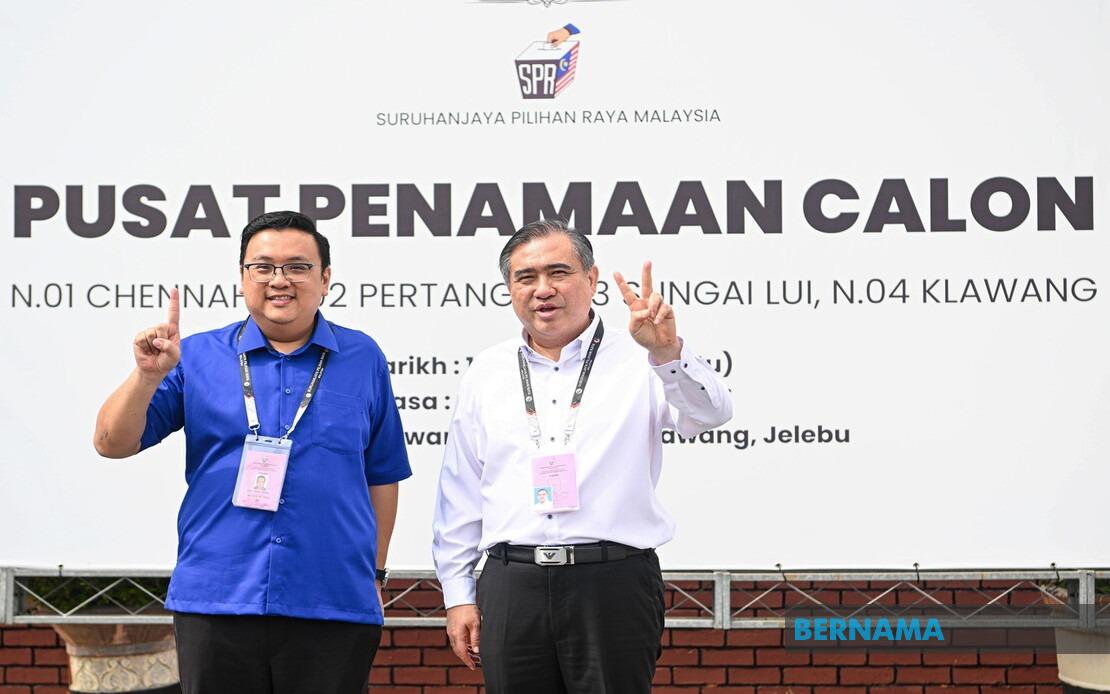
Among the straight contests, high-profile figures will demonstrate their personal appeal and organisational strength. Transport Minister Anthony Loke, serving as DAP secretary-general, will carry Pakatan Harapan's banner in Chennah against BN's Siow Kong Choon, signalling DAP's confidence in retaining this urban-leaning seat. Meanwhile, UMNO deputy president and Foreign Minister Datuk Seri Mohamad Hasan defends Rantau for BN against Pakatan's Dr Azizul Hakim Mahdi, suggesting BN views this constituency as winnable despite the broader trend towards three-way races. These showcase contests will attract national attention and potentially influence voter sentiment across the state.
The Linggi state seat presents a compelling three-way clash that epitomises current Negeri Sembilan dynamics. PKR vice-president and Negeri Sembilan Menteri Besar Datuk Seri Aminuddin Harun leads the incumbent Pakatan coalition challenge, but faces determined opposition from BN's Datuk Mohd Faizal Ramli and Bersatu's Zamri Md Said. A strong Bersatu showing here could fracture the Malay-Muslim vote sufficiently to change the seat's trajectory, demonstrating how third-party entry reshapes calculations in constituencies previously considered settled. The presence of a sitting Menteri Besar in a three-cornered contest underscores vulnerability that would have seemed improbable in simpler two-sided contests.
Bersatu's consistent insertion into competitive races—appearing in nearly all multi-cornered contests—reflects the party's broader strategy to maintain political relevance and leverage its historical connections to UMNO and Malay politics. The party fields candidates even where victory appears unlikely, apparently prioritising vote-splitting and signalling capacity to contest over genuine seat prospects. This approach risks consolidating opposition votes in seats where Bersatu might otherwise abstain, potentially benefiting Pakatan in constituencies where the three-way split benefits the incumbent.
The Klawang seat features an intriguing generational dimension, with Danni Rais, son of veteran politician Tan Sri Rais Yatim, representing Perikatan Nasional against incumbent Datuk Bakri Sawir of Pakatan and Bersatu's Muhammad Adib Musa. Danni Rais's entry suggests PN's ambition to rebuild cadre strength and leverage family political networks, particularly among older Malay voters nostalgic for figures associated with earlier establishment politics. His candidacy serves notice that PN views Negeri Sembilan as contested territory worthy of high-profile deployments.
The four-cornered contests in Jeram Padang and Rahang introduce even greater complexity. Jeram Padang's four-way race includes Parti Orang Asli Malaysia's Dayana Dal, indicating indigenous representation attempts gaining traction in specific constituencies. Rahang's contest features Parti Sosialis Malaysia's S. Thinagaran, suggesting leftist alternatives continue finding openings despite Malaysia's restricted political environment. These smaller parties' participation, though unlikely to win, further divides available votes and complicates projection modelling.
The two five-cornered contests in Nilai and Sri Tanjung represent unprecedented complexity. Nilai incumbent J. Arul Kumar of Pakatan faces BN's Lai Chien Kong, Bersatu's Datuk V. Saravana Kumar, Berjasa's Zamani Ibrahim, and independent Omar Mohd Isa. Sri Tanjung's incumbent Datuk Dr G. Rajasekaran confronts similarly crowded competition. These seats illustrate how multiple small parties—including those addressing specific community concerns or religious constituencies—now possess sufficient organisational reach to field candidates, fragmenting once-predictable electoral blocs. Victories in such races could legitimately command less than 30 percent support, raising questions about mandate clarity.
The electoral administration framework supports participation from this expanded field. The Election Commission has scheduled early voting for July 28, with main polling on August 1. A total of 889,490 electors are eligible to vote, comprising 867,151 ordinary voters alongside 16,884 military personnel and their spouses, and 5,455 police officers. This voter base of roughly 890,000 maintains Negeri Sembilan's status as Malaysia's smallest state by electorate, making individual candidate efforts more personalised than in larger states.
From a Malaysian perspective, Negeri Sembilan's electoral fragmentation foreshadows trends likely emerging in other state and federal contests. The state effectively serves as a political laboratory where coalition strategies, third-party viability, and multi-cornered contest dynamics can be observed before playing out nationally. A strong Pakatan performance despite reduced straight fights would suggest their coalition survives fragmentation, whilst significant BN gains would demonstrate the government coalition's capacity to exploit split opposition votes. Bersatu's performance across three-way races will indicate whether the party maintains meaningful political salience or remains primarily a vote-splitting nuisance without genuine victory prospects.

