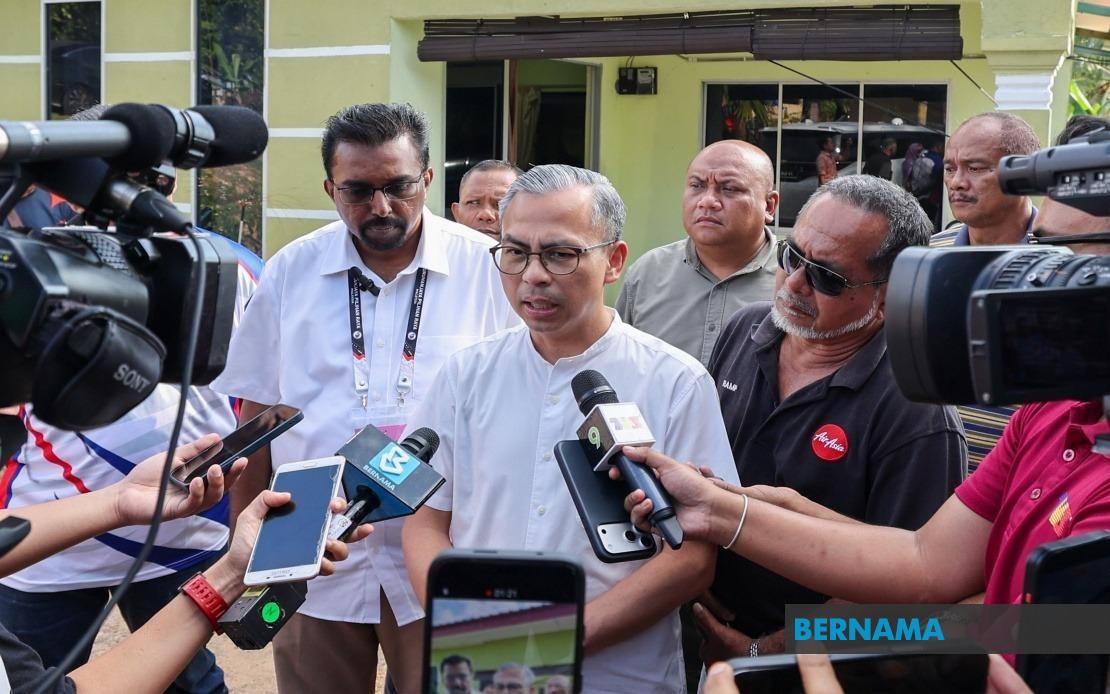
The Negeri Sembilan state election campaign has not generated significant controversy on social media platforms so far, Communications Minister Datuk Seri Fahmi Fadzil said today, providing an interim assessment of the regulatory environment as polling approaches. Since campaigning commenced, the Malaysian Communications and Multimedia Commission has logged only 16 complaints—a relatively modest number given the scale of political engagement expected during state elections. This suggests that candidates, supporters and the general public have largely adhered to established guidelines, though enforcement agencies remain vigilant as the campaign enters its critical phase.
Of the complaints received, 14 centred on basic telecommunications infrastructure problems rather than breaches of electoral or platform conduct rules. The remaining two involved fraudulent social media accounts, a category that typically draws stricter scrutiny from platform operators and regulators. The distinction between technical network failures and deliberate misconduct is significant for policymakers assessing whether current regulatory frameworks are functioning effectively or whether the relatively low complaint volume reflects genuine compliance versus underreporting of violations.
Fahmi emphasised the public's role in maintaining electoral integrity, calling on citizens to report potentially problematic content directly to the social media platforms themselves before escalating matters to MCMC. This two-tier approach reflects Malaysia's preference for industry self-regulation as a first resort, delegating responsibility to Meta, TikTok, X and other operators to enforce their own community standards before government intervention becomes necessary. The minister's guidance suggests confidence in platform responsiveness, though it also places the burden of initial investigation on ordinary users rather than on proactive monitoring by authorities.
With six days of campaigning completed and approximately a week remaining before polling on August 1, Fahmi acknowledged that the campaign calendar typically sees intensified online activity during the final stretch. The 72 to 96 hours immediately preceding the election traditionally trigger a surge in social media posts from political parties, independent candidates and grassroots supporters seeking to influence undecided voters. This closing period historically presents the greatest risk of misinformation, disinformation and coordination problems that regulators find most challenging to contain.
The minister expressed cautious optimism about the campaign's trajectory while flagging concerns about what may yet transpire in the campaign's final weekend. His acknowledgment of typical patterns suggests MCMC is prepared for escalated activity but also hints at the difficulty authorities face in policing a decentralised information environment where verification happens slowly and false narratives can spread rapidly before fact-checks gain traction. The challenge intensifies for a state-level election, where voters may encounter less established fact-checking resources compared to national campaigns.
Beyond social media governance, Fahmi identified persistent connectivity gaps in rural and semi-rural areas as a separate but equally pressing concern. His visit to Felda Palong 1 revealed that internet coverage problems concentrated along main access roads rather than within residential settlements themselves—a finding that points to incomplete infrastructure deployment in transitional zones. Poor connectivity in these areas creates problems extending far beyond election-period communications; it affects residents' ability to access government services, participate in the digital economy and respond effectively to emergencies.
The minister instructed the MCMC to prioritise remedying the coverage gaps, framing adequate internet access as a basic necessity on par with road infrastructure. His assertion that internet should be available wherever roads exist reflects an updated conception of essential services in Malaysia, acknowledging that digital connectivity now underpins economic opportunity and social participation. The formulation also carries an implicit critique of telecommunications companies' deployment strategies, suggesting that commercial incentives alone have failed to deliver universal coverage in less densely populated areas.
Telecommunications firms committed to network-sharing arrangements through a memorandum of understanding signed last year, but implementation has proceeded sluggishly in addressing coverage disparities. The regulatory gap between signing commitments and achieving tangible infrastructure improvements reveals ongoing coordination problems in Malaysia's telecom sector. Fahmi's frustration at the slow pace suggests that voluntary agreements may lack sufficient enforcement mechanisms or that companies face competing financial pressures that decelerate rural expansion projects.
To accelerate connectivity improvements, authorities have identified multiple solutions operating in parallel. New telecommunications tower construction remains foundational but requires substantial capital investment and faces site acquisition challenges. Optimisation of existing infrastructure offers quicker gains through technological upgrades requiring less upfront expenditure. Satellite services such as Starlink represent an interim bridging technology, providing coverage in remote areas while permanent terrestrial infrastructure is being developed—though satellite solutions typically involve higher latency and different coverage characteristics than ground-based networks.
Fahmi also highlighted improvements to customer feedback systems as part of the broader push toward better telecommunications service delivery. Leveraging artificial intelligence to enable users to track complaint status transforms complaint handling from an opaque administrative process into a transparent service where customers can monitor progress and escalate issues if necessary. This technological enhancement addresses a persistent frustration in Malaysian telecommunications—the sense that complaints disappear into bureaucratic systems without resolution or meaningful feedback.
The state election campaign serves as a focused case study for regulatory coordination across multiple domains: electoral integrity, social media governance, and basic digital infrastructure all intersect at this moment. The modesty of social media complaints may reflect genuine compliance or may indicate that current monitoring systems fail to capture subtle forms of manipulation. Meanwhile, the parallel infrastructure deficits in rural areas raise questions about equitable election access—voters in poorly-connected regions may struggle to research candidates or participate in online campaign discussions, potentially skewing the information environment that shapes electoral decisions.
Polling takes place on August 1, with early voting scheduled for July 28. The six-day snapshot of relative social media compliance does not guarantee the final weeks will remain orderly, but it provides baseline evidence that Malaysia's multi-layered regulatory approach—combining platform self-regulation, government monitoring and public reporting—has maintained sufficient equilibrium during the campaign's opening phase. The minister's warnings about the final days suggest authorities are preparing for intensity rather than expecting continued calm.

