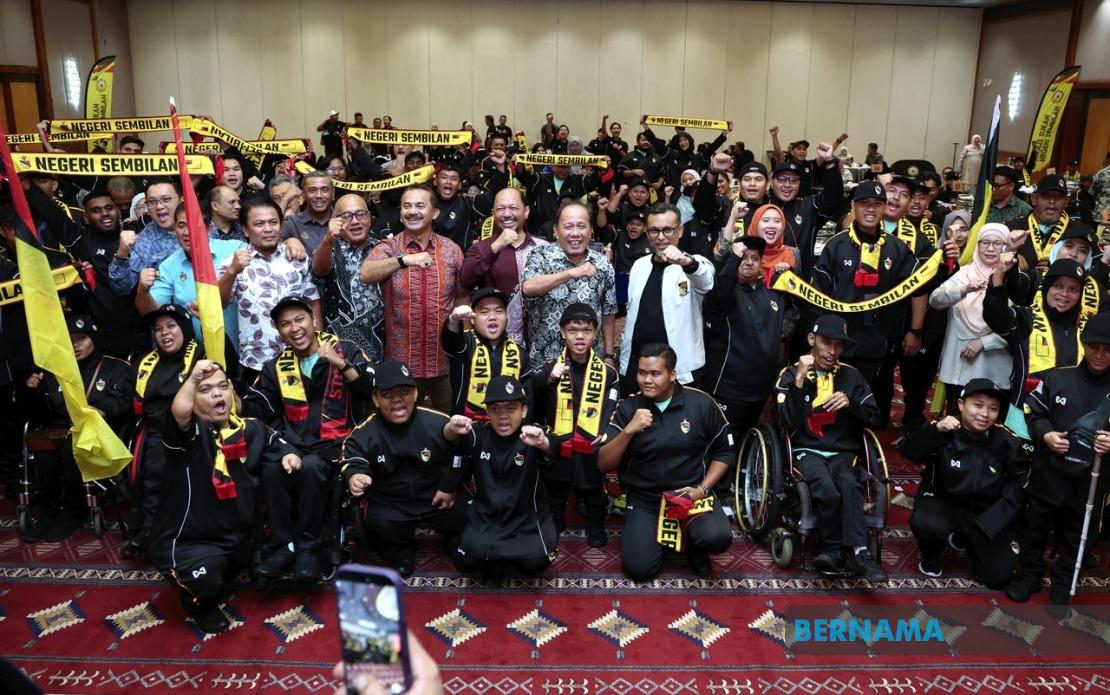
Negeri Sembilan is targeting 12 gold medals from its 80 participating athletes at the 2026 Para Malaysia Games (Para SUKMA) set to commence on September 5 in Selangor. The ambitious objective comes as the state attempts to recover from an underwhelming performance at the regular SUKMA 2026 competition, which concluded earlier this week, signalling a determined push to restore competitive standing among Malaysia's states.
Menteri Besar Datuk Ismail Lasim highlighted the significance of this medal target, framing it not simply as a numerical goal but as a reflection of the dedication, discipline and comprehensive preparation demonstrated by athletes during their training phases. The state leadership expressed confidence that the contingent possesses the capability to realise this objective, emphasising the calibre and determination evident within the para athlete community.
The performance gap between SUKMA 2026 and previous competitions has motivated the renewed focus on Para SUKMA. At the regular SUKMA 2026 Games, Negeri Sembilan's contingent secured seven gold medals from a total medal haul of 48, representing a substantial decline compared to their achievement two years prior when the state captured 19 gold medals from 56 total medals. This significant contraction in medal performance created urgency around establishing realistic yet challenging targets for the Paralympic-focused competition.
Drawing on historical benchmarks, Negeri Sembilan's para athletes achieved considerable success at the 2024 Para SUKMA Games held in Sarawak, capturing 14 gold medals alongside 19 silver and 20 bronze medals. This prior accomplishment provides a tangible reference point for assessing the feasibility of the current 12-gold target, which sits between the 2024 performance and the general SUKMA 2026 results. The comparison underscores how para competitions have historically represented stronger competitive domains for the state compared to mainstream SUKMA events.
Menteri Besar Lasim emphasised that every para athlete must mobilise their complete capability and commitment to achieve the envisioned outcomes. He characterised para athletes as individuals possessing extraordinary competitive spirit and resilience, with the potential to rehabilitate the state's sporting reputation through outstanding individual and collective performances. This rhetorical framing seeks to inspire confidence and motivation among the contingent ahead of the Games.
The state administration is implementing additional incentive mechanisms to encourage medal-winning performances at Para SUKMA 2026. These financial and recognition-based rewards are designed to reinforce the significance of the medal targets and provide tangible recognition for athletes who deliver results. Such incentive structures reflect broader Malaysian sporting practice whereby states and federal agencies attempt to drive elite performance through performance-based compensation.
The Para SUKMA Games represent a specialised competitive platform focusing on athletes with physical and sensory disabilities across multiple sporting disciplines. These competitions have grown increasingly prominent within Malaysia's sporting calendar, providing dedicated pathways for para athletes and attracting comparable investment and attention as mainstream SUKMA events. The Selangor hosting presents organisational and logistical considerations specific to staging inclusive sporting competitions at scale.
For Negeri Sembilan specifically, Para SUKMA 2026 represents a critical opportunity to demonstrate competitive capability in a domain where the state has previously performed respectably. The contrast with SUKMA 2026 results suggests that para athletes may have benefited from more focused preparation or that certain sports within the para competition framework align better with the state's sporting infrastructure and athlete development systems. Understanding these differential performances could yield insights for optimising resource allocation and training methodologies.
The state's sporting administration, represented through the State Youth and Sports Development Action Committee and the Negeri Sembilan Sports Council, has coordinated comprehensive preparation activities to support athlete readiness. The formal flag handover ceremony to the Chef de Mission and Team Managers symbolised the transition toward active competition phase and reinforced institutional commitment to the Games. This administrative engagement signals systematic approach to competition preparation rather than ad-hoc participation.
Regionally, Para SUKMA outcomes carry implications for Malaysia's disability sports development trajectory and inclusive sporting culture. Strong para competition performance at state level contributes toward building depth in the national para athlete talent pipeline and demonstrates commitment to Paralympic pathways. Negeri Sembilan's stated ambitions reflect broader Malaysian recognition that para sports merit equivalent investment and strategic focus as conventional sporting competitions.
The 12-gold target reflects realistic optimism grounded in prior performance data and current athlete cohort capabilities. Achievement of this objective would represent substantial success while remaining attainable based on historical precedent. Conversely, underperformance would trigger analysis regarding preparation adequacy, athlete selection and training programme effectiveness—feedback mechanisms that inform future Para SUKMA cycles.
As Negeri Sembilan prepares its contingent for departure to Selangor, the Games represent both competitive challenge and opportunity for demonstrating resilience following SUKMA 2026 disappointment. The concentrated focus on para athletes provides psychological and practical scaffolding for delivering strong performance in a dedicated platform, potentially restoring momentum and confidence within the state's sporting community as preparation continues toward the September 5 commencement.

