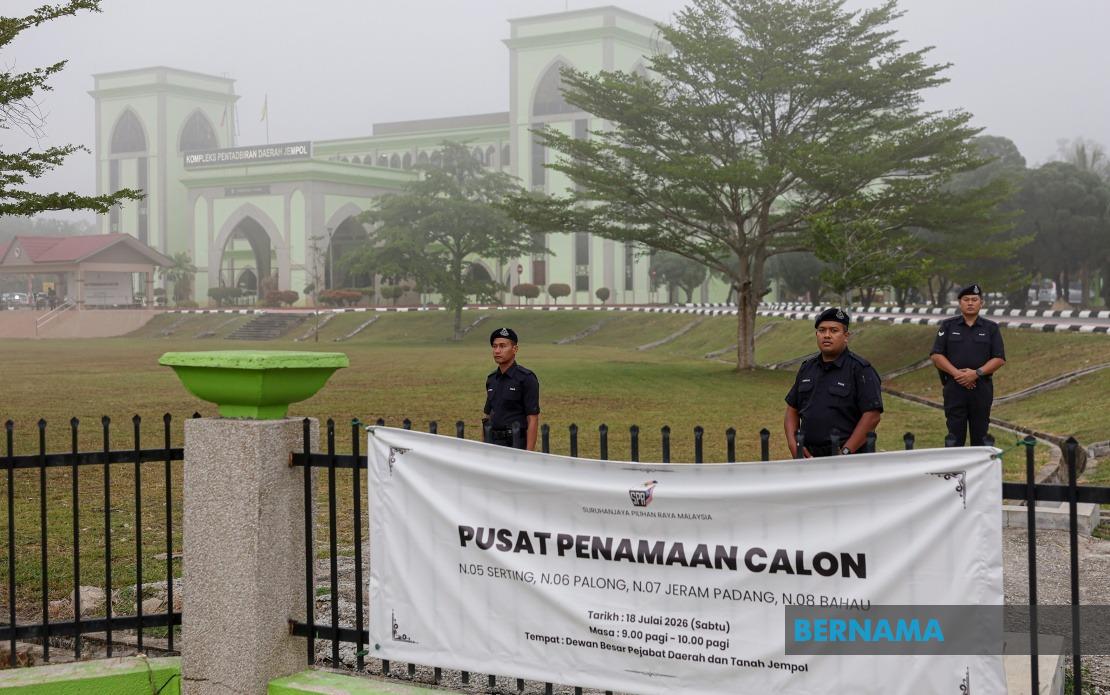
The Negeri Sembilan state election entered its decisive phase today as nomination proceedings commenced across the state's eight designated centres, each opening their doors at 9am in a coordinated start to the electoral process. This milestone marks the formal beginning of what promises to be a closely watched contest between the incumbent Pakatan Harapan administration, the opposition Barisan Nasional coalition, and rising challenger Perikatan Nasional.
The nomination window, compressed into a single hour running until 10am, represents the compressed but critical window in which prospective candidates must formally register their intent to contest. Once this period closes, returning officers stationed at each centre will immediately release the official roster of eligible candidates, providing voters and political observers with their first clear picture of the competitive landscape they will navigate in the coming weeks.
The Election Commission has carefully orchestrated the electoral calendar to allow maximum preparation time for all stakeholders. Following today's candidate announcement, campaigning will commence immediately and sustain for precisely 14 days, culminating at 11:59pm on July 31. This fortnight represents the only period in which candidates may conduct public outreach, organise rallies, and direct media messaging toward the state's voters. The compressed timeline reflects electoral best practice, ensuring neither excessive campaign fatigue nor insufficient time for public consideration.
Polling itself will occur on August 1, preceded by an early voting window on July 28. This staggered approach accommodates military personnel and police officers who serve across Negeri Sembilan, granting them advance opportunities to cast ballots. According to the Election Commission's most recent voter roll data, the state encompasses 889,490 registered electors spread across its seven districts. This constituency comprises 867,151 ordinary voters, supplemented by 16,884 military and police personnel eligible for early voting. The numerical scale underscores Negeri Sembilan's significance as a mid-sized state electorate within Malaysia's political architecture.
Securing the nomination process itself required substantial security deployments. Datuk Alzafny Ahmad, the Negeri Sembilan police chief, confirmed that 2,393 officers have been strategically positioned across all eight nomination centres to maintain public order and prevent disruptions. This security presence, while prominent, reflects routine electoral protocol rather than extraordinary precautions, suggesting authorities anticipate an orderly process devoid of significant unrest.
Weather conditions throughout the state have remained favourable, eliminating any potential logistical complications that adverse meteorological circumstances might otherwise introduce. Clear skies and temperate conditions across all seven districts have facilitated smooth operations at nomination venues and will continue supporting campaign activities throughout the fortnight ahead.
The 16th state election follows the formal dissolution of the Negeri Sembilan State Legislative Assembly on June 5, a procedural step that required and obtained the formal consent of Tuanku Muhriz Tuanku Munawir, the Yang Dipertuan Besar of Negeri Sembilan. This constitutional requirement ensures electoral legitimacy and proper deference to the state's traditional ruler, maintaining the ceremonial dimensions integral to Malaysia's federal structure.
Context matters profoundly for understanding this election's trajectory and significance. The immediately preceding 15th state election, conducted in 2023, established the current political equilibrium. Pakatan Harapan secured dominance with 17 of the 36 available seats, translating into governmental control and executive prerogative over state administration. Barisan Nasional, the long-dominant national coalition, managed only 14 seats, reflecting its diminished position following the 2018 federal watershed that unseated the coalition from national power. Perikatan Nasional, representing the Malay-Islamic-focused political tendency, captured five seats, establishing itself as a secondary force in state politics.
For Malaysian observers and Southeast Asian watchers, this Negeri Sembilan contest carries implications extending beyond the state's borders. As a mid-tier electorate neither overwhelmingly large nor negligibly small, Negeri Sembilan serves as a bellwether for Malaysian political sentiment. The state's diverse demographic composition—encompassing substantial Malay, Chinese, and Indian communities—mirrors national demographic patterns. Electoral outcomes here frequently signal broader shifts in voter preferences that cascade through subsequent national elections.
The incumbent Pakatan Harapan government enters this election defending not only a comfortable 17-seat majority but also the broader legitimacy derived from national-level support that brought the coalition to federal power. For Barisan Nasional, this election represents an opportunity to demonstrate viability in state-level contests and build momentum toward potential future national resurgence. Perikatan Nasional, meanwhile, will endeavour to expand beyond its current five seats, positioning itself as an essential coalition partner in potential post-election negotiations.
The stakes extend beyond simple arithmetic majorities. Control of state resources, development priorities, and patronage networks hanging on electoral outcomes will shape Negeri Sembilan's trajectory across the next electoral cycle. Furthermore, the state election serves as a testing ground for campaign messaging, electoral strategies, and organisational effectiveness that all three coalitions will refine before future national contests.
With nomination proceedings now underway and the candidate roster imminent, political analysis and public scrutiny will intensify substantially. The coming 14-day campaign period will witness intensive competition as contenders vie for the favour of nearly 890,000 voters whose decisions will reconfigure the state's political governance.

