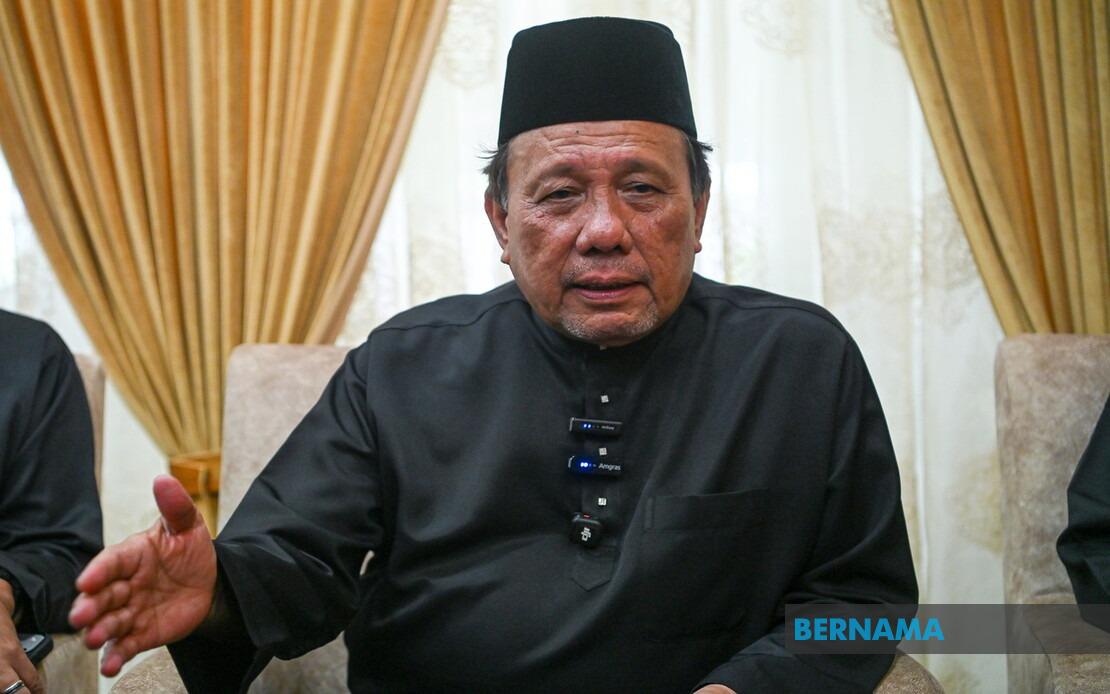
Negeri Sembilan Menteri Besar Datuk Ismail Lasim has taken the reins as chairman of Negeri Sembilan Football Club (NSFC) in a move that reunites the state's political leadership with its sporting aspirations. The appointment, which became effective on August 14, marks a significant transition for the club following the resignation of Datuk Seri Aminuddin Harun, signalling renewed commitment from the state government to elevate the organization's competitive standing and institutional foundation.
The decision carries particular resonance within Negeri Sembilan's football community, as Ismail brings a wealth of experience cultivated over multiple decades in administrative and management roles. During the 1990s and early 2000s, he served as the state team manager, a position that afforded him intimate knowledge of the club's operational mechanics, player development systems, and the broader sporting culture that defines football in the state. This hands-on experience proved instrumental in his elevation to the role, distinguishing him from candidates lacking such direct institutional familiarity.
Tunku Besar Tampin Tunku Syed Razman Tunku Syed Idrus Al-Qadri, president of the Negeri Sembilan Football Association (PBNS), articulated confidence in Ismail's appointment, emphasizing the incoming chairman's deep roots within the state's footballing ecosystem. The PBNS chief underscored that Ismail's historical involvement—which extended to serving as PBNS vice-president in 2010—positions him uniquely to navigate the complexities of modern club governance while maintaining continuity with established traditions and values that characterize Negeri Sembilan football.
The appointment reflects a broader strategic repositioning of NSFC within Malaysia's football landscape. With Ismail now at the helm, the club aims to crystallize a comprehensive professional framework that emphasizes sustainable operations and competitive performance across multiple dimensions. This multifaceted approach transcends traditional notions of on-field success, incorporating institutional maturity, financial prudence, and long-term strategic planning—priorities that increasingly define successful football clubs regionally and internationally.
Crucially, Ismail's elevation to the chairmanship carries implications for stakeholder coordination within Negeri Sembilan's sports governance structure. As Menteri Besar, he occupies a position of considerable political influence, enabling him to facilitate deeper collaboration between NSFC, the PBNS, state government resources, and external stakeholders invested in the club's trajectory. This convergence of political authority and sporting responsibility potentially streamlines decision-making processes and resource allocation—advantages that could prove transformative for an organization seeking operational efficiency and competitive credibility.
The PBNS president identified several pillars that will anchor NSFC's development strategy under Ismail's leadership. Player development initiatives constitute a foundational priority, reflecting recognition that sustainable competitiveness emerges from robust youth academies and talent identification systems. Concurrently, the club intends to strengthen its organizational architecture, ensuring that administrative, coaching, and support staff operate within clearly defined structures that promote accountability and professional standards. Such institutional reinforcement typically proves prerequisite to achieving competitive consistency at higher levels of Malaysian football.
Commercial sustainability emerged as another explicit focal point within the development framework outlined by PBNS leadership. Malaysian football clubs historically struggle with financial viability, facing pressures to generate revenue streams beyond government subventions and traditional sponsorship arrangements. By prioritizing commercial development, NSFC seeks to cultivate a diversified financial base that insulates the organization from cyclical budget constraints and positions it for organic growth. This commercial reorientation aligns with modern football governance practices increasingly adopted throughout Southeast Asia.
Community engagement and supporter relations represent the final dimension of NSFC's stated developmental priorities. Football clubs function optimally when they maintain authentic connections with fan bases and broader communities, drawing strength from grassroots enthusiasm and civic pride. Ismail's appointment, given his political standing and established credibility within Negeri Sembilan society, potentially facilitates enhanced community integration and supporter mobilization—intangible assets that contribute meaningfully to institutional resilience and organizational culture.
The timing of this appointment carries additional significance within Malaysia's broader sports development context. As national and state governments increasingly recognize football's capacity to generate economic activity, social cohesion, and international prestige, leadership transitions within clubs often reflect deliberate efforts to elevate organizational performance. Ismail's appointment suggests that Negeri Sembilan state authorities regard NSFC as a vehicle for advancing state interests, warranting direct political engagement and strategic oversight at senior levels.
Looking forward, Ismail faces the formidable challenge of translating his historical experience and current political influence into tangible competitive improvements and organizational development. The football landscape in Malaysia has become considerably more professionalized and competitive than during his previous managerial tenures decades earlier, requiring him to navigate modern coaching methodologies, player compensation structures, and regulatory frameworks governing domestic competition. Success will depend substantially on his capacity to synthesize historical insights with contemporary best practices in football administration.
For Malaysian football observers and stakeholders across Southeast Asia, the appointment underscores broader trends of heightened government engagement in club-level sports governance. Whether such political involvement ultimately strengthens institutional performance or introduces complications remains an evolving question within Malaysian football discourse. Ismail's tenure at NSFC may therefore provide instructive lessons regarding optimal governance models for state-affiliated sporting organizations operating within Malaysia's competitive football ecosystem.

