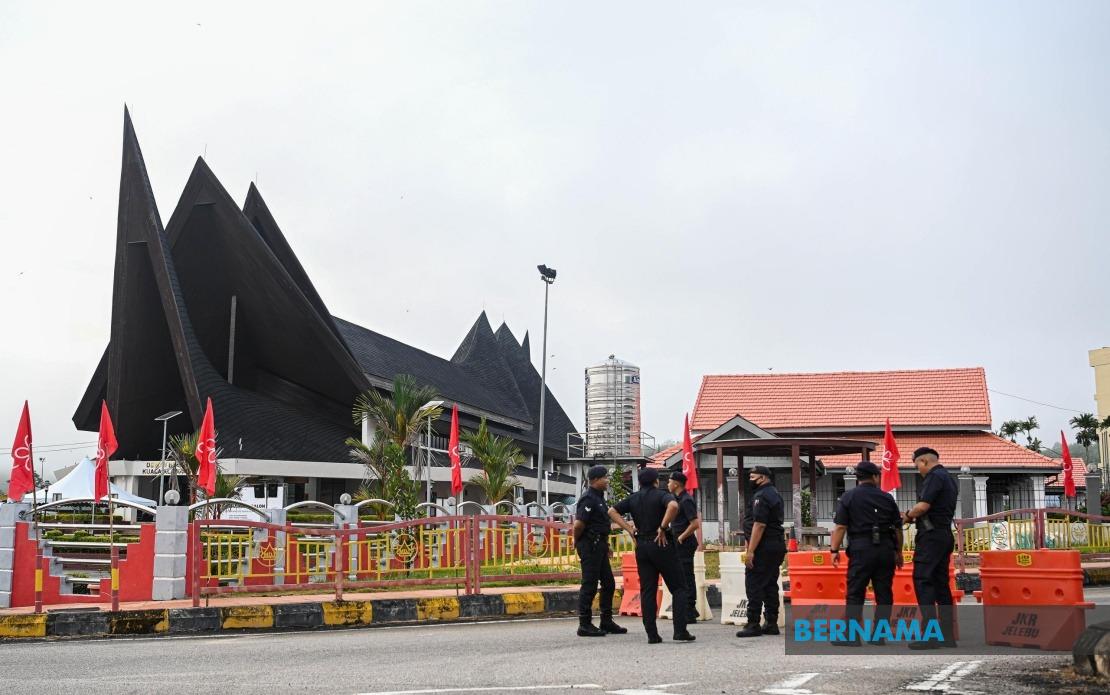
The Negeri Sembilan State Election nomination process commenced on schedule this morning across eight centres throughout the state, with clear weather facilitating an orderly start to the critical phase before polling day on August 1. Election Commission officials had completed their preparations to ensure the nomination centres operated without disruption from 9 am to 10 am, the designated window for political parties to formally lodge their candidates. The state capital of Seremban and seven other locations served as the venues where representatives from contesting parties presented their nominees for the 36 state assembly seats.
Political activity was already evident well before the official commencement time, with journalists congregating at nomination centre compounds from as early as 7 am to document the proceedings. Party supporters and representatives began filtering in gradually throughout the morning, reflecting the competitive nature of this election cycle. The smooth operational environment created by the favourable weather conditions meant that the logistical arrangements put in place by the Election Commission faced no weather-related obstacles, allowing the process to unfold as planned without delays or complications.
The electoral landscape for this state contest involves a fragmented political environment with multiple coalitions and independent players vying for representation. Pakatan Harapan has committed to contesting all 36 seats, positioning itself as the most ambitious participant in terms of comprehensive state coverage. Barisan Nasional, traditionally a major force in Negeri Sembilan politics, has opted for a more selective strategy by fielding candidates in 25 seats, a deliberate choice that reflects its current strategic positioning in the state. Perikatan Nasional, the third significant coalition, has announced a limited slate of 11 candidates, suggesting a focused approach targeting specific constituencies.
Smaller political players have also entered the contest, with Parti Orang Asli Malaysia, Parti Sosialis Malaysia, and Parti Barisan Jemaah Islamiah Se-Malaysia each contesting a single seat. Most notably, Parti Pribumi Bersatu Malaysia has chosen to contest as a solo entity rather than within a coalition framework, fielding 24 candidates directly and allocating two seats to Parti Bersepakat Hak Rakyat Malaysia under the Bersatu logo. This arrangement demonstrates the complex internal dynamics within Malaysia's political ecosystem, where electoral cooperation extends beyond formal coalition structures into seat-sharing arrangements between aligned parties.
The dissolution of the 36-seat Negeri Sembilan State Assembly on June 5 set this electoral cycle in motion, with the Election Commission subsequently announcing the election schedule. Early voting has been designated for July 28, allowing military and police personnel, along with their spouses, to cast ballots prior to the general polling day. This two-stage voting structure accommodates the participation of uniformed personnel who may have deployment or operational constraints on the general election date.
The eligible voter base for this election encompasses approximately 889,490 individuals with voting rights in the state. This total comprises 867,151 ordinary voters registered in standard electoral rolls, supplemented by 16,884 military and police personnel and their spouses who are entitled to vote but subject to the early voting arrangement. The substantial voter population ensures that the election will generate a genuine democratic mandate reflecting the preferences of the majority across the state's diverse communities and constituencies.
The previous state election held in 2023 produced a result that saw Pakatan Harapan emerging as the single largest bloc with 17 seats, though short of the 19 seats required for a state government majority. Barisan Nasional secured 14 seats, positioning it as a significant opposition force, while Perikatan Nasional won five seats. This configuration highlighted the competitive multiparty nature of Negeri Sembilan politics and the potential for coalition negotiations in forming a state government. The 2023 outcome effectively made Negeri Sembilan a bellwether for coalition politics in Malaysia, as various permutations of political alignments proved possible depending on post-election developments.
For Malaysian political observers and voters in Negeri Sembilan, this election represents an opportunity to reassess performance and reorient political representation. The state has historically served as a testing ground for political trends that subsequently influence national-level politics. The campaign period and nomination process will likely reveal the extent to which voter sentiment has shifted since 2023, particularly regarding the performance of the incumbent Pakatan Harapan administration and the strategies being pursued by opposition coalitions seeking to recover lost ground or consolidate existing support bases.
The nomination process completion marks the formal transition to the active campaigning phase, during which political parties will intensify their outreach to voters. The clear weather conditions that characterised nomination day may symbolise a smooth progression toward the August 1 election, though political campaigns invariably generate turbulence and competition for voter attention. With early voting scheduled for July 28, the electoral timeline compresses the effective campaign period, requiring political parties to mobilise their resources and messaging efficiently to reach voters before they cast their ballots. The Negeri Sembilan election will provide valuable indicators of political sentiment in Malaysia's southwestern peninsula and may influence strategic calculations at the national political level.

