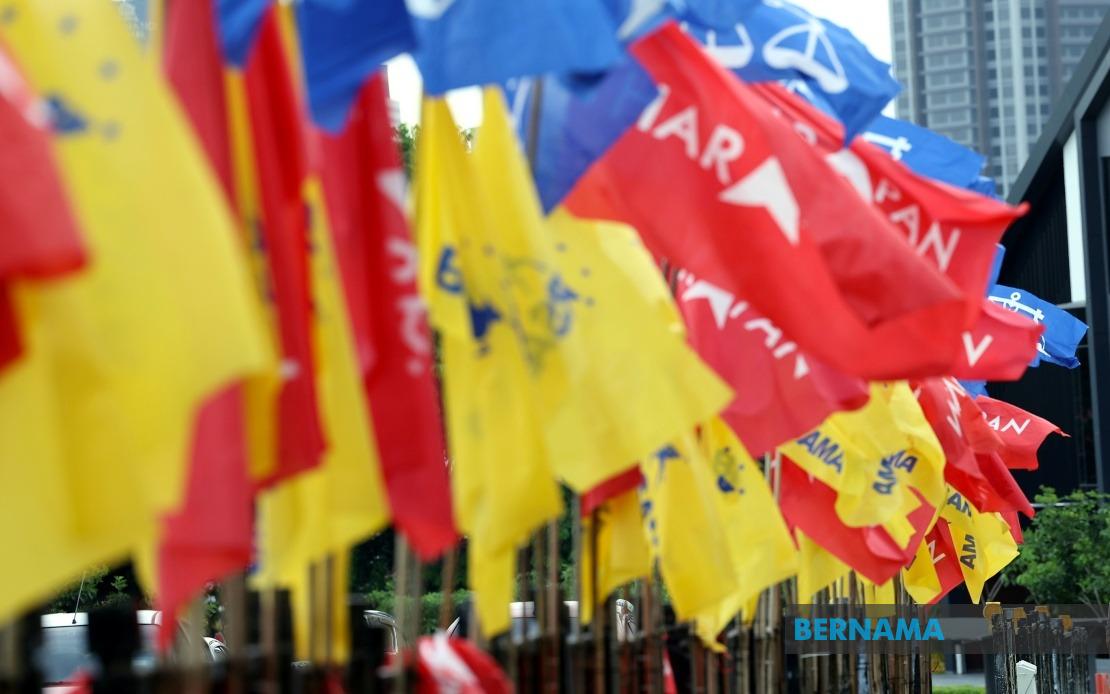
The Negeri Sembilan Palace has issued a formal appeal to all political parties participating in the 16th state election, instructing them to keep the royal institution entirely separate from their campaign strategies and public communications. The directive, issued through Datuk Azizi Mohamad Ali, Comptroller of the Negeri Sembilan Royal Household, represents a pre-emptive effort to insulate the monarchy from partisan political contestation during an increasingly heated electoral period.
Azizi's statement underscores a fundamental principle that Malaysia's constitutional framework has long enshrined: the political neutrality of the institution of the monarchy. He emphasised that the Negeri Sembilan Palace maintains strict impartiality toward all contending political factions and categorically rejects any association with particular parties or their agendas. This position reflects a broader constitutional convention that separates the symbolic, unifying role of the Crown from the competitive realm of electoral politics where temporary majorities gain power through democratic processes.
The royal household framed this neutrality as essential to the monarchy's broader social function. According to the palace's position, the Ruler and the royal family serve fundamentally as symbols of cohesion and continuity for the people of Negeri Sembilan. By maintaining distance from partisan contests, the institution preserves its capacity to transcend factional divides and represent all citizens equally, regardless of their electoral preferences. This symbolic role becomes particularly important during periods of political transition, when competing visions for governance might otherwise fragment public sentiment.
Crucially, the palace issued a blanket denial regarding any false claims linking the monarchy to specific political actors. Azizi explicitly stated that any allegations, statements, images, videos, or other materials suggesting that the Negeri Sembilan Palace, the Ruler, or members of the royal family endorse or support any political party constitute misinformation. This language suggests that the palace has already encountered attempts—whether deliberate or inadvertent—to appropriate royal legitimacy for electoral purposes, prompting this public clarification.
The comptroller's guidance extended beyond abstract principles to prescriptive instructions for campaign conduct. All candidates contesting the state election have been advised to eschew exploitation of what are commonly referred to as the three R's: religion, royalty, and race. These sensitive domains have historically been subject to inflammatory political rhetoric in Malaysian elections, and the palace's intervention acknowledges the particular vulnerability of the monarchy to instrumentalisation during emotionally charged campaigns. The palace's emphasis on ethical conduct and adherence to law reflects concern that competitive pressures might incentivise candidates to transgress established norms.
The timing of this intervention carries significance given the electoral calendar. The Negeri Sembilan State Legislative Assembly was dissolved on June 5 to facilitate the holding of the 16th state election. Early voting was scheduled for July 28, with the main polling day set for August 1. The palace's statement, issued on July 27, came just before the early voting phase commenced, suggesting a deliberate effort to establish clear boundaries before the most intensive phase of campaigning occurred. This placement maximised the likelihood that candidates and party operatives would encounter the directive before conducting their final campaign push.
The palace also appealed directly to the general public, requesting their cooperation in safeguarding the royal institution from misinterpretation or partisan exploitation. This outreach recognises that citizens themselves constitute a critical line of defence against the inappropriate politicisation of the monarchy. By encouraging people to reject unverified claims and to rely exclusively on official palace communications, the household sought to establish a communications framework within which accurate information could circulate and unfounded rumours could be efficiently countered.
For Malaysian observers, this statement illustrates the ongoing tension between democratic competitive politics and the institution of constitutional monarchy. While Malaysia's system provides for robust electoral contests between rival parties, it simultaneously preserves the monarchy as an institution standing above partisan contestation. This dual structure requires periodic reinforcement through formal statements like that issued by the Negeri Sembilan Palace, particularly during elections when pressures to mobilise all available symbolic resources become intense.
The directive also reflects broader patterns in Southeast Asian politics, where questions about the proper boundaries between democracy and traditional institutions continue to generate debate. The palace's appeal for campaigns conducted with prudence and ethical awareness suggests a view that electoral competition, while legitimate and necessary, must be constrained by deeper commitments to institutional respect and social harmony. In Negeri Sembilan's context, this means ensuring that even as parties vigorously contest power, they do so in ways that preserve public confidence in institutions that transcend any single government.
The palace's emphasis on official communication channels, finally, deserves attention as a governance response to the digital age. In an environment where social media enables rapid, unverified dissemination of claims, the palace sought to establish itself as the authoritative source for information about royal positions and activities. This strategy implicitly acknowledges that controlling narratives about the monarchy requires active engagement with contemporary information ecosystems, not merely passive reliance on traditional gatekeepers.

