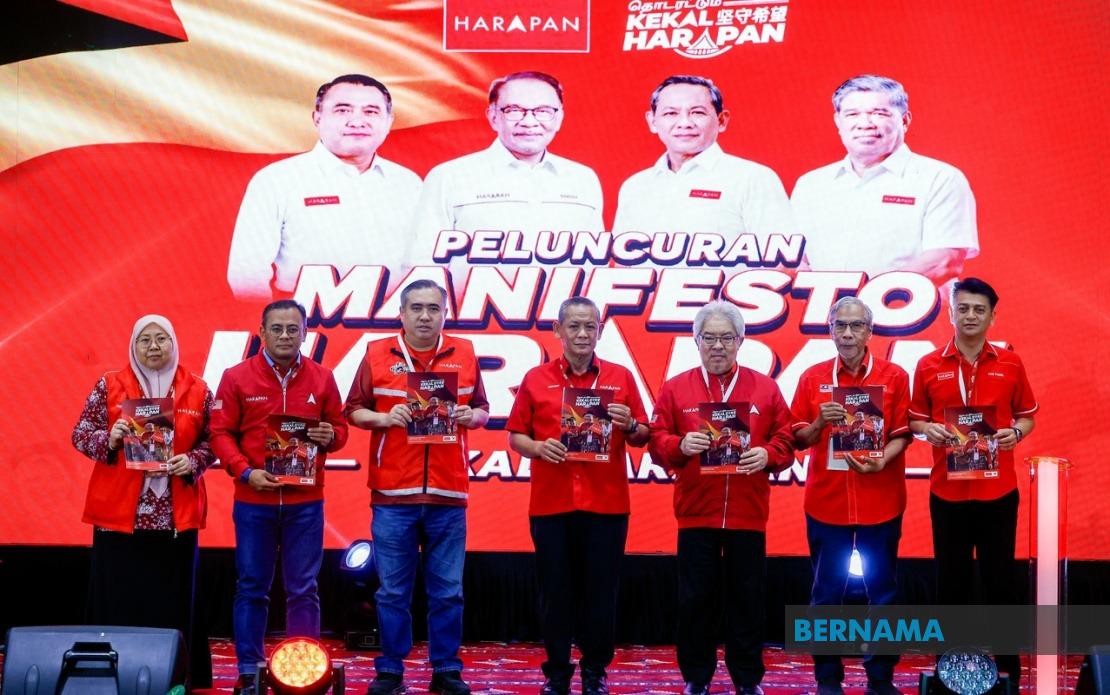
Pakatan Harapan has shifted its election strategy in Negeri Sembilan away from grandiose campaign pledges towards a pragmatic agenda centred on consolidating and strengthening existing programmes implemented during its eight years in state office. The coalition's approach, unveiled here in Seremban, represents a calculated departure from the traditional model of introducing sweeping new initiatives during campaign season, instead emphasising the refinement and expansion of proven development pathways across the state.
Datak Seri Aminuddin Harun, serving as both Menteri Besar and state coalition chairman, framed this strategic recalibration as evidence of political maturity and accountability. Speaking at a press conference following the manifesto launch, Aminuddin explained that the coalition's eight-year tenure has provided concrete evidence of what works in the Negeri Sembilan context, allowing the incoming campaign period to focus on demonstrating competence rather than making unfulfilled promises. This messaging strategy directly addresses a persistent criticism levelled at political coalitions across Malaysia: the gap between pre-election commitments and post-election implementation.
The manifesto, themed "Negeri Sembilan Kekal Harapan" (Negeri Sembilan Stays With Harapan), consolidates the coalition's electoral platform into 10 key commitments rather than the lengthy lists that have characterised previous campaign cycles in Malaysia. This condensed approach may reflect lessons learned from previous state and federal elections, where voters have grown increasingly sceptical of politicians who present exhaustive shopping lists of promises without clear funding mechanisms or implementation timelines.
Aminuddin's messaging emphasises continuity and enhancement rather than transformation, a positioning that carries significant implications for how Malaysian voters now evaluate political performance. The strategic choice to highlight what already exists, rather than what might be created, suggests that Pakatan Harapan views its track record in Negeri Sembilan as sufficiently strong to warrant another term. This confidence in existing achievements stands in contrast to opposition parties, which typically capitalise on incumbent complacency by promising radical change.
The five-year timeframe outlined by Aminuddin serves as the temporal boundary for evaluating whether these commitments translate into tangible benefits for residents. By anchoring promises to a specific duration, the coalition establishes measurable benchmarks against which future electoral performance can be assessed. This temporal specificity reduces the ambiguity that has historically plagued Malaysian political manifestos, where vague timelines have allowed parties to defer accountability indefinitely.
For Negeri Sembilan voters, this manifesto represents an opportunity to assess whether the ruling coalition's eight-year record justifies continued governance. The state's development trajectory during Pakatan Harapan's tenure—across infrastructure, social programmes, and economic initiatives—provides the factual basis for evaluating claims of responsible stewardship. Voters must weigh whether incremental improvement of existing systems offers better outcomes than the alternative of institutional disruption associated with electoral change.
The emphasis on building "a strong foundation for Negeri Sembilan that can benefit future generations" introduces an intergenerational dimension often absent from Malaysian political discourse. This framing suggests that the coalition's priority extends beyond immediate electoral considerations towards long-term structural development. Such language appeals to voters concerned with sustainability and legacy rather than short-term populist measures, though sceptical voters may question whether such rhetoric translates into actual policy prioritisation.
Aminuddin's personal candidacy in the Linggi state seat embeds him directly within the electoral contest, making his manifesto claims subject to constituent scrutiny. His simultaneous roles as Menteri Besar and coalition chairman position him as the principal architect and accountable figure for the manifesto's implementation, a concentration of responsibility that sharpens the stakes for the incumbent coalition.
The manifesto launch represents a critical juncture in Malaysian electoral politics, where voter expectations for accountability have demonstrably increased. Whether Pakatan Harapan's strategic pivot toward deliverable promises rather than rhetorical flourish resonates with Negeri Sembilan voters remains to be determined by electoral outcomes. The approach reflects broader recognition that Malaysian voters increasingly demand evidence-based governance rather than aspirational campaign messaging, a fundamental shift in political discourse dynamics across the region.

