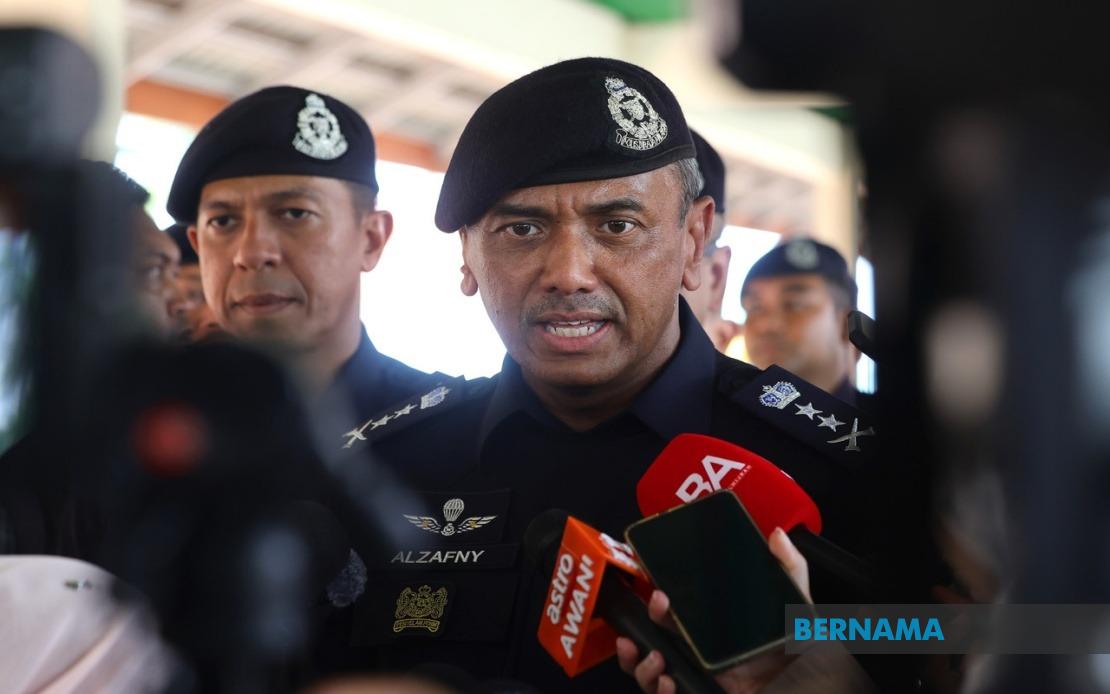
The nomination process for Negeri Sembilan's 16th state election concluded uneventfully across all eight polling centres on July 18, with authorities reporting full compliance from political parties and their supporters throughout the day. State police chief Datuk Alzafny Ahmad confirmed that the carefully orchestrated exercise maintained control from morning through noon, with party officials and candidates demonstrating discipline in adhering to police directives and logistical arrangements at each venue.
The distribution of supporters across the nomination centres revealed considerable variation in turnout patterns, offering insights into ground-level political engagement in the state. Jempol emerged as the most active centre, drawing approximately 2,500 supporters from the various contesting parties, reflecting stronger political mobilisation in that constituency. Conversely, Kuala Pilah recorded the lowest participation with around 1,000 supporters, suggesting differential levels of party activism across the state's electoral divisions. The remaining six centres each hosted between 1,000 and 2,500 supporters, indicating relatively consistent engagement across most constituencies except for the two extremes.
The deployment of 2,373 police officers and personnel represented a significant security commitment aimed at preventing any disruption during the nomination phase. This substantial police presence served dual purposes: maintaining public order and managing traffic congestion that typically accompanies such mass gatherings. The stationing of officers across all eight nomination centres underscored the authorities' determination to prevent incidents that could undermine confidence in the electoral process or trigger communal tension in this politically sensitive state.
Datuk Alzafny's stern advisory to candidates addressed a concern that regularly emerges during Malaysian electoral campaigns—the potential for provocative or inflammatory speech that could breach constitutional boundaries. His specific reference to avoiding contentious matters relating to religion, royalty, and race reflected an understanding that campaigns touching these sensitive issues carry genuine risks of escalating social divisions. The emphasis on preventing statements with elements of provocation, incitement, or slander acknowledged that electoral competition can occasionally veer into territory that undermines social cohesion.
The police chief's guidance encouraging parties to focus campaign messaging on their respective strengths rather than attacking opponents or making divisive statements represented a plea for responsible political conduct. This appeal carries particular weight in Negeri Sembilan, where the state's compact geography and diverse demographic composition mean that inflammatory rhetoric can spread rapidly and create lasting community tensions. Campaigns that emphasise constructive policy platforms over character attacks tend to leave less residual bitterness after polling day, a consideration relevant to post-election governance and social stability.
Practical compliance matters also featured in the police chief's reminders, including the apparently straightforward but frequently overlooked requirement that motorcyclists wear helmets while campaigning in residential and village areas. Such directives, while seemingly minor, reflect broader police strategy to ensure that campaign activities maintain basic safety standards and demonstrate respect for community norms. Candidates who neglect such requirements risk appearing indifferent to public welfare, undermining their political messaging regardless of policy content.
The establishment of monitoring teams operating jointly with the Election Commission signalled coordinated effort to oversee campaign conduct throughout the election period. These teams would monitor compliance with regulations governing campaign activities, duration, and permitted venues, as well as scrutinising the tone and content of campaign discourse. The multi-agency approach implied that ensuring electoral integrity extended beyond voting day itself to encompassing the entire campaign cycle from nomination through polling.
The Election Commission's scheduling of polling day for August 1, with early voting on July 28, provided a clear timeline for candidates and parties to calibrate their campaign strategies. The two-week campaign period represented a compressed timeframe requiring efficient resource deployment and focused messaging. For candidates, this timeline meant that nomination day's peaceful conclusion would be quickly overshadowed by the intensifying campaign activities ahead.
Negeri Sembilan's 16th state election carried particular significance as it would determine the state's political direction over the coming years. The smooth nomination process provided an encouraging foundation, suggesting that competitive political engagement need not degenerate into disorder or conflict. However, the authorities' careful precautions and explicit warnings to candidates indicated that maintaining this orderliness throughout the campaign phase would require ongoing vigilance and candidate cooperation. The coming weeks would test whether this promising start could be sustained through the more tempestuous phases of campaigning leading to August 1.

