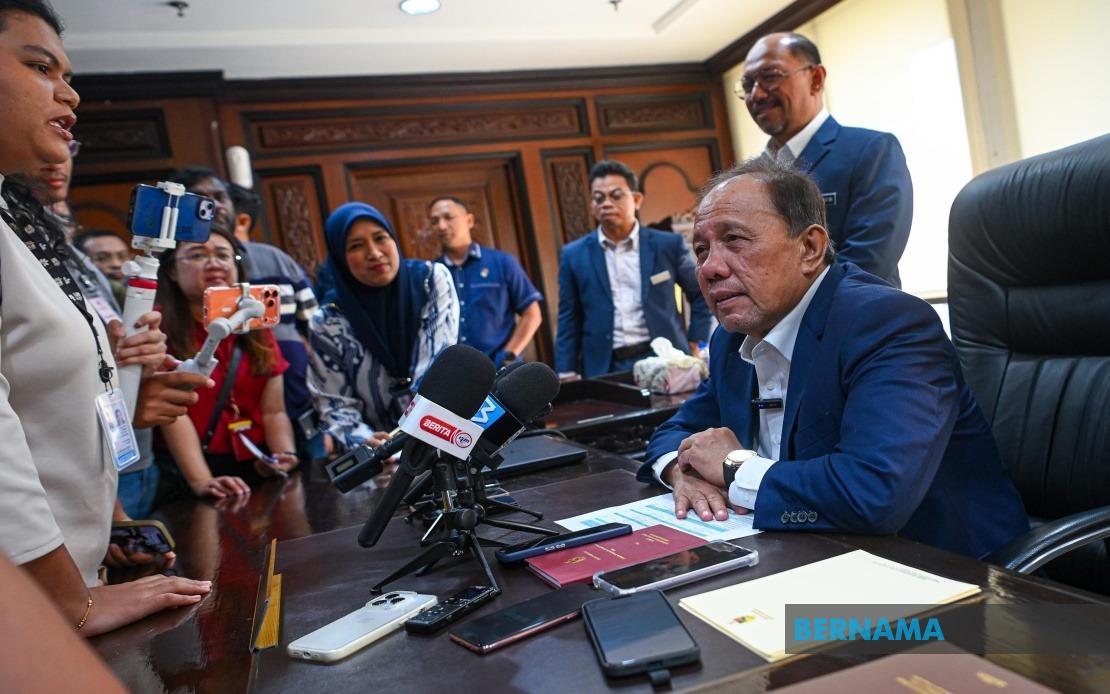
Menteri Besar Datuk Ismail Lasim has signalled that the Negeri Sembilan government intends to reshape its executive structure by establishing Deputy Executive Council positions alongside existing Exco roles, a move designed to expand administrative capacity and distribute ministerial responsibilities more effectively. Speaking at Wisma Negeri in Seremban on his first working day, Ismail acknowledged that the conventional number of Exco portfolios may prove insufficient to accommodate all qualified assemblymen from the coalition partners, prompting the administration to explore this novel arrangement as a pragmatic solution.
The proposed deputy positions would primarily benefit representatives from the three component parties now governing the state: Barisan Nasional, Parti Islam Se-Malaysia (PAS), and Parti Wawasan Negara (Wawasan). This configuration reflects the coalition's composition following the recent state election, which delivered Barisan Nasional 18 seats, Perikatan Nasional seven seats, and Pakatan Harapan eleven seats. The combined strength of the first two coalitions—totalling 25 seats out of 36—provides a comfortable two-thirds majority, creating space for a more expansive cabinet structure than historical precedent might suggest.
Ismail, 67, commenced his tenure on Monday morning at the Menteri Besar's Office, where State Secretary Datuk Mohd Zafir Ibrahim and departmental heads greeted him formally. His appointment followed the swearing-in ceremony held on Sunday before the Yang Dipertuan Besar of Negeri Sembilan, Tuanku Muhriz Tuanku Munawir, at Istana Besar Seri Menanti. The Juasseh state assemblyman now leads an administration tasked with navigating coalition dynamics while delivering on electoral promises to Negeri Sembilan voters.
The deliberation over Deputy Exco positions represents a calculated approach to political management. By creating secondary positions across critical portfolios, the administration can offer meaningful roles to assemblymen from smaller coalition partners without diluting the authority of full Exco members. This tiered structure allows coalition partners to claim representation in key areas—potentially including education, commerce, local government, or agriculture—thereby distributing both prestige and responsibility in a manner that strengthens internal coalition cohesion.
Ismail stressed that the exact number of deputy positions remains under consideration, indicating that the final decision will reflect careful assessment of administrative requirements and political arithmetic. The deliberative process also extends to the appointment of Senior Exco positions, which the administration is exploring despite provisions already existing for such roles. This cautious approach suggests that Ismail's team is weighing various configurations to optimise both governance efficiency and coalition satisfaction.
The structural innovation carries implications for how Negeri Sembilan's government will function operationally. Deputy Exco members would typically assist their principal Exco counterparts, shadow specific policy areas, and potentially chair working committees or implementation bodies. This arrangement could enhance policy coordination and accelerate project delivery across portfolios, particularly in areas requiring sustained attention such as infrastructure development, economic diversification, and social services.
For Malaysian observers, Negeri Sembilan's experiment offers a model worthy of attention as other state and federal administrations grapple with coalition governance. The creation of deputy-level positions sidesteps the zero-sum competition inherent in purely appointing senior Exco members, reducing potential friction while acknowledging the legitimate aspirations of coalition partners. Should the arrangement prove effective, it may influence how other multiparty governments structure their cabinets in future elections.
The timeline for cabinet announcements underscores the administration's intent to move swiftly. Ismail indicated that the full Exco line-up would be unveiled either on Friday or Monday at the latest, suggesting that coalition negotiations over post allocation had advanced considerably even as public consultations continued. This expedited schedule reflects the practical necessity of establishing a functioning executive to address pending administrative matters and implement the coalition's election commitments.
The broader context of Negeri Sembilan politics reveals a state transitioning from previous governance arrangements. The election results demonstrate voters' preference for the Barisan Nasional-Perikatan Nasional configuration, ending the previous administration's tenure and presenting Ismail with a mandate to chart a distinct policy direction. The deputy exco proposal exemplifies his intention to govern differently, leveraging structural innovation to build inclusive coalitions rather than relying solely on traditional power-sharing formulas.
Looking forward, the success of this administrative restructuring will depend on several factors: the clarity with which deputy roles are defined, the quality of individuals selected for these positions, and the willingness of principal Exco members to collaborate constructively with their deputies. If implemented thoughtfully, deputy positions could enhance transparency and representation while distributing workload more equitably across the administration. Conversely, poorly defined hierarchies might generate confusion or undermine decision-making authority.
For Negeri Sembilan's civil service and the public it serves, the expanded cabinet structure signals continuity with an enhanced capacity for delivering government services. The involvement of PAS and Wawasan in governance provides these parties with practical experience in administration and accountability, potentially raising policy discourse across the three-coalition partnership. As Ismail settles into his role and completes the cabinet formation process, stakeholders will closely monitor whether the deputy exco model proves sufficiently robust to manage the state's development agenda and coalition governance simultaneously.

