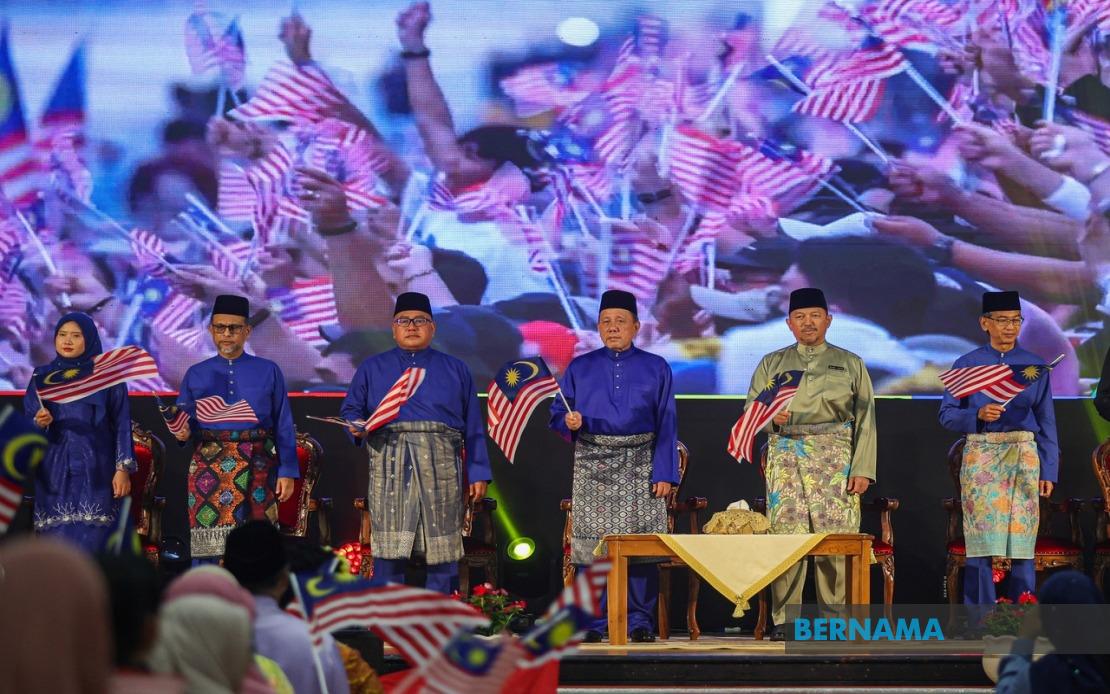
Negeri Sembilan Menteri Besar Datuk Ismail Lasim has articulated an ambitious vision for the state's future, anchoring his administration's direction around three foundational pillars: stability, progress and prosperity. Speaking at the state-level public servants assembly in Seremban, Ismail framed these principles as essential guideposts for tackling public concerns, streamlining government processes and elevating living standards across the 1.2 million-strong population of Negeri Sembilan.
The emphasis on stability extends beyond mere electoral mathematics or parliamentary arithmetic. Ismail stressed that the state administration must prioritise institutional robustness, administrative consistency and political equilibrium rather than relying solely on numerical advantage in the State Legislative Assembly. This reflects a maturer understanding of governance that recognises durable stability as prerequisite for investor confidence and public trust—both critical assets in an increasingly competitive regional economy where capital flows and talent migration respond swiftly to perceived governance weakness.
Institutional safeguards form a cornerstone of this stability agenda. Ismail highlighted the Constitutional Monarchy and established customs as protective umbrellas underpinning state cohesion, framing their preservation alongside sound policymaking as twin imperatives. For a state like Negeri Sembilan, which sits within Malaysia's federal architecture and must balance state autonomy with constitutional constraints, this framing suggests efforts to deepen institutional reliability while implementing reforms designed to reassure both domestic publics and foreign investors of predictable, principled governance.
The progress pillar diverges notably from narrow economic metrics. Rather than fixating exclusively on gross domestic product expansion, Ismail advocated for a multi-dimensional conception encompassing opportunity creation, investment attraction and equitable spatial distribution of development gains. This nuance addresses a persistent tension in Malaysian regional development: the tendency for economic growth to concentrate in urban nodes while peripheral and rural zones languish. Negeri Sembilan's federal land settlements and rural constituencies represent significant demographic blocs whose economic marginalisation could undermine broader prosperity claims.
Balanced development across Negeri Sembilan's varied geography represents a tangible challenge. The state encompasses the developed Klang Valley fringe and Seremban metropolitan core alongside extensive Felda settlements and rural constituencies requiring targeted intervention. Ismail's insistence that rural advancement must parallel urban progress suggests awareness that uneven development breeds grievance and political fragmentation. This resonates across Southeast Asia, where rural-urban divides have proven destabilising in neighbouring jurisdictions.
Financial performance provides a concrete basis for assessing progress. Negeri Sembilan has accumulated RM522.4 million in state revenue to date, positioning the administration to pursue an ambitious RM1 billion revenue target by 2030. This expansion would require sustained disciplined fiscal management and tax base growth. The state's gross domestic product reached RM55.8 billion in the most recent full year, representing 2.6 per cent growth from RM54.3 billion previously, with momentum driven by services and manufacturing sectors. These figures underscore economic diversification away from traditional reliance on agriculture and mining, though sectoral balance remains a work in progress.
The manufacturing and services sectors driving current growth offer distinct opportunities and vulnerabilities. Manufacturing provides employment density and foreign exchange earnings but faces regional competition from Vietnam, Thailand and Indonesia where labour costs remain lower. Services, encompassing tourism, professional services and government, offer higher-value potential but require sustained human capital development and infrastructure investment. Ismail's governance framework must navigate these sectoral dynamics to sustain the modest but consistent growth trajectory.
Prosperity as the third pillar extends beyond income metrics to encompass inclusive participation in economic opportunity. Ismail's framing emphasises shared prosperity rather than growth concentrated among elites or particular constituencies. This articulation addresses legitimate concerns about inequality and opportunity access that have animated electoral competition across Malaysian states. In Negeri Sembilan's diverse population, ensuring felt prosperity across ethnic and socioeconomic groups becomes essential for political legitimacy and social cohesion.
The newly constituted State Executive Council embodies this administrative vision through diverse representation intended to bring accumulated expertise and fresh perspectives to governance challenges. Ismail's emphasis on Exco cohesion and collaboration with the professional public service suggests recognition that governance quality depends fundamentally on institutional teamwork rather than personality-driven leadership. This institutional emphasis contrasts with earlier patterns of concentrated executive authority and offers potential for more sustainable administrative performance.
Competitiveness in investment and business attraction represents a strategic imperative for Negeri Sembilan positioning within the broader Malaysian and Southeast Asian economy. The state occupies a geographical sweet spot between Kuala Lumpur and the southern regions, with highway connectivity and port access. Yet competing against Selangor's established industrial ecosystem and Johor's aggressive development marketing requires differentiation. Ismail's focus on youth opportunity creation and agricultural-rural sector strengthening suggests a strategy emphasising niche competitive advantages rather than direct competition with larger neighbours.
The youth employment and entrepreneurship agenda carries particular weight given Malaysia's demographic trajectory and generational expectations. Youth unemployment and underemployment represent significant social risks across Southeast Asia, and Negeri Sembilan's capacity to generate meaningful opportunities for school and university graduates will substantially influence political stability and social cohesion. Agricultural modernisation and rural economic diversification likewise require youth engagement and technological adoption to remain economically viable.
Ismail's call to fly the Jalur Gemilang in conjunction with National Day celebrations represents symbolic mobilisation alongside substantive governance initiatives. National unity messaging complements the three-pillar framework by invoking shared citizenship and collective purpose. For Negeri Sembilan, where diverse communities coexist, such unity symbolism carries practical significance in maintaining social harmony essential for effective administration and inclusive prosperity.
The articulated governance vision positions Negeri Sembilan within broader currents reshaping Malaysian state governance. Emphasis on institutional stability, equitable development distribution and inclusive prosperity reflects lessons drawn from Malaysia's own governance challenges and regional experiences. Success in implementing this framework would offer a replicable model for other Malaysian states while contributing to Malaysia's broader competitiveness and stability within Southeast Asia's dynamic regional economy.

