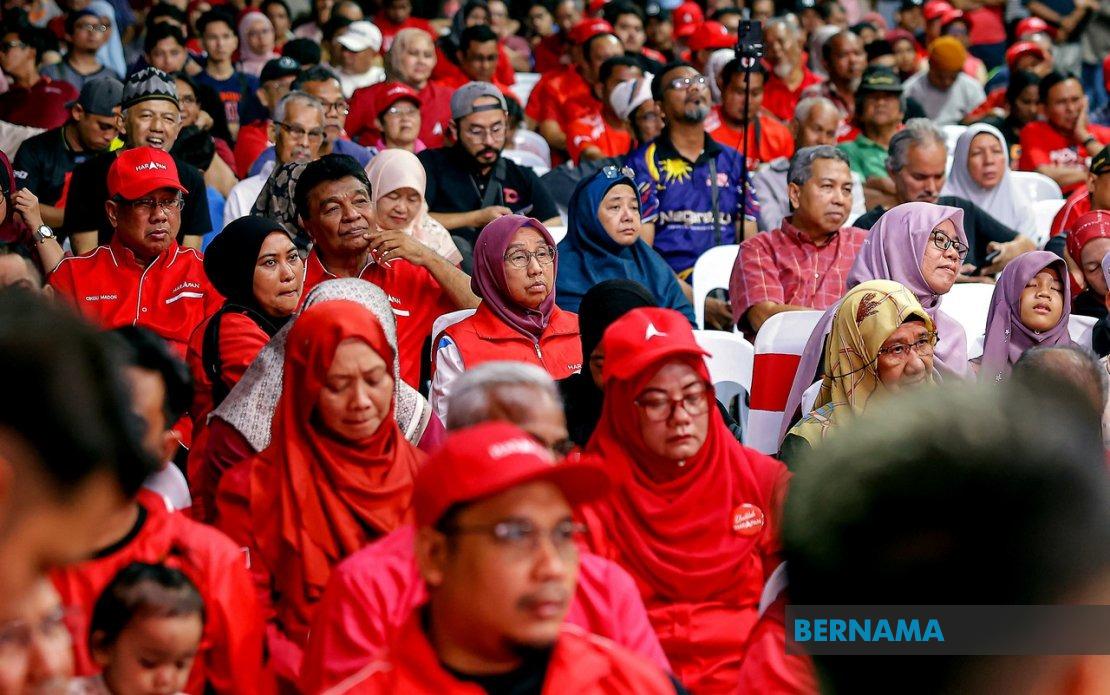
With the 16th Negeri Sembilan state election campaign well underway, an unmistakable pattern has emerged from conversations across the state: ordinary voters are increasingly impatient with politicians who remain distant from communities. A ground-level survey reveals that accessibility and demonstrable competence have become the key metrics by which candidates are being judged, overshadowing traditional factors like party affiliation or incumbency. This shift reflects a broader frustration with politics that promises much but delivers little, a sentiment that resonates across Malaysia as voters grow more pragmatic about who deserves their ballot.
Kamarulzaman Ab Aziz, a 64-year-old retired educator, articulates a perspective that appears widespread among local voters. He emphasises that charisma and genuine engagement with constituents matter far more than whether a candidate originates from the district. His reasoning is straightforward: a well-connected outsider who makes himself available and responsive to community needs outperforms a hometown representative who proves difficult to reach or unwilling to engage. This view challenges the conventional political wisdom that local roots guarantee electoral success, suggesting instead that voters have matured beyond nostalgia or tribalism. The implication for political parties is significant—candidate selection based purely on familiarity or hereditary claims may increasingly backfire.
The economic squeeze facing ordinary Malaysians manifests starkly in the concerns of Negeri Sembilan traders and small business owners. Nurulainee Hamidon, a 37-year-old food shop operator in Port Dickson's Linggi area, describes a brutal daily calculus: raw material costs climb relentlessly, forcing her to raise prices, which alienates customers already stretched thin by inflation. For small business owners across the state, this represents an existential pressure that extends beyond profit margins into questions of survival. The next state government will face immediate demands to address cost pressures, yet the tools available to state authorities—controlling rents, reducing licensing fees, streamlining supply chains—remain limited. Voters like Hamidon are watching intently to see which candidates demonstrate genuine understanding of these constraints rather than simply promising price rollbacks they cannot deliver.
Rural and estate communities, often marginalised in state development planning, have become vocal about their demands for equitable infrastructure and opportunity distribution. M. Manisha, a 38-year-old housewife, raises the persistent complaint that peripheral communities miss out when new facilities and economic projects are announced. This concern reflects genuine inequality: rural areas typically lag in broadband connectivity, healthcare access, and commercial infrastructure compared to urban centres. State governments have historically struggled to balance resource allocation between vote-rich urban constituencies and dispersed rural populations. For Negeri Sembilan, where substantial portions of the population live in estate settings and smaller towns, addressing this disparity authentically rather than through symbolic gestures will likely prove crucial to electoral outcomes.
Employment quality emerges as a priority for younger voters entering the job market. Mohammad Najmi Aiman, a 22-year-old college student casting his first ballot in Paroi, articulates the frustration of graduates who find themselves underemployed or working in positions that do not utilise their qualifications. Across Malaysia, skills mismatch and wage stagnation plague younger workers, creating both economic hardship and political alienation. State governments can influence this landscape through targeted skills training programmes, partnerships with employers to create quality positions, and policies that encourage high-value industries. The fact that first-time voters are already focused on employment opportunity rather than ideological appeals suggests political parties must engage substantively on economic strategy rather than relying on rhetoric.
A theme spanning multiple voter segments concerns the tone and conduct of political campaigns themselves. Lim Kian, a 43-year-old private sector employee, advocates for mature, respectful competition that elevates rather than demeans opponents. His plea reflects weariness with the personal attacks, character assassination, and divisive rhetoric that have characterised recent Malaysian political contests. The paradox he identifies is compelling: regardless of which party wins, the victorious coalition must eventually govern and maintain social cohesion. Campaigns characterised by civility and issue-focused debate tend to generate less resentment among losing voters, potentially strengthening institutional legitimacy. In a state election context where governing margins may be narrow, the goodwill generated by dignified campaigning could prove consequential.
The electoral mechanics underscore the stakes involved. With 889,490 registered voters across 36 seats—comprising 867,151 regular voters plus 22,339 military and police personnel and their families—the race hinges on relatively modest constituency margins. A total of 103 candidates competing for these 36 positions creates genuine choices in most contests, preventing the coronation dynamics that sometimes characterise uncompetitive elections. Early voting on July 28 followed by polling on August 1 condenses the decision window, meaning the final campaign week will be intensely active. This compressed timeline actually favours candidates who have already invested in community relationships over those attempting late-stage visibility blitzes.
The collective voice emerging from Negeri Sembilan reflects a maturation in voter expectations that extends beyond this single state election. Malaysian voters increasingly distinguish between politicians who treat elections as transactional exercises in power-seeking and those who demonstrate sustained commitment to constituent service. This distinction has practical consequences: voters reward accessibility through reelection, while punishing representatives who disappear once elected. The challenge for candidates lies in converting this awareness into votes while managing the reality that state governments operate within federal frameworks and limited revenue bases. Messaging must balance authentic empowerment with honest acknowledgment of constraints.
Looking forward, the Negeri Sembilan election will likely provide early indicators of whether Malaysian voters are consolidating around quality-of-governance concerns or whether traditional partisan loyalties still dominate voting behaviour. The presence of voters explicitly willing to support capable outsiders rather than connected insiders suggests cracks in patronage-based political structures. Similarly, the focus on bread-and-butter issues—cost of living, employment, infrastructure—rather than ideological positioning suggests electoral competition will increasingly turn on practical competence. For both ruling and opposition coalitions, the lesson is clear: voters in Negeri Sembilan and likely across Malaysia are asking hard questions about whether their representatives actually serve their interests. Politicians ignore this trend at considerable peril.

