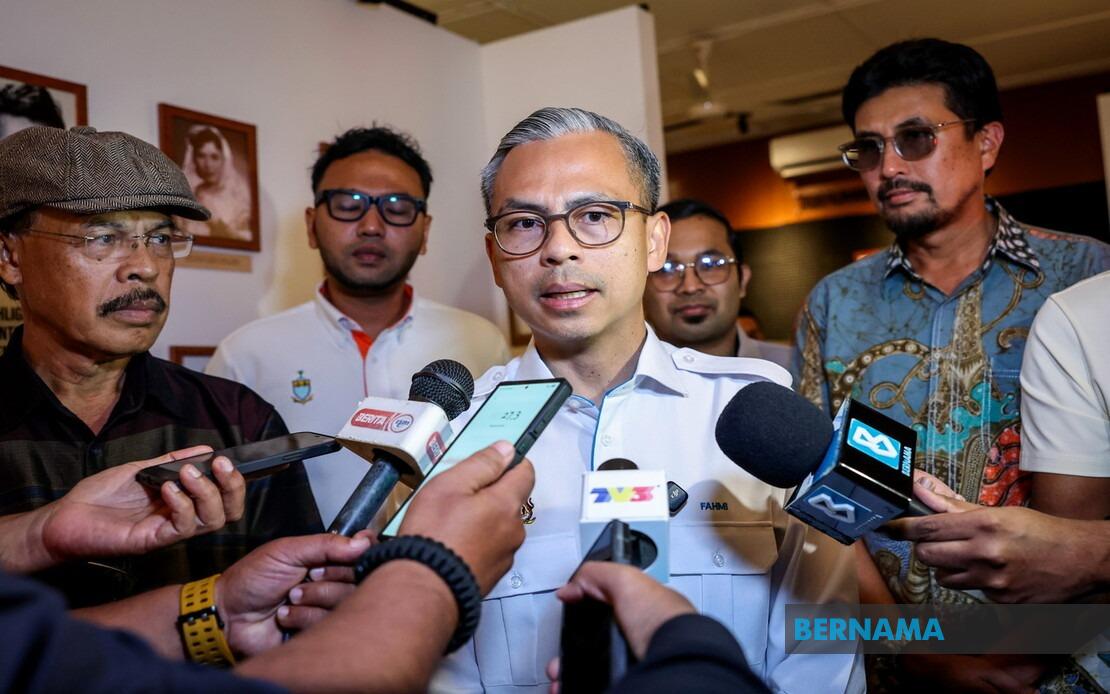
As Malaysia's Negeri Sembilan state election campaign intensifies, the country's Communications Ministry has sounded a clear alarm about the proliferation of misleading information online, urging voters to treat unverified social media posts with considerable scepticism. Communications Minister Datuk Seri Fahmi Fadzil delivered the warning during a visit to Bukit Mertajam, emphasising that in today's information ecosystem, distinguishing between legitimate reporting and fabricated narratives has become increasingly difficult for ordinary citizens.
The minister's intervention reflects growing alarm over how digital platforms are weaponised during electoral periods to shape public opinion. Fahmi stressed that voters must adopt a deliberate verification process before accepting or sharing any claims, particularly those circulating through messaging applications and social networks. The fundamental message is straightforward yet critical: content that has not been independently reported by established news organisations warrants significant caution, as it may represent either entirely false information or outdated material recycled to appear timely.
One particularly troubling pattern identified by authorities involves the repackaging of old content as breaking news. This tactic capitalises on the speed at which information spreads through social channels and the limited fact-checking that typically occurs before users share material. Fahmi illustrated the scale of the challenge by noting that misleading statements and false claims circulating online possess considerable potential to distort public perception and ultimately influence electoral behaviour. The minister's remarks highlight how the traditional gatekeeping function of mainstream journalism has become more important, not less, during the digital age.
The Malaysian Communications and Multimedia Commission has already fielded sixteen separate complaints involving fake news and related grievances since the Negeri Sembilan campaign commenced. This figure, whilst seemingly moderate, represents only reported incidents—many cases of misinformation likely circulate undetected or go unreported by the public. The commission's involvement underscores the formal response required when digital deception reaches scales that threaten public discourse during elections.
Fahmi's particular concern centres on the role of encrypted messaging platforms like WhatsApp, where voters routinely receive unverified claims directly from their personal networks. The intimate nature of these communications—arriving from family members, colleagues, or community leaders—often bypasses the critical scrutiny that publicly posted material might encounter. This private-sphere distribution mechanism has become a preferred channel for spreading election-related misinformation, partly because it occurs outside the view of professional fact-checkers and media monitors.
In response to these challenges, the Communications Ministry has extended an explicit appeal to media organisations themselves, asking them to adopt more proactive stances in monitoring viral content. Rather than waiting for complaints or formal reports, news outlets are encouraged to systematically identify misleading claims gaining traction online and publish clarifications that reach wide audiences. This collaborative approach acknowledges that government alone cannot police the information environment and that professional journalism institutions possess both the resources and credibility to combat falsehoods effectively.
The implications for Negeri Sembilan voters extend beyond any single election cycle. The patterns observed during this campaign—the recycling of content, the strategic amplification through social channels, the exploitation of messaging platforms—will likely persist across future electoral contests at both state and national levels. Malaysian voters increasingly occupy an information landscape where distinguishing signal from noise requires conscious effort and deliberate habits. The minister's call to verify information through established news sources represents a practical, if labour-intensive, approach to personal media literacy.
For Southeast Asia more broadly, Negeri Sembilan's experience reflects regional trends. Across Indonesia, Thailand, the Philippines, and elsewhere, election officials and communications authorities have similarly grappled with misinformation campaigns that mobilise digital networks to influence outcomes. Malaysia's formal response—combining MCMC monitoring with ministerial public education—fits within emerging regional frameworks for managing election-related digital deception. The challenge remains balancing the desire to combat falsehoods against the imperative to preserve free expression.
Fahmi's emphasis on cross-referencing claims across multiple mainstream media outlets acknowledges an important epistemological principle: established news organisations maintain institutional checks and accountability mechanisms that social platforms fundamentally lack. Journalists face professional reputational consequences for publishing false information; social media users typically do not. This structural difference in incentives means that even imperfect mainstream journalism generally filters out the most egregious falsehoods before publication.
The minister's intervention also implicitly critiques the passive consumption of information that characterises much social media use. Voters who receive claims through WhatsApp or Facebook often treat these as equivalent to news, despite their origins in ordinary users rather than journalists. Fahmi's call for active verification represents an educational campaign aimed at shifting this behaviour—encouraging voters to ask basic questions about source credibility and independent confirmation before accepting narratives as factual. This represents a form of defensive information literacy adapted to electoral contexts.
As the Negeri Sembilan campaign progresses, the effectiveness of these official warnings will become apparent through behavioural patterns and any subsequent MCMC complaint figures. Whether voters actually implement the recommended verification practices remains uncertain. However, the government's explicit acknowledgment of the problem and public commitment to addressing it signals recognition that election integrity in Malaysia now depends substantially on managing the information environment, not merely on securing ballot boxes. In an era when narratives shape political outcomes as decisively as votes, controlling the flow of election-related information has become a central governance concern.

