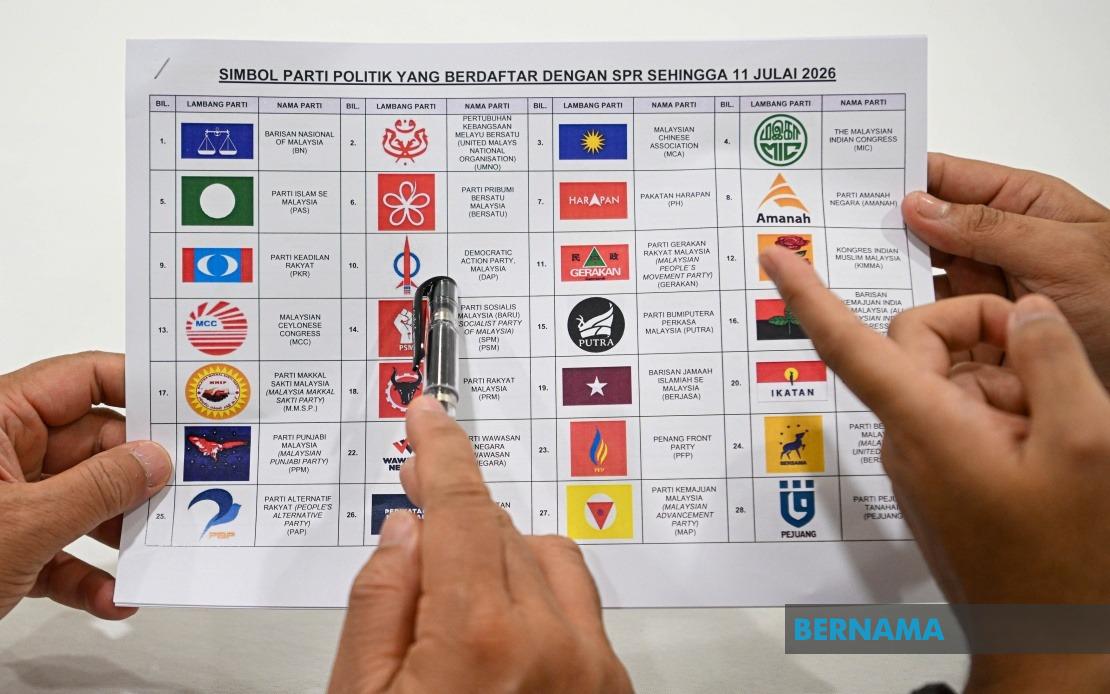
The 16th Negeri Sembilan state election formally began operations today with prospective candidates submitting nomination papers at eight designated centres across the state, marking the official start of what promises to be a closely contested battle for control of Malaysia's central state administration. The nomination process, running from 9 am until 10 am at each centre, represents the critical gateway through which candidates must pass to secure their place on the ballot, with the Election Commission subsequently verifying their eligibility before announcing the final roster of contenders.
Preparations for today's proceedings have been extensive, with the Election Commission reporting that 464 nomination forms have already been distributed to interested parties, while 70 prospective candidates have formally confirmed their candidacy by paying the requisite election deposits. This relatively high level of early engagement suggests strong competition across multiple constituencies, though the final numbers will only become apparent once the nomination period concludes and the verified candidate list is published. The verification process itself carries significance, as any irregularities or missing documentation could potentially eliminate candidates at this preliminary stage.
The electoral calendar has been precisely calibrated by the Election Commission to allow for a comprehensive campaign period. Following today's nomination deadline, the 14-day campaign window commences immediately and extends through 11.59 pm on July 31, providing political parties with a fortnight to mobilise supporters, articulate policy positions, and conduct grassroots outreach. Early voting opportunities have been scheduled for July 28, accommodating voters unable to participate on the main polling day, with the definitive election contest taking place on August 1 following the dissolution of the State Legislative Assembly on June 5, which received the formal consent of Tuanku Muhriz Tuanku Munawir, the Yang Dipertuan Besar of Negeri Sembilan.
The electorate participating in this contest comprises 889,490 eligible voters across multiple categories, including 867,151 ordinary civilian voters, 16,884 military personnel and their spouses, and 5,455 police officers and their spouses. This diverse voter base reflects the demographic composition of the state and underscores the importance of electoral accessibility, particularly for uniformed personnel and their families who may face logistical constraints during standard voting periods. The substantial voter roll ensures that the eventual election outcome will carry genuine representativeness.
Party strategies have begun emerging as organisations unveiled their candidate slates in recent days, revealing varying approaches to the competition ahead. Pakatan Harapan has adopted an expansive strategy by contesting all 36 state seats, effectively making itself available to voters across every constituency and signalling confidence in its electoral prospects. Barisan Nasional has fielded candidates in 25 seats, suggesting a more selective approach that concentrates resources in competitive and traditional stronghold areas. Perikatan Nasional has nominated candidates in 11 seats, reflecting its positioning as a challenger force in the state, while smaller political formations including Parti Orang Asli Malaysia, the Socialist Party of Malaysia, and Parti Barisan Jemaah Islamiah Se-Malaysia have each submitted single candidates, providing voters with ideologically diverse options beyond the major blocs.
Pertii Pribumi Bersatu Malaysia, operating partially as a component of Perikatan Nasional, has fielded 24 candidates including two representatives from Parti Bersepakat Hak Rakyat Malaysia who are running under the Bersatu logo, demonstrating the coalition flexibility that characterises Malaysian electoral dynamics. This configuration reflects both the fragmentation and the collaborative networks within the opposition bloc, where smaller parties leverage larger party infrastructure to gain ballot access and campaign visibility. The candidate mix across all parties combines sitting incumbents seeking re-election with fresh political entrants, suggesting generational transitions occurring within state politics.
Context from the preceding 2023 state election provides a benchmark for assessing this year's competitive dynamics. In that contest, Pakatan Harapan secured 17 seats, establishing itself as the largest single faction, while Barisan Nasional captured 14 seats and Perikatan Nasional won five, leaving the PH administration with a relatively narrow working majority in the 36-member assembly. The intervening period has likely involved realignments, local issue developments, and shifts in voter sentiment that could substantially alter the electoral mathematics, making this year's outcome far from predetermined despite PH's existing advantage.
Police security preparations have reached substantial levels, with the Negeri Sembilan constabulary deploying 4,800 officers and personnel to oversee today's nomination process and the broader campaign period, supplemented by an additional 1,373 officers and personnel from federal police headquarters at Bukit Aman. This deployment reflects official concern about maintaining orderly proceedings and preventing security incidents during what is typically a high-tension period of political activity. The Election Commission has issued explicit directives to candidates and their supporters to observe conduct guidelines and refrain from provocative behaviour that could disrupt the nomination centres, acknowledging that the concentration of political figures and enthusiastic supporters creates potential flashpoints.
Weather considerations add a practical dimension to today's proceedings, with the Malaysian Meteorological Department forecasting generally fair conditions across most locations during the morning hours when nominations are occurring. However, rain is expected in Port Dickson and Seremban, potentially creating logistical challenges for nomination centre operations and for supporters gathering at these locations. Afternoon thunderstorms have been forecast statewide, suggesting that campaign activities and public gatherings later today may require contingency planning to accommodate rainfall.
Nomination day traditionally draws large crowds of party loyalists, senior political figures, and grassroots activists who accompany their candidates to submission centres as public demonstrations of party strength and organisational capacity. The spectacle of these gatherings serves multiple functions within Malaysian electoral culture, simultaneously energising party bases, projecting party unity, and generating media coverage that shapes early campaign narratives. The size and enthusiasm of crowds accompanying candidates today may foreshadow the intensity of the broader campaign ahead.
For Malaysian observers and particularly for Negeri Sembilan residents, this election assumes significance beyond state-level governance, potentially offering insights into broader national political trends and voter sentiment shifts. The performance of Pakatan Harapan in defending its narrow majority, Barisan Nasional's capacity to regain lost ground, and Perikatan Nasional's ability to expand its footprint will carry implications for understanding regional political dynamics heading toward any future national contest. The next 14 days of campaigning will intensify scrutiny of policy platforms, candidate quality, and party organisational capacity as the state election moves toward its August 1 conclusion.

