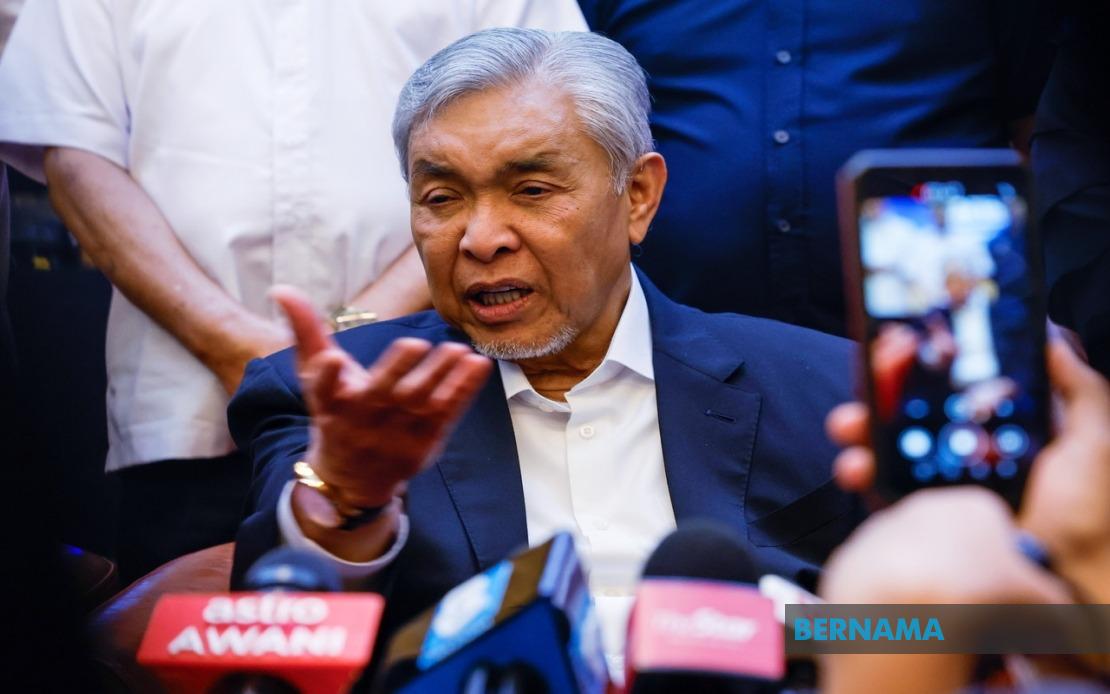
Malaysia's economic development increasingly hinges on how regional governments nurture local entrepreneurship, a theme Deputy Prime Minister Datuk Seri Dr Ahmad Zahid Hamidi emphasised during an entrepreneurs gathering in Negeri Sembilan on July 27. Speaking at the event in Seremban, Ahmad Zahid outlined his expectations for the state administration that will emerge from forthcoming elections, positioning entrepreneurial support as fundamental to bridging the gap between domestic business success and global market participation. His remarks reflect broader national priorities around Bumiputera economic advancement and competitive positioning in Southeast Asia's dynamic business landscape.
The Deputy Prime Minister articulated a vision wherein the new state government actively facilitates rather than merely oversees entrepreneurial development. Ahmad Zahid stressed that policies should create conditions enabling business growth across scales, from informal operators to internationally competitive enterprises. This framing rejects a passive governance model, instead calling for deliberate state intervention in removing bureaucratic obstacles, streamlining licensing procedures, and ensuring infrastructure adequacy. For Malaysian entrepreneurs accustomed to inconsistent regulatory environments across different state administrations, such a commitment—if realised—would represent meaningful differentiation in attracting investment and talent.
Negeri Sembilan's geographical advantages warrant particular attention in this conversation. Positioned between Kuala Lumpur and the southern regions, the state occupies a strategic corridor that bridges the nation's political and economic capitals while serving as a logistics gateway. Ahmad Zahid's recognition of these inherent advantages suggests that unlocking economic potential requires policy frameworks that capitalise on geographic positioning rather than relying on subsidy-dependent development models. The state's proximity to major infrastructure—including transportation networks and digital connectivity hubs—creates natural competitive advantages that thoughtful governance could amplify substantially.
Ahmad Zahid, simultaneously serving as Rural and Regional Development Minister, emphasised MARA's responsibility in fostering progressive entrepreneur trajectories. The framing of success around advancement stages rather than disbursement amounts introduces performance metrics aligned with capability-building rather than fund distribution. This approach acknowledges that entrepreneurial ecosystem development requires sustained mentorship, market access facilitation, and skill enhancement—not merely capital injection. The distinction carries implications for how government agencies measure impact and allocate resources, potentially reshaping developmental finance across Malaysia.
The religious and ethical dimensions of entrepreneurship received explicit mention, with Ahmad Zahid emphasising that business sustainability integrates spiritual obligations including zakat compliance. This positioning integrates religious practice with commercial success, suggesting that profitable enterprises and Islamic principles constitute compatible rather than competing objectives. For Southeast Asian entrepreneurs operating within predominantly Muslim markets, this integration reflects understanding that business legitimacy increasingly encompasses ethical and spiritual dimensions valued by consumers, investors, and communities.
Negeri Sembilan's sectoral strengths span manufacturing, logistics, agricultural commodities, halal production, tourism, and digital services—clusters with demonstrated growth trajectories across regional markets. Ahmad Zahid's inventory of these sectors indicates recognition that competitive advantage emerges from concentrating resources within established industrial strengths rather than attempting comprehensive sectoral development. The halal industry merits particular attention, as it represents both domestic Malaysian capability and expanding Southeast Asian and global market opportunity. Similarly, tourism sector revitalisation connects to post-pandemic regional travel recovery and growing middle-class consumer bases across Asia.
The Malaysia Vision Valley initiative represents Negeri Sembilan's most ambitious development framework, aiming to position the state as a comprehensive economic and residential destination. Ahmad Zahid's vision of a place to live, work, conduct business, invest, and build futures reflects holistic development ambition extending beyond mere economic metrics. This integrated approach acknowledges that entrepreneur retention and attraction depends on quality of life, educational opportunity, and community vitality alongside commercial viability. For younger generations and professional talent, such comprehensive development prospects compete effectively against concentrations of opportunity in Kuala Lumpur or Selangor.
Technical and vocational education training deserves sustained policy emphasis, as Ahmad Zahid indicated. Southeast Asia faces persistent skills gaps in technical fields despite growing manufacturing and logistics sectors. Negeri Sembilan's capacity to develop TVET infrastructure and graduate employment-ready technicians would simultaneously address national skills requirements and create stable employment pathways for communities. This investment bridges formal education systems and private sector demands, generating economic participation opportunities for populations that might otherwise face marginalisation in knowledge-intensive economies.
Small and medium enterprise modernisation emerged as essential development pillar, acknowledging that Malaysia's SME sector—while numerically substantial—often operates with outdated technologies, limited digital integration, and constrained market access. Systematic modernisation programmes could enhance SME competitiveness substantially, particularly as regional supply chains increasingly demand digital connectivity and quality standardisation. Negeri Sembilan's potential to serve as modernisation demonstration zone could generate lessons applicable across Malaysian states, contributing to broader competitiveness enhancement.
The emphasis on international market participation distinguishes Ahmad Zahid's vision from parochial development frameworks. Rather than targeting domestic market dominance, the strategy explicitly positions Negeri Sembilan enterprises for export competitiveness and cross-border investment participation. This outward orientation aligns with Malaysian economic policy objectives around deepening regional integration and competing within global value chains. For entrepreneurs, access to export support services, international market intelligence, and cross-border partnership facilitation becomes competitive necessity rather than optional advantage.
Coordination between state government and MARA represents structural prerequisite for realising these objectives. Historically, state administrations and federal agencies sometimes operate with misaligned priorities or insufficient information-sharing. Ahmad Zahid's explicit call for collaboration suggests recognition that entrepreneurial ecosystem development requires integrated action across governance levels. This institutional coordination challenge extends beyond Negeri Sembilan, affecting entrepreneurship support effectiveness across Malaysia and presenting ongoing implementation complexities.
The gathering brought together Deputy Rural and Regional Development Minister Datuk Rubiah Wang and MARA chairman Datuk Dr Asyraf Wajdi Dusuki, indicating whole-of-government engagement with entrepreneurial development priorities. Such high-level participation underscores national commitment to empowerment agendas while simultaneously establishing public accountability for promised policy frameworks. As Negeri Sembilan enters electoral transition, how incoming administrators translate these aspirations into regulatory action and resource allocation will substantially determine whether entrepreneurial support constitutes durable commitment or campaign rhetoric.

