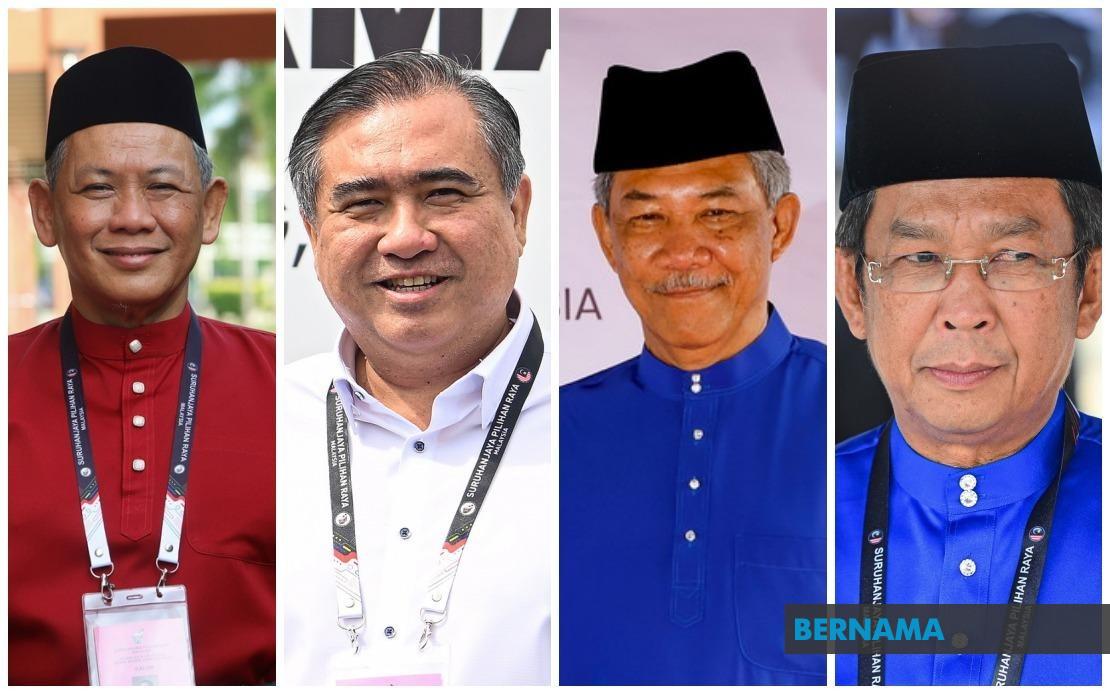
The 16th Negeri Sembilan state election is shaping up to be far more competitive than typical electoral cycles, with several nationally prominent politicians discovering that their political standing offers limited protection at the ballot box. Following the close of nominations on July 18, a total of 103 candidates have registered to contest for 36 state assembly seats, setting the stage for what observers are describing as an unusually fragmented and unpredictable electoral landscape in the state.
Among those facing unexpectedly challenging contests is Datuk Seri Aminuddin Harun, the caretaker Menteri Besar and Pakatan Harapan chairman, who is locked in a three-way race for the Linggi seat against incumbent Datuk Mohd Faizal Ramli from Barisan Nasional and Bersatu candidate Datuk Zamri Md Said. The contest underscores the difficulty of maintaining state-level leadership in an environment where coalition politics has become increasingly volatile. Aminuddin's position as PKR vice-president and his role in steering Negeri Sembilan's government since the 2023 general election have not translated into a straightforward path to re-election, reflecting broader uncertainties within the Pakatan coalition in the state.
The DAP's Transport Minister and secretary-general Anthony Loke confronts a similar predicament in Chennah, a constituency the party has controlled since 2013. His challenger, Negeri Sembilan MCA Youth chief Siow Kong Choon, has been fielded by Barisan Nasional in what represents a direct test of the DAP's organisational strength in a traditionally secure seat. Such contests in supposedly safe constituencies carry particular significance, as they can signal shifting voter sentiment or organisational complacency that might ripple across other marginal battlegrounds.
Foreign Minister Datuk Seri Mohamad Hasan, commonly known as Tok Mat, presents perhaps the most intriguing narrative of the election. The 70-year-old UMNO deputy president and Barisan Nasional deputy chairman has represented the Rantau seat since 2004, accumulating two decades of accumulated local authority and party machinery. Yet he now faces a straight fight against PH candidate Dr Azizul Hakim Mahdi, whose relative youth—approximately 35 years old—symbolises the generational shift that has become increasingly visible in Malaysian politics. The contest pits institutional experience and political networks against questions about electoral fatigue and the appetite for new leadership.
Negeri Sembilan UMNO chief Datuk Seri Jalaluddin Alias, who has held the Pertang seat since 2013, confronts a three-cornered contest against Mohd Umry Abdul Khois from Pakatan Harapan and Bersatu's Mohd Faizal Fadli Mohd Idrus. The proliferation of three-way and multi-cornered contests across Negeri Sembilan reflects the state's distinctive political architecture, where smaller parties and independent candidates have carved out meaningful space rather than being entirely squeezed out by the two major coalitions.
Two particularly fractious contests have attracted substantial observer attention. In Nilai, DAP national deputy chairman and incumbent J. Arul Kumar is defending his seat against four challengers: Datuk Lai Chien Kong from Barisan Nasional, Bersatu's Datuk V. Saravana Kumar, Berjasa candidate Zamani Ibrahim, and independent Omar Mohd Isa. This five-cornered contest mirrors the complexity now characterising several Negeri Sembilan seats and complicates traditional vote-splitting analyses. Similarly, in Sri Tanjung, a five-way battle features PH incumbent Dr G. Rajassekaran facing Barisan Nasional's A. Achutan, independent candidates Saravanan Arumugam and Islah Wahyudi Zainudin, and Bersatu's Leevineshwaraan Murugan, who at 23 years old is the youngest candidate in the entire state election.
The candidate distribution across coalitions reveals the extent of electoral competition. Pakatan Harapan has fielded the maximum 36 candidates for all available seats, while Barisan Nasional is contesting 25 seats—a notably lower total that reflects either strategic seat concentration or reduced organisational capacity compared to previous cycles. Bersatu has positioned itself aggressively with 24 candidates, suggesting the party's determination to establish itself as a meaningful force in Negeri Sembilan politics beyond its previous presence. Perikatan Nasional, the coalition structure in which Bersatu operates, is fielding 11 candidates independently from Bersatu's direct candidacies, adding another layer of fragmentation.
The involvement of smaller parties and independent candidates further illustrates the state's political pluralism. Barisan Jemaah Islamiah Se-Malaysia (Berjasa), Parti Orang Asli Malaysia (ASLI), and Parti Sosialis Malaysia (PSM) have each fielded single candidates, while four independent candidates are competing without formal party affiliation. This diversity contrasts sharply with recent federal elections, where dominant coalitions have succeeded in marginalising smaller players through vote consolidation strategies.
The 14-day campaign period, which commenced immediately after nominations closed and will extend until July 31, provides candidates with a compressed timeframe to persuade voters in a notably crowded field. The Election Commission has scheduled early voting for July 28, with polling day set for August 1. This compressed electoral calendar means that campaign messaging must penetrate a cluttered informational landscape where voter attention is divided among numerous competitors in several constituencies.
For Malaysian politics more broadly, the Negeri Sembilan contest carries implications beyond the state's borders. The election will provide early indicators of voter sentiment toward the Pakatan Harapan-led government at the state level, test Barisan Nasional's capacity to reclaim ground lost in recent years, and gauge whether Bersatu can establish itself as an independent political force rather than remaining a junior partner in coalition arrangements. The prominence of national figures in several contests means that the state election will receive heightened media attention, potentially influencing perceptions of different parties' electoral viability heading into future nationwide elections.
The outcome in Negeri Sembilan will also test whether Malaysia's voters are willing to embrace genuine electoral competition in which established figures face genuine uncertainty, or whether institutional and organisational advantages still substantially determine electoral outcomes. With over 100 candidates competing for 36 seats, the mathematics of victory have become genuinely unpredictable in multiple constituencies, creating a genuinely open electoral environment.

