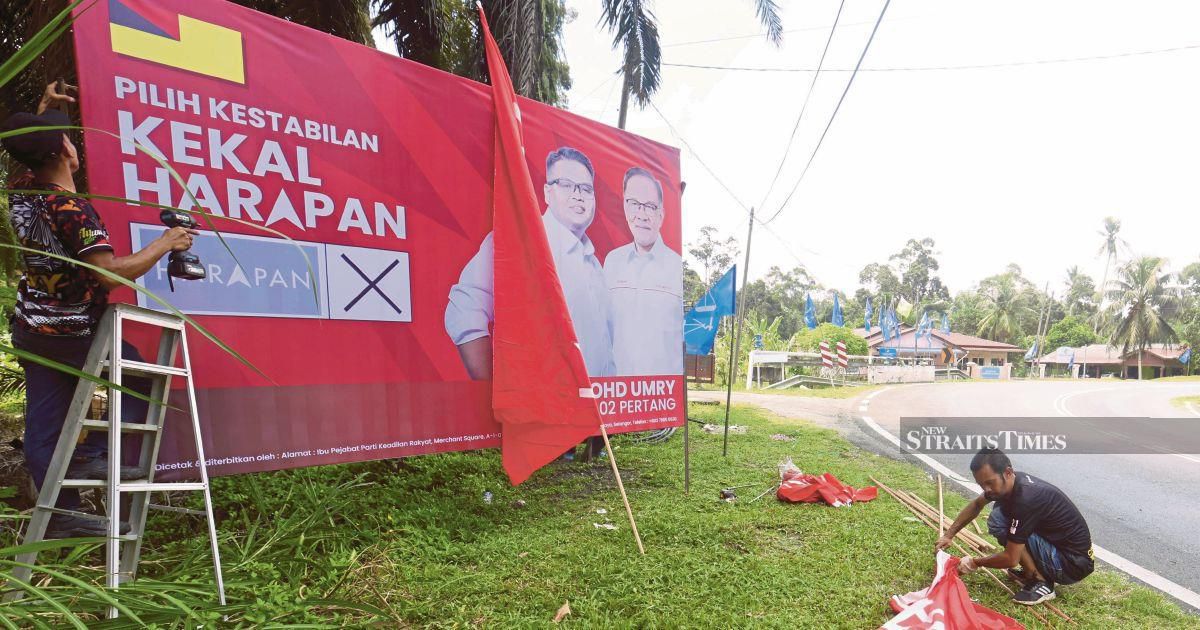
The Negri Sembilan state election is set to become a significant test of Malaysia's evolving political coalitions, with 103 candidates lined up to contest the 36 legislative assembly seats on offer. This electoral exercise carries broader implications beyond the state level, offering critical insights into how the fractious relationship between Barisan Nasional, Perikatan Nasional, and Bersatu will shape future political negotiations across the country.
Bersatu's position in this contest appears particularly precarious. The party has been caught between competing pressures from its former allies in PN and its partnerships with BN at both state and federal levels. In Negri Sembilan specifically, the party must navigate a delicate balancing act that will likely inform how coalition negotiations develop elsewhere, making the state's outcome consequential for national politics. The way Bersatu manages its electoral strategy and candidate positioning will signal whether it can maintain relevance as a kingmaker in Malaysian politics or whether it risks marginalisation.
The competition landscape in Negri Sembilan reflects the complexity that has defined Malaysian politics since 2022. The presence of 103 candidates across multiple parties and coalitions demonstrates how fragmented the political field has become, with traditional two-bloc politics giving way to more fluid arrangements. Each candidate represents not merely individual ambitions but broader factional interests within parties that are themselves divided over strategic direction and coalition alignment. This multiplication of choice points underscores how unpredictable contemporary Malaysian elections have become.
For Bersatu specifically, the Negri Sembilan election carries symbolic weight beyond numerical seat representation. As a party founded on reformist principles, its current coalition positioning has drawn criticism from those who believe it has compromised ideological consistency for political survival. The contest provides party members and supporters with an opportunity to assess whether leadership decisions around coalition-building have strengthened or weakened the party's electoral appeal. A strong performance could validate party strategists' decisions, while a weak showing would fuel internal dissent and external scepticism about Bersatu's long-term viability.
The broader BN-PN cooperation framework adds another layer of complexity to understanding this election. Both coalitions have demonstrated willingness to work together on specific issues while maintaining competitive postures in electoral contests. Negri Sembilan will test the limits of such pragmatic coexistence. If both coalitions field candidates across most seats without formal coordination, the result could be a three-way split that fundamentally reshapes the state political landscape. Such fragmentation could also create unexpected opportunities for smaller parties or independent candidates capable of appealing to voters fatigued by coalition politics.
Bersatu's internal dynamics will likely influence campaign strategy and messaging throughout the state. The party has struggled with organisational coherence since its 2021 split from PN, and some state branches remain fractious. Candidates fielded in Negri Sembilan will need to convey party unity despite these underlying tensions, a communications challenge that could prove difficult if factional divisions become visible during campaigning. Media scrutiny of any apparent discord within Bersatu ranks could undermine candidate credibility and dampen voter enthusiasm.
The 36 seats available represent a manageable number for detailed analysis of voting patterns. While no single outcome appears predetermined, the distribution of seats across parties will provide clear signals about which coalition commands majority support and which faces structural weakness. If BN emerges dominant, this would strengthen arguments for deepening cooperation between BN and PN components. Conversely, if PN performs strongly, this could validate Bersatu's decision to maintain some distance from both traditional coalitions and pursue more flexible positioning. A Bersatu breakthrough would require near-perfect execution of campaign and ground operations.
The electoral mechanics in Negri Sembilan also warrant consideration. With 36 seats and over 100 candidates, many constituencies will feature multi-cornered contests. This environment favours candidates with strong personal networks and local credibility, potentially reducing the influence of centralised party messaging. Bersatu must ensure its nominees possess sufficient grassroots support to compete effectively in such conditions. Parachuting candidates without local connections could prove counterproductive if voters reward those perceived as genuine community representatives.
Beyond Negri Sembilan's borders, observers across Southeast Asia will monitor this election as an indicator of Malaysia's broader political trajectory. The region has experienced concerning trends toward democratic backsliding and coalition fragmentation, and Malaysia's ability to manage increasingly complex political transitions peacefully remains instructive. An election conducted professionally with clear acceptance of results would reinforce confidence in Malaysian democratic institutions, while any irregularities or disputed outcomes could raise questions about institutional resilience.
For Malaysian voters in Negri Sembilan, this election presents an opportunity to hold elected representatives accountable for state-level service delivery in areas including education, healthcare, and infrastructure development. While coalition politics and national-level jockeying dominate media coverage, the practical concerns of constituents regarding their immediate economic wellbeing and access to quality public services remain paramount. Candidates who effectively connect coalition politics to tangible improvements in constituent welfare will likely prove most persuasive.
The weeks ahead will reveal whether Bersatu can maintain relevance as a coalition player or whether it will be relegated to peripheral status in Malaysian politics. The party's performance in Negri Sembilan will provide the most reliable gauge of its electoral strength independent of coalition dynamics. Whether party strategists have successfully navigated the contradictions inherent in serving multiple coalition interests simultaneously will become apparent once voting concludes and results are tallied. This test will have implications extending far beyond this single state, influencing expectations for future electoral contests and coalition reconfiguration across Malaysia.

