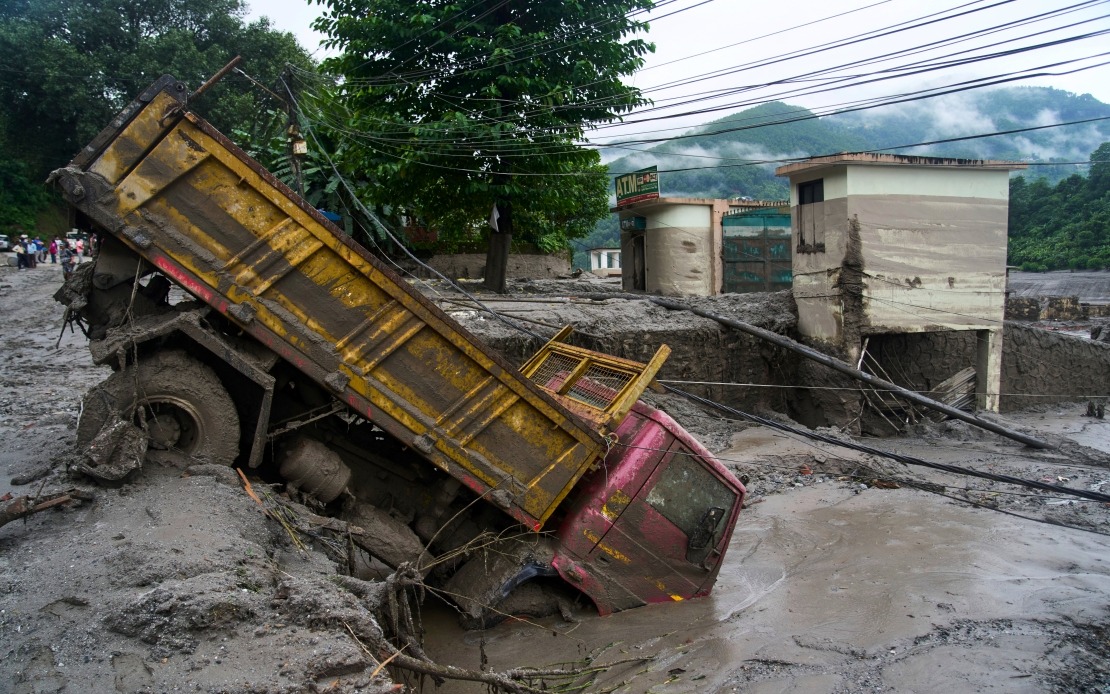
Nepal faces an intensifying water crisis as its national disaster management authority issued a fresh warning on Friday of imminent flooding along the Bhote Koshi River, the same waterway that unleashed catastrophic destruction just two days earlier. The National Disaster Risk Reduction and Management Authority (NDRRMA) reported that water flows carrying debris and mud have surged again in the Rasuwa district section of the river, raising alarm among emergency responders still engaged in rescue operations following Wednesday's devastating flash flood.
The recurring threat underscores the precarious situation facing rescue teams and residents in the region. The NDRRMA's alert specifically cautioned all personnel involved in ongoing relief and search operations along both the Bhote Koshi and Trishuli rivers to maintain heightened vigilance. Anyone remaining in flood-prone zones was instructed to relocate to elevated areas immediately upon observing any warning signs, such as unusual water discoloration, increased flow velocity, or abnormal noise from the riverbed.
The scale of the humanitarian catastrophe unfolding in Nepal remains staggering. The death toll from Wednesday's flash flood has climbed to 475 individuals, with rescue teams facing the grim prospect of searching for hundreds of people still unaccounted for. Search and rescue operations continue in waterways and downstream regions where bodies and survivors are being recovered, though the harsh reality is that many may never be found as debris continues to move downstream.
The timing of this fresh warning compounds the challenges faced by emergency responders. With search teams actively deployed along riverbanks and in affected communities, the prospect of another major flood poses significant risk to those conducting rescue operations. The NDRRMA's dual messaging—urging caution while also advising immediate evacuation—reflects the tension between continuing the desperate search for survivors and protecting the lives of those conducting the searches.
The Bhote Koshi River's destructive capability appears to be linked to the monsoon season's intensity and the volume of water accumulated in upstream regions. The fact that another dangerous surge has occurred within 48 hours of the initial catastrophe suggests that water accumulation in higher elevations may continue for days, with multiple surge events potentially occurring as water gradually drains from the watersheds feeding the river system.
For Southeast Asian contexts, Nepal's situation carries significant warning value. The region's geography—characterized by steep mountainous terrain and monsoon-dependent water systems—creates inherent flooding risks across multiple countries, including parts of northern Thailand, Laos, and mountainous Myanmar regions. The cascading nature of these floods, where initial disaster is followed by secondary surges, represents a pattern that climate change and extreme weather events may intensify.
The NDRRMA's communication approach reflects lessons learned from previous disaster cycles in Nepal. By issuing explicit warnings and mandatory evacuation orders, authorities are attempting to reduce preventable casualties. However, the challenge of balancing rescue operations with public safety remains acute, particularly when rescue teams must operate in the same danger zones they are warning others to evacuate.
The broader implications for Nepal's disaster preparedness infrastructure are significant. The frequency and severity of floods across the region suggests that early warning systems, community shelters, and evacuation routes require substantial investment. The current situation demonstrates both the capability and limitations of Nepal's disaster management systems—alerts are being issued promptly, yet the death toll remains catastrophically high, indicating gaps in evacuation infrastructure or community preparedness.
Malaysian and Southeast Asian policymakers monitoring this crisis will note the importance of investing in real-time monitoring systems for river basins, particularly in transboundary watersheds shared with neighboring countries. Nepal's experience underscores how quickly natural disasters can overwhelm even organized response systems, especially when secondary hazards emerge before primary impacts have been fully addressed.
The uncertainty surrounding the final death toll and the number of missing persons reflects the chaos typical of large-scale flood events. Communication networks may be disrupted, communities isolated, and access to affected areas limited, making accurate casualty counts difficult for days or weeks following the event. This reality underscores why preemptive evacuation—despite the disruption to economic activity and daily life—remains the most reliable mitigation strategy.
As recovery operations continue and danger remains elevated, Nepal's crisis serves as a sobering reminder of nature's capacity to overwhelm human infrastructure and planning. The nation's ability to absorb and recover from such successive shocks will depend heavily on international support, rapid government mobilization of resources, and the resilience of affected communities themselves.

