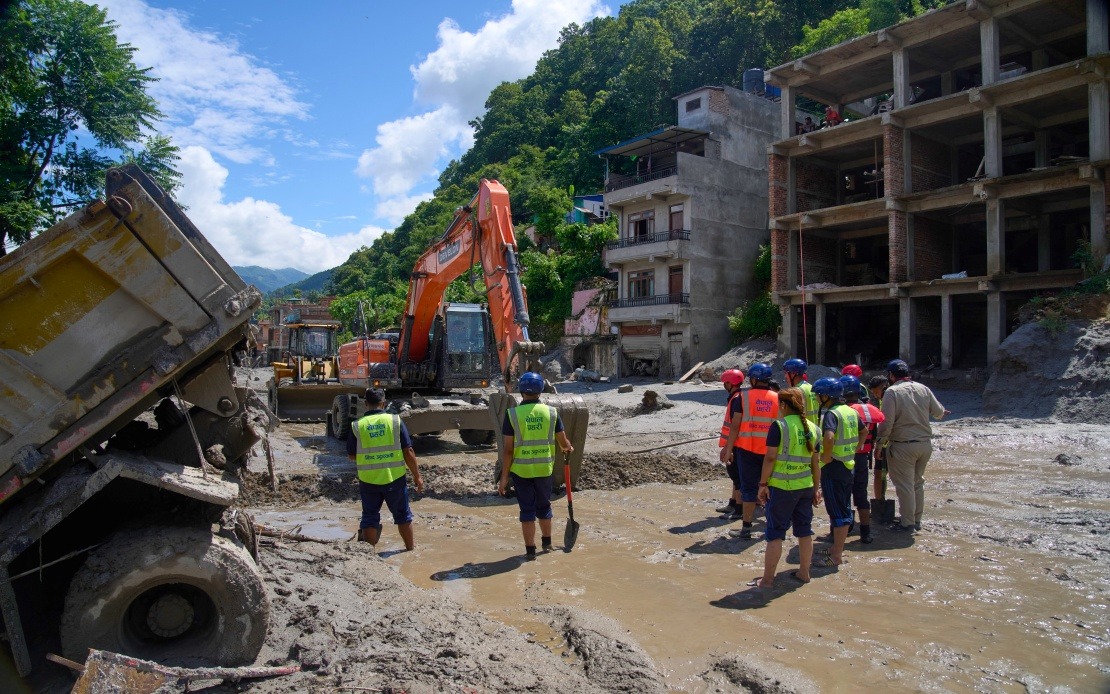
Nepal's Foreign Ministry has activated an Emergency Response Team to serve as the central command hub for locating missing foreign nationals and providing consular assistance following catastrophic flooding in the Bhotekoshi River valley. The crisis, which unfolded Wednesday morning in the Rasuwa district, has created an unprecedented coordination challenge as authorities grapple with the scale of the disaster and the complexity of managing a multinational search operation across difficult terrain.
The mandate of the Emergency Response Team encompasses multiple critical functions that reflect the chaos created by the natural disaster. Beyond simply coordinating search and rescue operations, the team has been tasked with verifying information about affected individuals, maintaining communication channels with foreign embassies and diplomatic missions, and providing regular updates to families of missing persons scattered across numerous countries. This centralised approach signals recognition that ad-hoc communications during such crises often create confusion, duplicate efforts, and misinformation that can hinder rescue operations and compound the distress of affected families.
The scale of the disaster has overwhelmed local capacity. As of Thursday evening, confirmed fatalities had reached 359 people, whilst rescue teams managed to extract 31 survivors. However, the truly alarming figure is the number of unaccounted persons: more than 800 individuals remain missing, with the majority comprising foreign tourists and Nepali nationals. Many of those unaccounted for were visiting the region for leisure activities when the floods struck, making them particularly difficult to track through normal administrative channels given the transient nature of tourism.
The composition of the missing presents particular challenges for Nepal's diplomatic corps. Whilst the majority of unaccounted individuals appear to hail from India and Nepal itself, the presence of significant numbers of foreign tourists from other nations complicates the coordination effort substantially. Each nationality requires separate diplomatic notification channels, and embassy staff from multiple countries are now working to verify citizenship and notify families. For Nepal's relatively modest Foreign Ministry, managing this multinational response whilst simultaneously handling its own domestic crisis represents a severe strain on institutional capacity.
To facilitate reporting and information gathering, Nepal's authorities have established direct communication channels for concerned parties. Diplomatic missions, international organisations, families of missing persons, and members of the public have been instructed to contact the Emergency Response Team through two dedicated WhatsApp and telephone numbers: +977-9744441227 or +977-9744441228. Additionally, an email address at [email protected] has been established. These multiple contact methods acknowledge that different individuals will have varying access to communications technology and reflect efforts to capture as many reports as possible from the scattered network of people with information about missing persons.
Malaysia's position within this unfolding tragedy remains uncertain. Datuk Seri Mohamad Hasan, Malaysia's Foreign Minister, acknowledged that the precise number of Malaysian nationals unaccounted for in the disaster has yet to be confirmed by Nepal's authorities. This ambiguity reflects the broader coordination problem facing the Emergency Response Team: establishing definitive lists of affected nationals is proving difficult when individual tourists may have varied travel documentation, used different accommodation options, or provided inconsistent information to hosts and guides before disaster struck. Malaysian authorities are presumably working through diplomatic channels to obtain clarification from Nepal, but such verification processes necessarily consume time whilst uncertainty persists for affected families in Malaysia.
The Bhotekoshi River valley's reputation as a destination for adventure tourism and outdoor activities almost certainly exacerbates the challenge of locating missing persons. Tourists in such regions often disperse across multiple accommodation facilities, guide services, and outdoor activity operators, creating a fragmented record-keeping landscape. Unlike a centralised event venue or resort where guests are systematically registered, tourism across a valley involves numerous private operators and informal arrangements. This structural fragmentation means that no single database exists from which complete information can be quickly extracted, forcing authorities to manually compile information from dozens of sources.
The Emergency Response Team's success will ultimately depend on its ability to synthesise information flowing from disparate sources whilst maintaining the security and accuracy of personal data. Unverified reports can lead rescuers on wild-goose chases, whilst false rumours of survival can offer families false hope. The team must therefore balance speed with verification, a particularly difficult balance when every hour increases the likelihood of negative outcomes for missing persons. The deployment of this centralised coordinating body represents an institutional acknowledgment that during such crises, information management itself becomes a critical rescue tool.
For regional observers including Malaysia, the Nepal floods underscore the vulnerability of South Asian nations to extreme weather events and the international dimensions of modern disasters. Malaysian tourists travelling to Nepal for trekking, mountaineering, or other adventure activities now face elevated risks from climate-related hazards, prompting potential reconsiderations of travel itineraries and safety protocols. Similarly, the challenge Nepal faces in locating and supporting foreign nationals reflects broader questions about tourism management and disaster preparedness in developing economies where tourism infrastructure may outpace safety and coordination systems.
The establishment of the Emergency Response Team also highlights the diplomatic dimensions of natural disasters. Nepal's government must simultaneously manage its own domestic crisis response, care for its own citizens, and fulfil consular obligations to multiple foreign governments. Malaysia's Foreign Minister will likely be monitoring developments closely not only for the immediate wellbeing of Malaysian nationals but also to evaluate Nepal's institutional capacity to handle such multinational crises. How Nepal performs in this challenge may influence future Malaysian government guidance regarding travel to the region and bilateral diplomatic relationships more broadly.
As search operations continue and more information emerges about the full scale of the disaster, the Emergency Response Team will face mounting pressure from families, embassies, and international media. The team's communications strategy, transparency about verified information versus speculation, and ability to maintain operational focus amid emotional and political pressure will determine whether this coordinating mechanism successfully serves its intended purpose or becomes another source of frustration for those desperately seeking answers about missing loved ones.

