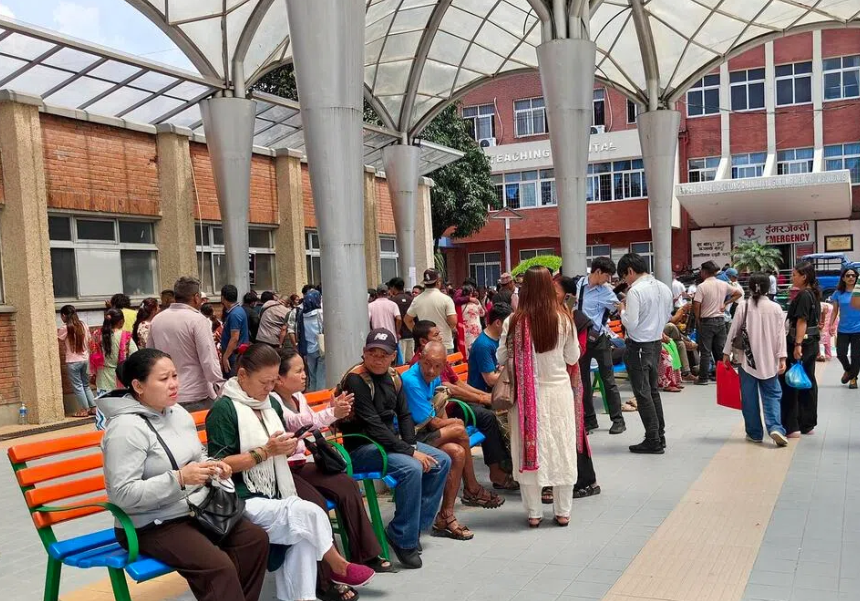
The search for the missing in Nepal has taken on a haunting character in the days following the catastrophic flash flood that swept through the country's northern border region on August 26. At the gates of Tribhuvan University Teaching Hospital in Kathmandu, a grim gallery of photographs depicting unidentified bodies has been erected as families and friends converge on the capital, searching desperately for any trace of their relatives. The display, while necessary for identification purposes, has become a symbol of the scale and brutality of the disaster that continues to unfold.
The toll from the deluge has surpassed 500 deaths in northern Nepal alone, with rescue teams systematically combing through the Bhotekoshi river system and its downstream regions in search of survivors and recovering bodies. Yet the true magnitude of the tragedy remains unclear, as over 1,500 people remain unaccounted for and the full extent of damage across multiple districts becomes apparent. The disaster has left entire communities fractured, with search and rescue operations deployed across a vast geographical area extending from the Nepali border with Tibet into lower-lying districts in the south.
Dolma Tamang, a 36-year-old woman, exemplifies the anguish gripping the nation. She has spent the past three days shuttling between Kathmandu's hospitals searching for her sister and brother-in-law, who were last heard from on the morning of the disaster while passing through Rasuwa district in a truck ferrying goods from the Chinese border. Their phones have gone silent, leaving Tamang in a state of limbo—neither confirmation of survival nor closure. Her experience is replicated across dozens of family members who have descended upon the capital with printed photographs of missing relatives, desperately hoping for recognition from hospital staff or chance encounters with survivors.
The identification process at Kathmandu's major hospitals has become emotionally overwhelming for those confronted with the macabre reality of sudden mass death. Bikesh Shrestha, searching for his cousin Rakesh, found himself unable to look at photographs of unidentified corpses displayed for recognition, illustrating the psychological toll this search has exacted on families. Others, like Sushila Shrestha searching for her 21-year-old brother Bir Bahadur, cling to hope based on the absence of confirmed identification, a thin thread of possibility that their loved ones might still be found alive in remote areas far from immediate rescue access.
The disaster has also ensnared numerous international travellers caught in the wrong place at the wrong time. Nine Singaporeans remain unaccounted for, while approximately 288 Indian nationals are among the missing. Many were engaged in the Kailash-Mansarovar pilgrimage, a religiously significant journey to Mount Kailash and Lake Manasarovar in Tibet that passes through the devastated Rasuwa district. The Gyirong border crossing between Nepal and Tibet, severely damaged in the deluge, has become a focal point for missing person inquiries. Family members from India, particularly from Tamil Nadu, have flown into Kathmandu to join the search efforts, bringing with them the weight of expectation and the burden of potentially grim discoveries.
Nepal's response to the crisis has mobilised significant national resources, with over 4,400 police personnel deployed alongside personnel from the Nepali Army and Armed Police Force. Rescue operations have proceeded continuously, though they were briefly suspended on August 28 due to concerns that a barrier lake—formed by debris damming the river—might breach and trigger a secondary deluge. This precaution underscores the ongoing volatility of the situation, as hydrological conditions in flood-affected areas remain unstable and unpredictable.
International support has flowed into the disaster zone, though Nepal's government has been selective about accepting external rescue assistance. Prime Minister Balen Shah declined offers from China, India, and other nations to deploy foreign search and rescue teams, a decision grounded in lessons learned from the 2015 earthquake when multiple international rescue operations created coordination challenges and logistical complications. Instead, Nepal has requested financial assistance channelled through a unified mechanism being established by the government, preferring to manage rescue operations independently while accepting material aid from neighbouring countries.
India has demonstrated significant solidarity, initially dispatching 47 tonnes of humanitarian assistance including temporary shelters, blankets, hygiene kits, and medicines via military transport aircraft. New Delhi has additionally offered prefabricated truss bridges to replace dozens of structures destroyed in the floods, recognising that infrastructure damage extends far beyond the immediate flood zone. The generosity reflects the deep people-to-people connections between the two countries and India's recognition that recovery will require sustained reconstruction effort across multiple sectors.
The capacity of hospitals to manage the crisis is already reaching critical limits. The Kathmandu Post reported that medical facilities across multiple districts are running out of morgue space to store bodies awaiting identification or claiming. Chitwan district, located downstream from the epicentre and bordering India, has been particularly hard hit. By August 28, 186 bodies had been recovered there, yet the district's hospitals could collectively accommodate only between 30 and 50 bodies in existing morgue facilities. This capacity shortfall raises urgent questions about how authorities will manage identification, dignified treatment of the deceased, and prevention of disease outbreaks in the coming weeks.
The disaster has exposed the vulnerability of communities along the Nepal-Tibet border corridor, where infrastructure remains fragile and population concentrations along major transport routes create pockets of extreme danger during natural disasters. For Malaysian readers and the broader Southeast Asian region, the Nepal floods serve as a stark reminder of how climate-related hazards and geographical vulnerabilities disproportionately affect mountainous and border-crossing areas. The scale of the disaster and its international dimensions—with nationals from Singapore, India, China, and the United Kingdom among the affected—underscore how natural catastrophes in one nation rapidly acquire regional and global implications.
As rescue operations continue and the missing person count stabilises, Nepal faces a protracted recovery phase. The psychological impact on survivors and families of the missing will persist long after the immediate crisis passes. The disaster highlights the critical importance of regional disaster preparedness frameworks, cross-border coordination mechanisms, and investment in early warning systems for communities situated in high-risk geographical zones. For the families still gathered outside Kathmandu hospitals, the anguish continues as they wait for news, hoping against diminishing odds that their loved ones will emerge from the debris.

