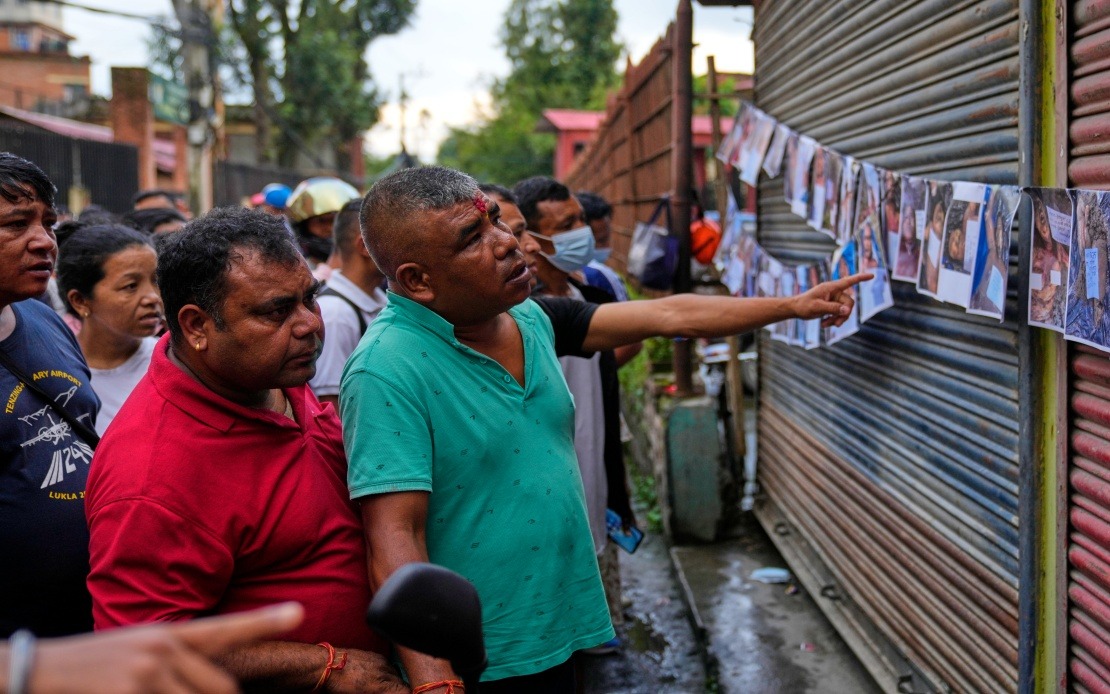
The catastrophic flooding that devastated Nepal's northern regions on Wednesday morning has claimed more than 500 lives, with search and rescue teams working frantically to locate survivors and account for missing persons across the affected districts. By Friday afternoon, rescue operations had entered their third consecutive day following the disaster that originated in the Rasuwa district along the Bhote Koshi and Trishuli rivers, triggered by a sudden and powerful glacial collapse in the Himalayas.
Malaysia remains actively engaged in tracking the welfare of its citizens caught in the disaster zone. As of Friday afternoon, the Foreign Ministry confirmed that two of the 57 Malaysians initially reported as untraceable had been successfully located, leaving 55 others still unreachable. The figures continue to be verified through coordination with Nepalese authorities and relevant agencies, as the full scope of the disaster becomes clearer. Datuk Syed Mohamad Hasrin Tengku Hussin, the Foreign Ministry's Deputy Secretary-General for Bilateral Affairs, emphasised that all numbers remain subject to further verification as information flows in from Nepalese counterparts.
Nepal's tourism authorities intensified the accountability effort on Thursday evening by releasing a comprehensive list of 537 foreign nationals from over 30 countries reported missing in the wake of the flooding. The Department of Tourism, operating under Nepal's Ministry of Culture, Tourism, and Civil Aviation, published detailed information including the names, ages, and nationalities of those unaccounted for, alongside records of the travel agencies coordinating their trips. This systematic documentation effort reflects both the scale of the international dimension to the disaster and the challenges faced in tracking individuals scattered across a vast and now-fragmented geographical area.
The disaster unfolded with terrifying speed on Wednesday morning when the glacial collapse released a torrential surge of water and debris down the Bhote Koshi River. The initial deluge devastated communities in Rasuwa before the floodwaters converged with the Trishuli River system, amplifying the destruction downstream. Infrastructure across multiple districts suffered catastrophic damage, with roads, bridges, and buildings swept away by the force of the water. Entire vehicles and structures vanished into the current, while some communities found themselves completely cut off from external access, severely hampering rescue and aid delivery operations.
The identification challenge has become a secondary humanitarian crisis in itself. Authorities are recovering bodies and human remains in districts far removed from the initial flooding zone in Rasuwa, complicating identification efforts as corpses are carried downstream. Morgue facilities in several affected areas have become overwhelmed, creating storage and identification bottlenecks that are impeding the repatriation process. The Kathmandu Post reported that many victims remain unidentified, with authorities struggling to manage the sheer volume of deceased and the logistical demands of proper handling and family notification.
Meanwhile, rescue efforts have achieved some successes amid the devastation. Nepalese tourism authorities reported that 121 foreign nationals have been rescued from the flood-ravaged region so far. However, no Malaysians have yet been identified among those extracted to safety, adding to the anxiety surrounding the status of the 55 unaccounted citizens. The rescue operations have prioritised accessible areas where survivors might be trapped, though the difficult terrain and ongoing weather conditions continue to complicate search efforts.
The Malaysian government has mobilised a coordinated response at the highest levels. Prime Minister Datuk Seri Anwar Ibrahim indicated that assistance to Nepal could take multiple forms, ranging from financial support to the deployment of qualified rescue personnel. The National Security Council is maintaining close communication with the Nepalese government to determine the most appropriate and effective form of aid that Malaysia can provide, given the ongoing operational demands of the rescue phase.
Malaysia is actively considering the deployment of the Malaysian Special Search and Rescue Team (SMART), an elite unit trained for precisely these types of international emergencies. The decision regarding SMART's deployment hinges on coordination outcomes with Nepalese authorities, as a foreign rescue team's effectiveness depends significantly on ground access, local liaison, and integration with existing rescue structures already in place. The Foreign Ministry continues intensive efforts to establish the precise status of all Malaysians in the affected areas, maintaining open channels with local officials and travel agencies.
For Malaysia, the Nepal disaster carries particular resonance given the substantial number of Malaysian tourists and adventure travellers who regularly visit Nepal's Himalayan regions. The country's trekking and mountaineering tourism industry attracts significant numbers of Malaysian adventurers, many of whom operate through organised tour groups. The flooding in Rasuwa, a district encompassing popular trekking routes and mountainous attractions, means that many of those unaccounted for were likely part of structured tour packages that were caught in the disaster zone.
The broader implications for Southeast Asian tourism and regional cooperation are substantial. The disaster underscores the environmental risks associated with climate-related hazards in the Himalayan region and the inherent vulnerabilities of international tourist groups operating in remote mountainous areas. It has prompted urgent discussions about evacuation protocols, communication systems, and coordination mechanisms for situations when disasters strike tourist destinations hosting nationals from multiple countries simultaneously.
For the Malaysian contingent stranded or missing, the coming days will be critical. Search and rescue efforts typically become exponentially more difficult and less successful as time passes beyond the initial 72-hour window. However, the challenging terrain and ongoing accessibility issues in Nepal suggest that survivors may still be located in subsequent days, particularly those who managed to find shelter or higher ground away from the immediate floodwaters.

