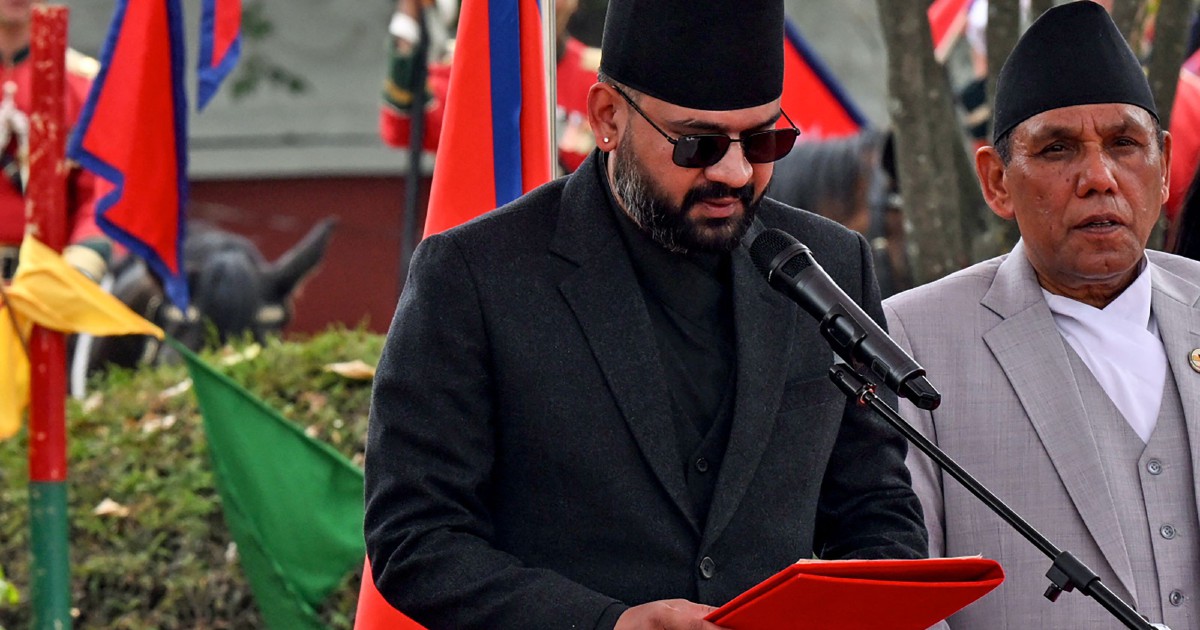
Nepal's Prime Minister Balendra Shah has secured clearance to retain his distinctive dark sunglasses while participating in parliamentary proceedings, marking a pragmatic resolution to an unusual constitutional matter. An official statement released on Tuesday confirmed that the exemption stems from legitimate health grounds, establishing a precedent that medical necessity can override traditional parliamentary decorum standards in the South Asian nation's legislature.
The initial friction arose when Nepal's parliament speaker advised the Prime Minister against wearing the eyewear during legislative sessions, citing long-standing conventions that govern acceptable attire and appearance within the chamber. Such conventions exist across parliamentary democracies worldwide, reflecting formality expectations and the symbolic significance of legislative spaces as forums for national governance. However, the situation took a different trajectory when medical documentation was presented to justify the continued use of the sunglasses.
The decision to permit Shah's sunglasses illustrates how modern institutional practices must accommodate individual health requirements, a principle increasingly recognized across government bodies globally. Rather than rigidly adhering to dated aesthetic standards, Nepal's parliament has demonstrated flexibility in balancing institutional decorum with personal medical needs. This represents a nuanced approach to parliamentary procedure that acknowledges real-world constraints while maintaining the dignity of legislative processes.
For Southeast Asian and regional observers, the episode offers insights into how democratic institutions navigate evolving expectations around accessibility and accommodation. Nepal's solution—verifying medical claims before granting exceptions—provides a reasonable framework that prevents frivolous requests while protecting individuals with genuine health concerns. This calibrated approach avoids both excessive leniency and inflexible institutional gatekeeping.
The parliament speaker's initial stance reflected conventional thinking about parliamentary standards, traditions that have governed legislative chambers since Nepal's democratic transition. However, the subsequent accommodation demonstrates institutional maturity and willingness to adapt policies when confronted with legitimate individual circumstances. Such flexibility, when applied thoughtfully, can strengthen public confidence in democratic institutions by showing they serve citizens rather than abstract procedural ideals.
In practical terms, the decision affects daily parliamentary operations minimally while potentially setting important precedent for future requests involving health-related accommodations. Other legislators or officials might reference this case if seeking similar exceptions for medical reasons, from hearing aids to specialized eyewear to mobility assistance devices. By establishing transparent criteria for evaluation, Nepal's parliament has created a framework others might follow.
The incident also touches on broader questions about what constitutes appropriate parliamentary dress and presentation in contemporary democracies. While formal dress codes remain important markers of institutional respect, they should not become impediments to participation when legitimate medical reasons exist. Nepal's resolution strikes this balance by accepting the medical justification rather than demanding the Prime Minister compromise his health for procedural aesthetics.
For Malaysian readers, the episode resonates given similar ongoing discussions about institutional flexibility and inclusion within regional parliaments. As Southeast Asian democracies mature, debates increasingly center on how to maintain procedural integrity while accommodating diverse needs and circumstances among elected representatives and officials. Nepal's approach offers a practical model that separates genuine accommodation from mere preference.
Balendra Shah's prominence as Prime Minister means his continued visibility in parliamentary settings influences public perception of institutional norms and values. By handling this matter decisively and reasonably, Nepal's parliament demonstrated that it prioritizes substantive governance contributions over cosmetic compliance. This sends positive signals about institutional priorities to both domestic audiences and regional observers.
The broader context of parliamentary evolution across South and Southeast Asia reveals increasing attention to accessibility and inclusion in legislative spaces. Nepal's decision aligns with global trends recognizing that health accommodations enhance rather than diminish institutional legitimacy. When citizens see their representatives treated fairly and their legitimate needs respected, confidence in democratic processes strengthens correspondingly.
Looking forward, this precedent may influence how Nepal's parliament and other regional legislatures address similar requests involving health-related accommodations. By establishing that medical documentation can justify exceptions to standard protocols, the decision creates pathways for other legitimate requests while maintaining mechanisms to prevent abuse. This nuanced institutional response reflects sophisticated understanding of how democratic bodies must evolve.
Ultimately, the resolution demonstrates that parliamentary traditions and modern medical realities need not conflict when institutions approach such matters thoughtfully. Nepal's handling of this situation suggests a matturing democracy that can balance respect for established conventions with recognition that individual circumstances sometimes require flexibility. Such adaptability, when grounded in reasonable criteria and transparent processes, strengthens rather than weakens democratic institutions and their connection to the people they serve.

