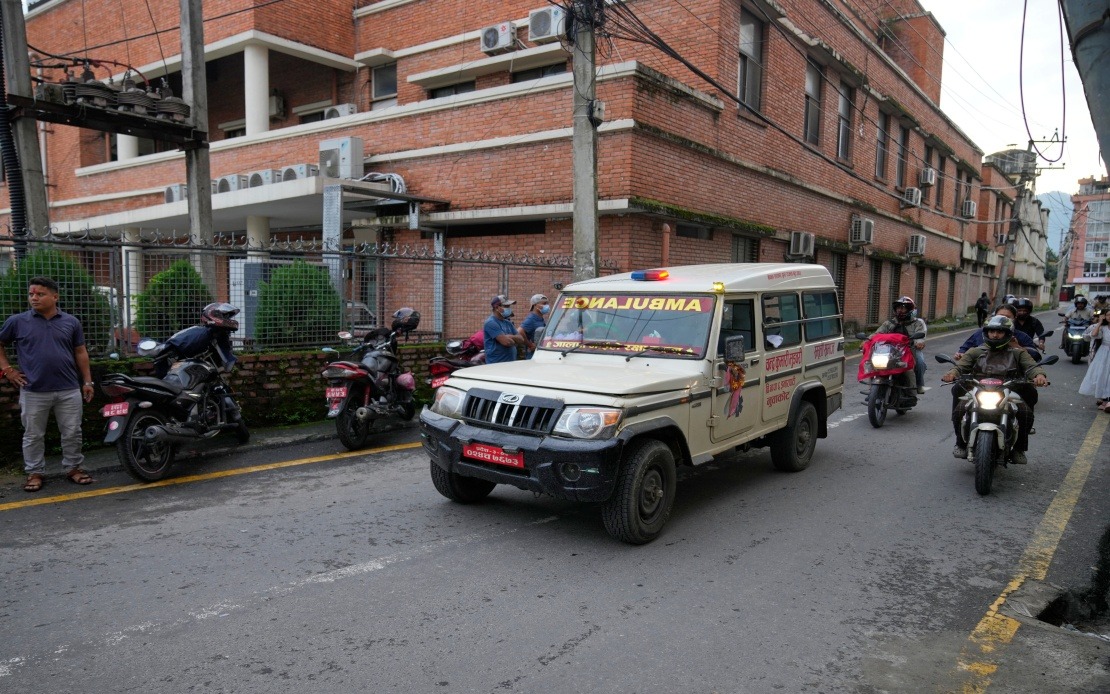
Nepal's rescue operation has successfully evacuated 121 international tourists and workers from regions devastated by flash flooding triggered by a Himalayan glacial collapse, though the true scale of the humanitarian crisis continues to mount as search teams struggle with recovery efforts across both Nepal and China. The rescue tally, compiled by Nepal's tourism authorities as of Friday evening, revealed a diverse cohort of stranded foreigners including 85 Indians, 16 Chinese nationals, nine South Koreans, and smaller numbers from Western nations such as the United States, Russia, Italy, Belgium, Bulgaria, Portugal, Spain and Switzerland.
Wednesday's disaster centred on the catastrophic failure of glacial structures high in the Himalayas, which unleashed torrential surges through the Bhote Koshi and Trishuli rivers. The resulting floods swept through populated areas with devastating force, claiming an estimated 550 lives to date and causing destruction that extends across the Nepal-China border region. The scale of casualties reflects both the sudden intensity of the water surge and the remote, rugged terrain that complicated immediate emergency response.
Indian officials have raised particular concern about the welfare of their nationals caught in the disaster zone. The Indian Ministry of External Affairs reported 320 people of Indian origin remain unaccounted for, though authorities have confirmed that 63 Indian workers employed on the Trishuli hydropower project have been located safely. An additional 21 rescued individuals have already been transported back to Indian territory. Beyond these figures, Indian officials identified approximately 100 people holding Indian passports or of Indian heritage carrying other nations' travel documents who remain missing—many believed to have been undertaking the sacred Kailash Mansarovar pilgrimage in the Xizang region of China when the disaster struck. Reassuringly, roughly 400 Indian nationals reported to have been in the Chinese region have been confirmed safe.
The logistical and humanitarian challenges facing Nepal's emergency response apparatus have become increasingly apparent as recovery operations continue. Hospital facilities in the twin tourist centres of Chitwan and Pokhara have reached capacity, forcing authorities to confront acute difficulties in identifying and storing recovered bodies. Nepalese officials have publicly acknowledged these constraints, with local media reports detailing the strain on medical infrastructure and morgue facilities. Search and rescue teams have been deployed to multiple downstream areas where the floodwaters have spread devastation, though the mountainous terrain and ongoing water flow continue to impede systematic searches.
Nepal's political leadership has mobilised the government's disaster response machinery, with Prime Minister Balendra Shah convening a Cabinet meeting on Friday to assess the flood's aftermath and coordinate relief efforts. As a symbolic gesture of national solidarity and commitment to recovery, Shah and his Cabinet colleagues pledged to contribute one month's salary to the Prime Minister's Natural Disaster Relief Fund. This decision, though largely ceremonial, underscores the government's acknowledgement of the crisis's severity and serves to set a tone for broader national mobilisation.
Regional solidarity has materialised rapidly, with neighbouring India responding through multiple humanitarian channels. New Delhi has already dispatched two separate shipments of relief aid totalling 47.5 tonnes to Nepal, with a third aircraft scheduled to depart on Friday carrying additional emergency supplies. This coordinated assistance reflects the deeply interlinked nature of South Asian disaster response, where shared borders and populations often mean that crises transcend national boundaries and require swift cross-border cooperation.
Pakistan has also joined the regional response framework, with Prime Minister Shehbaz Sharif initiating direct telephone contact with his Nepalese counterpart on Friday. During their conversation, Sharif conveyed Pakistan's condolences regarding the loss of life whilst formally pledging emergency relief assistance to Nepal. The gesture, whilst perhaps modest in scale compared to India's larger aid contributions, signals broader South Asian commitment to supporting Nepal through this crisis period.
For Malaysia and Southeast Asian observers, the Nepal disaster carries multiple implications. The incident underscores the increasing frequency and severity of climate-related natural disasters across the Hindu Kush-Himalayan region, a reality that reverberates through water security and environmental stability concerns for downstream nations including Southeast Asia. The rescue operation's complexity—involving multinational coordination to evacuate stranded foreign nationals—mirrors challenges that Southeast Asian nations regularly confront, particularly given the region's substantial flows of international tourism and migrant workers. Furthermore, the rapid regional diplomatic responses demonstrate established crisis management protocols that have developed through decades of disaster experience in South Asia, offering potential lessons for ASEAN nations seeking to strengthen their own cross-border emergency frameworks.

