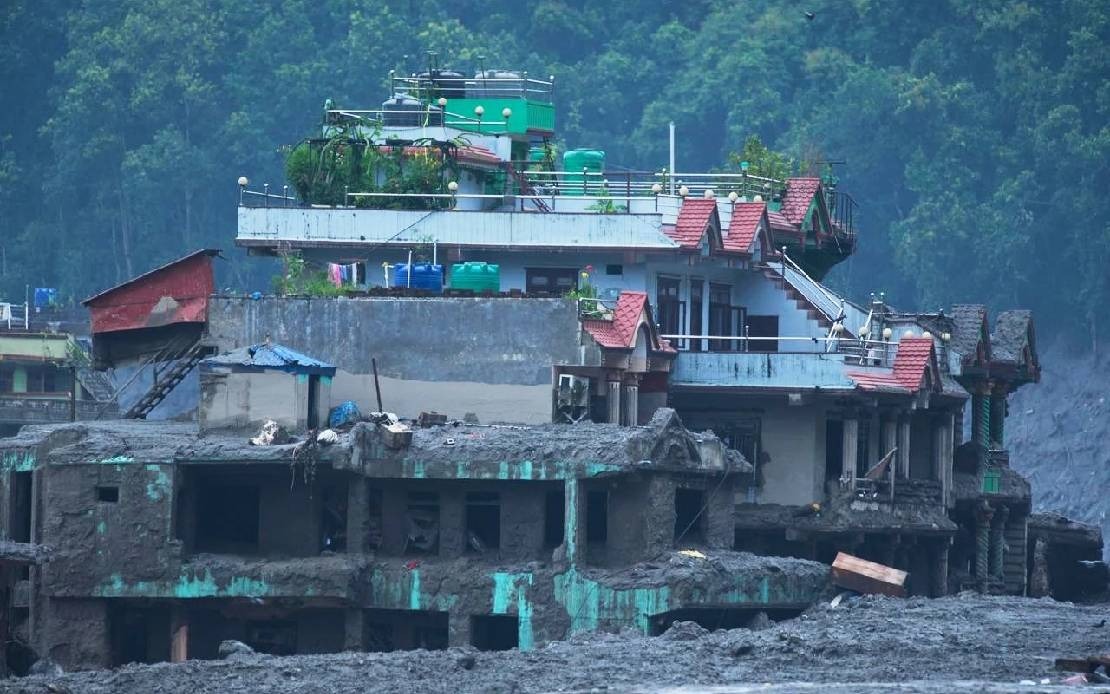
Nepal has launched an urgent appeal for international assistance in the aftermath of a devastating flood that swept through its mountainous terrain bordering Tibet, killing at least 626 people and leaving the impoverished nation of 30 million facing an estimated reconstruction bill of between US$4 billion and US$5 billion. The disaster struck on Wednesday when a glacier collapse unleashed a massive torrent of rock, ice, mud and debris through mountain river systems, destroying buildings, bridges and power infrastructure across a wide swathe of territory. The neighbouring region of Tibet in China has also suffered casualties, with seven deaths reported in Gyirong County.
The scale of the humanitarian crisis has been compounded by the challenges of locating survivors, with nearly 3,000 people unaccounted for — approximately 2,426 in Nepal and at least 554 across the border in Tibet, including roughly 540 foreigners, a significant number of whom are Hindu pilgrims from India who were trekking in the region when the disaster struck. The combination of challenging terrain, extensive damage to transportation networks and deteriorating weather conditions has severely restricted the ability of rescue teams to conduct comprehensive search operations. On Saturday, authorities were forced to suspend search and rescue efforts entirely due to heavy rainfall and dense fog, shifting their immediate focus towards transporting rescued individuals to safety in Kathmandu.
The identification and recovery of remains has become a secondary challenge of considerable complexity. With the flood occurring three days prior, the recovery of decomposed bodies has necessitated a complete recalibration of the handling protocols, as authorities grapple with both health concerns and the practical difficulties of identifying victims. The Chitwan district administration has established procedures for DNA sample collection before burial in designated open spaces, a measure intended to prevent potential disease transmission and epidemic risks while preserving the possibility of later identification through genetic analysis. At Maharajgunj Medical Campus in Kathmandu, families of the missing have congregated around the facilities where recovered bodies have been transported, with photographs displayed on walls and gates in desperate attempts to identify relatives.
One of the most significant remaining risks to Nepal's stability comes from two upstream lakes that formed during the flooding event. A body of water created across the Nepal-China border began overflowing dangerously into the Lhende Khola and Trishuli rivers, prompting a second suspension of rescue operations on Friday as authorities assessed the threat of secondary flooding. By Saturday, Chinese authorities reported that satellite imagery indicated the water was gradually flowing through the reservoir and diminishing in volume, reducing the immediate overflow hazard. However, officials have cautioned that flood risks will continue to pose a threat until both monitored lakes have completely drained, representing a protracted period of vulnerability for communities downstream.
Nepal's Foreign Minister Shisir Khanal has articulated the specific nature of the nation's requirements, clarifying that while local capabilities exist for general search and rescue operations, the country urgently requires specialised external expertise in several critical areas. These include the capacity to extract people trapped in collapsed tunnels, reopening of transportation and communication networks destroyed by the flood, advanced body identification techniques, DNA testing services and appropriate facilities for the preservation and storage of remains. Kathmandu has already submitted formal requests for such technical assistance from international partners, acknowledging that the scale and complexity of this disaster exceed existing domestic capacity.
India has responded swiftly to Nepal's distress, dispatching three flights carrying approximately 60 tonnes of relief supplies including blankets, medications, food and water purification equipment. Beyond immediate humanitarian aid, New Delhi has committed to deploying a specialised tunnel rescue team and a medical contingent to support ongoing recovery efforts. The Indian Foreign Ministry has further offered its national disaster response force and the provision of prefabricated bridges along with technical teams to assist in restoring critical connectivity across damaged infrastructure. This rapid mobilisation reflects the close security and humanitarian ties between the two nations and India's strategic interest in maintaining stability in the Himalayan region.
China, while calling for emergency humanitarian assistance to affected areas and international rescue cooperation, has not yet detailed the specific nature or scale of its own contribution to Nepal's recovery efforts. The ambiguity surrounding Beijing's response stands in contrast to India's publicised commitments, reflecting broader patterns of regional diplomatic competition in the aftermath of transnational disasters. The involvement of both major powers in Nepal's reconstruction underscores the geopolitical dimensions of humanitarian crises in South Asia, where neighbouring countries compete to demonstrate capability and commitment to affected populations.
Finance Minister Swarnim Wagle has provided the first official estimate of reconstruction costs, placing the reconstruction requirement between US$4 billion and US$5 billion, though he cautioned that these figures represent preliminary assessments subject to revision as detailed damage evaluations continue. This magnitude of financial requirement presents a considerable burden for a developing nation already struggling with limited fiscal resources and competing development priorities. The reconstruction demands will likely necessitate significant international donor coordination, potentially through mechanisms involving the World Bank, Asian Development Bank and bilateral partnerships with major trading partners and regional powers.
The disaster highlights the intersection of environmental vulnerability and development challenges in the Himalayan region. Climate change-induced glacier instability, combined with concentrated human activity in physically constrained mountain valleys, creates conditions for catastrophic events with devastating humanitarian consequences. For Southeast Asian nations engaged in similar mountainous terrain, including parts of Myanmar, Thailand and the Philippine cordillera, this event serves as a stark reminder of the urgent need for enhanced early warning systems, improved infrastructure resilience and coordinated regional disaster management protocols.
The recovery process will extend far beyond the immediate rescue phase, extending into months and potentially years of reconstruction and psychological rehabilitation. Nepal's international appeal signals recognition that localised disasters in a region of significant poverty and limited state capacity require genuine multilateral cooperation rather than isolated national responses. The success or failure of the international community's response to this crisis will shape expectations and capacities for future regional disasters, establishing precedents for cooperation or exposing gaps in regional disaster governance that merit urgent attention from policymakers across Asia.

