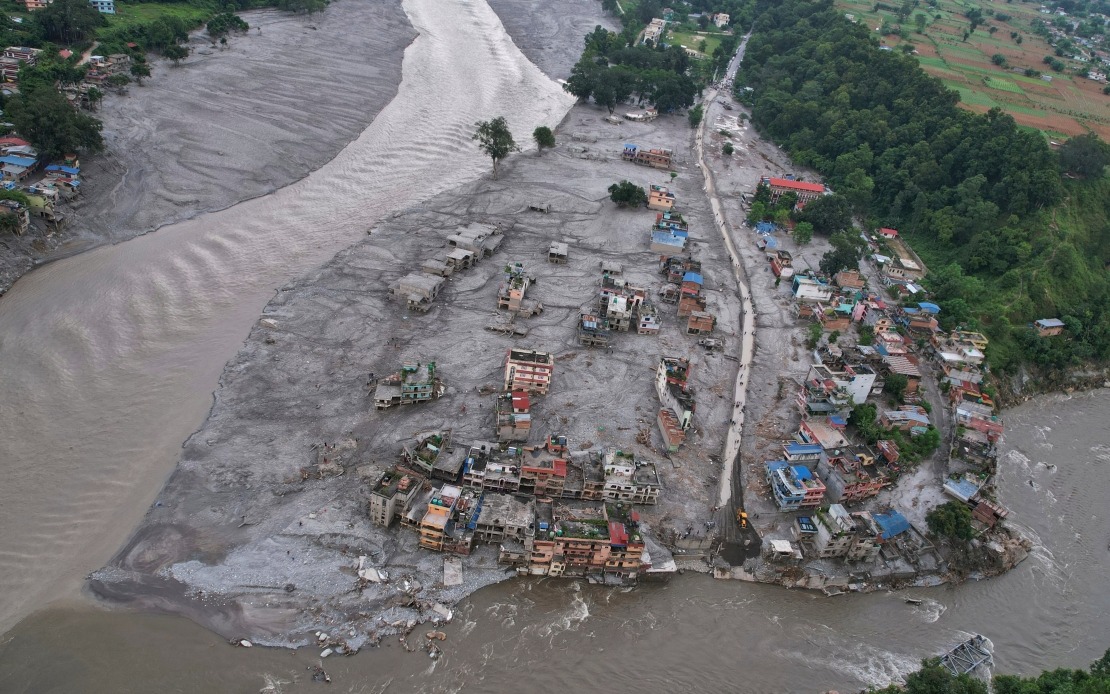
Nepal is proceeding cautiously with its decision on whether to accept search and rescue support from additional countries in the aftermath of the catastrophic flooding that struck its central and northern regions on Wednesday. The government has announced it will complete a comprehensive assessment of the current situation before committing to further external assistance, according to Malaysia's diplomatic representation in Kathmandu.
The disaster, triggered by severe flooding in the Bhote Koshi and Trishuli river basins, has created a complex humanitarian emergency that extends beyond Nepal's borders. Initial reports indicated that at least 633 people across Nepal and China were killed in the immediate aftermath of Wednesday's disaster, with nearly 3,000 individuals still unaccounted for, including hundreds of foreign nationals. The cross-border nature of the flooding has compounded rescue efforts, as the waters affected communities and infrastructure on both sides of the Nepal-China frontier.
Currently, Nepal has formally accepted search and rescue operations from four countries: Australia, China, India, and South Korea. The decision to bring in these specific nations reflects a strategic consideration—all four countries have citizens employed at hydropower facilities affected by the flooding. This connection highlights how modern infrastructure projects in the Himalayan region create interdependent international workforces, making bilateral cooperation essential during crises.
The scale of the emergency at hydropower installations has become starkly apparent. More than 900 workers across eleven hydropower projects, several still under construction, found themselves trapped in tunnels and underground powerhouses when the flooding occurred. These subterranean facilities, designed to harness the region's water resources for electricity generation, became death traps as water surged through confined spaces with no immediate escape routes. The workers' plight has become the centrepiece of the current rescue operations, driving the focus toward rapid extraction from these inaccessible locations.
Malaysia has positioned itself among the nations offering humanitarian assistance to Nepal, demonstrating the regional solidarity that characterises Southeast Asian responses to major disasters. Prime Minister Datuk Seri Anwar Ibrahim indicated earlier that Malaysia is actively coordinating the delivery of aid packages to the affected nation and is preparing to potentially deploy the Malaysian Special Search and Rescue Team (SMART). This specialized unit has developed considerable expertise through previous humanitarian missions across Asia and would represent a significant contribution to the multilateral rescue effort.
The charge d'affaires of the Malaysian Embassy in Kathmandu, Mohd Firdaus Azman, conveyed Nepal's cautious approach when speaking with journalists on Saturday. His statement that "they (Nepal) informed that they will assess the situation before accepting SAR missions from any other country" suggests that Nepalese authorities are managing the coordination of international assistance carefully, likely to avoid overwhelming their existing command structures or duplicating efforts already underway by the four accepted nations.
This measured approach carries practical implications. Nepal's disaster management infrastructure, while experienced with seasonal flooding and earthquakes, faces unprecedented challenges in coordinating multiple international rescue teams simultaneously. The Himalayan nation must balance its need for external expertise and resources against the logistical complexity of managing numerous foreign teams operating across difficult terrain. By maintaining a deliberative stance, Nepal can absorb current operations while remaining positioned to request targeted assistance should the situation deteriorate or specific expertise gaps emerge.
From Malaysia's perspective, the situation underscores the importance of robust regional disaster response mechanisms. The significant number of Malaysians unaccounted for—55 in Nepal and 36 in China as reported by the Foreign Ministry as of Saturday evening—adds urgency to bilateral coordination. Malaysia's SMART team specializes in precisely the type of rescue operations now critical in Nepal's hydropower facilities, suggesting that Malaysian assistance, if ultimately accepted, would address a genuine operational need rather than duplicating existing efforts.
The disaster also illuminates vulnerabilities in how Southeast Asian nations and their neighbours manage cross-border infrastructure risks. As countries throughout the region develop major hydropower, mining, and construction projects in challenging environments, the interdependency of workforces from multiple nations creates both opportunity for regional cooperation and complexity in emergency response. The Nepal flooding demonstrates that disaster preparedness must extend beyond national borders to encompass coordination frameworks, mutual aid agreements, and rapid communication channels.
Nepal's deliberate assessment process likely includes evaluating the effectiveness of current rescue operations, identifying specific resource gaps, and determining whether additional international teams would enhance or complicate coordination efforts. This pragmatic approach, while potentially frustrating to nations eager to contribute, reflects mature disaster management thinking. The nation is avoiding the trap of accepting assistance simply because it is offered, instead maintaining focus on what will genuinely accelerate the rescue of the 900 trapped workers and recovery for affected communities.
As the assessment proceeds, Malaysia and other waiting nations remain positioned to respond rapidly. The regional disaster response architecture has been tested repeatedly in recent years through earthquakes, typhoons, and flooding across Southeast Asia and South Asia. Each crisis refines these coordination mechanisms and strengthens the networks through which assistance flows. Nepal's current caution, rather than representing reluctance toward international cooperation, actually reflects the growing sophistication with which major disaster-affected nations now manage complex multi-country rescue operations.

