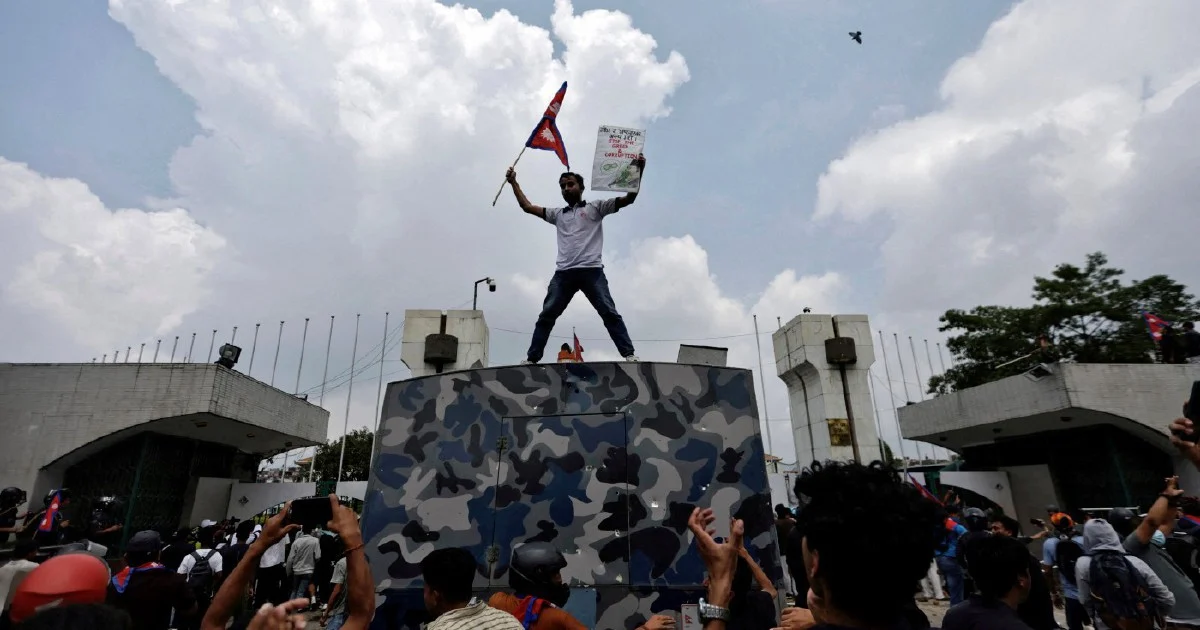
Bishnu Prasad Paudel, who previously served as Nepal's finance minister, was taken into police custody late on Monday following accusations of money laundering, marking a significant escalation in the country's broadening anti-corruption investigations. The arrest underscores the commitment of Nepal's current Gen Z-influenced administration to pursue alleged financial misdeeds that accumulated during previous administrations, a pledge that has increasingly shaped the government's law enforcement agenda since it assumed office.
The move reflects a wider pattern of intensified scrutiny directed at former officials across multiple government levels. Nepal's newly empowered administration has made combating perceived corruption within the state apparatus a central pillar of its political platform, and the apprehension of a former finance minister—a position with substantial control over national fiscal policy—demonstrates the scope and seriousness with which authorities are now pursuing high-profile cases.
Money laundering represents a particularly grave charge within international financial governance frameworks. The allegation suggests that funds obtained through illicit means were processed through legitimate financial channels to obscure their origin and ownership. For a former finance minister, such accusations carry heightened significance, as these individuals typically possess intimate knowledge of government treasury operations, foreign exchange mechanisms, and banking sector oversight structures that could theoretically be exploited for illicit purposes.
The arrest comes amid growing international focus on financial transparency across South Asia. Nepal, like other regional nations, has faced scrutiny from global financial watchdog bodies regarding its anti-money laundering protocols and enforcement mechanisms. The arrest of a high-profile former official signals that Nepal's authorities are responding to both domestic and international pressure to demonstrate effective compliance with international standards for combating financial crimes.
For Malaysian observers, Nepal's investigation trajectory offers relevant lessons regarding governance vulnerabilities that transcend borders. Southeast Asian nations and their South Asian counterparts share common challenges in addressing corruption within ministerial-level positions, where access to financial systems and discretionary spending authority creates opportunities for illicit enrichment. The Nepal case demonstrates how successor governments may utilise anti-corruption mechanisms as political tools while also potentially addressing genuine financial irregularities.
The involvement of a Gen Z-influenced government in prosecuting predecessors introduces an interesting generational dimension to anti-corruption efforts. Younger political leadership often campaigns on transparency and institutional reform as distinguishing platforms, creating both genuine commitments to accountability and political incentives to target predecessors. This dynamic mirrors developments seen across several regional democracies where generational turnover in leadership has prompted renewed attention to historical financial irregularities.
Nepal's financial sector remains vulnerable to informal money transfers, cross-border cash smuggling, and inadequately documented remittance flows that complicate detection of illicit fund movement. The Himalayan nation's position within regional trade networks and its historical challenges in implementing robust banking regulations create structural conditions where money laundering can flourish with relative ease. Former finance ministers, possessing sophisticated understanding of regulatory gaps and enforcement mechanisms, might theoretically exploit such vulnerabilities more effectively than ordinary actors.
The timing and nature of the arrest also warrant attention regarding its political implications. In transitional democracies, prominent arrests of opposition-aligned figures can simultaneously serve legitimate accountability purposes and reflect partisan motivations. International observers and civil society organisations typically scrutinise such prosecutions to assess whether they reflect genuine rule of law advancement or selective justice targeting political opponents while leaving allied figures unexamined.
Paudel's case will likely proceed through Nepal's judicial system amid international observation and domestic political commentary. The investigation's trajectory—particularly regarding evidence gathering, transparency in proceedings, and consistency with how similarly-positioned officials are treated—will substantially influence perceptions of whether Nepal is genuinely advancing institutional accountability or employing anti-corruption mechanisms selectively for political advantage.
The broader implications extend beyond Nepal's borders. Regional investors and development partners assess governance quality partly through observing how nations handle high-level corruption investigations. Credible prosecutions of former ministers can strengthen confidence in institutional integrity, while politically motivated cases can undermine faith in judicial independence and discourage foreign investment in governance-dependent sectors.
As Nepal's investigation proceeds, the case will test whether the country's Gen Z-aligned administration can translate anti-corruption rhetoric into institutionally robust, politically neutral enforcement mechanisms. Success would position Nepal as a regional exemplar of generational commitment to financial accountability, while failure to maintain judicial impartiality could reinforce perceptions that anti-corruption campaigns serve primarily partisan purposes. For Malaysia and other regional nations grappling with similar institutional challenges, Nepal's experience offers instructive precedent regarding both the possibilities and pitfalls inherent in aggressive anti-corruption efforts.