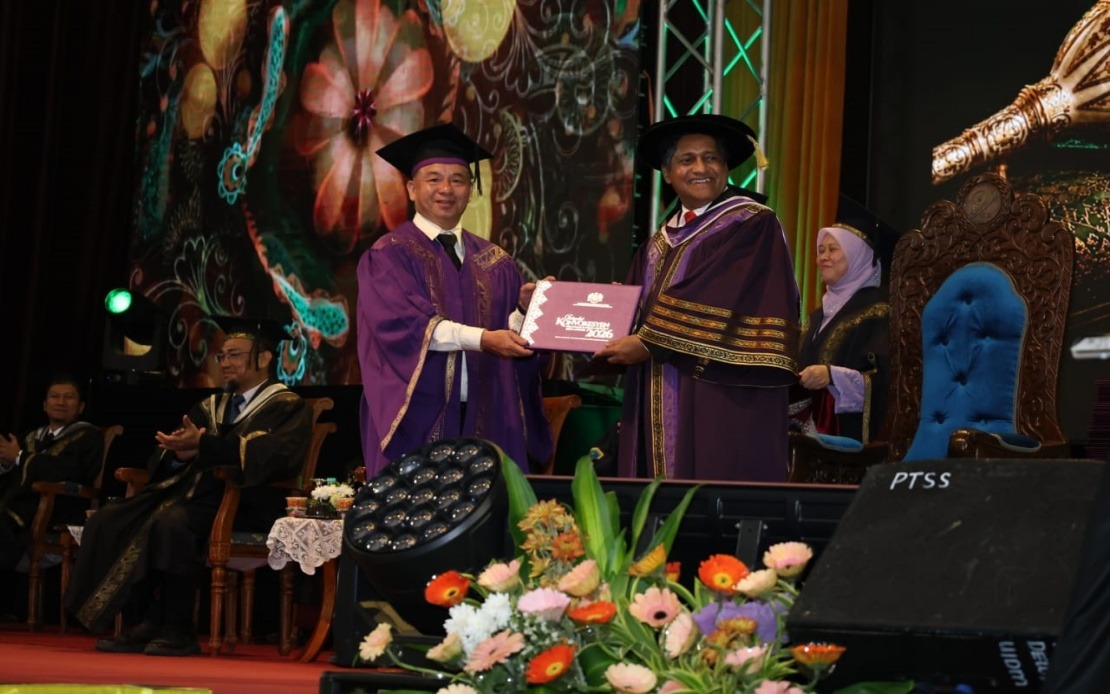
Heng Meng Lai has shattered age barriers in Malaysia's vocational education landscape by becoming Seberang Perai Polytechnic's oldest graduate, receiving his Diploma in Electrical and Electronic Engineering at the institution's 2026 Convocation Ceremony. The 57-year-old's milestone achievement represents far more than a personal accomplishment; it signals a broader shift in how Malaysian society views education and second chances, particularly in an era when skills upgrading and continuous learning are becoming essential rather than optional.
Heng's path to graduation spanned nearly five decades of deferred ambitions. Childhood hardship shaped his determination to pursue formal qualifications—his father's death when he was nine left his mother as the family's sole breadwinner, working in a sewing factory to support seven children. These early struggles instilled in Heng a resolute belief that education could transform his circumstances, even if that transformation would take half a lifetime to achieve. His earlier career progression through the electronics sector, rising from storekeeper to production line supervisor, provided practical experience but left an intellectual hunger that formal credentials could satisfy.
The decision to pursue Electrical and Electronic Engineering reflected Heng's career history and genuine passion for the field. His decades of exposure to electronics manufacturing operations had deepened his understanding of the industry's technical dimensions, making the polytechnic curriculum a natural extension of his professional experience. This convergence of practical knowledge and formal training represents an increasingly common pattern in Malaysia's workforce, where experienced professionals seek qualifications to legitimize and advance their expertise.
What distinguishes Heng's experience at Seberang Perai Polytechnic is the institutional environment that facilitated his success. Being substantially older than classmates could have created isolation or academic friction, yet the polytechnic's lecturers provided consistent encouragement and pedagogical flexibility. Heng emphasizes that he never felt marginalized despite his age differential, suggesting that the institution cultivated an inclusive learning community. This institutional responsiveness matters significantly in Malaysia's push toward lifelong learning, as older students considering educational re-entry need assurance that they will find supportive rather than dismissive environments.
The personal dimension of Heng's achievement carries particular resonance for Malaysian workers in middle age seeking career transitions or professional advancement. His journey demonstrates that the polytechnic system—traditionally positioned as an alternative pathway for school-leavers—functions equally as a viable option for career pivots and skills enhancement among mid-career professionals. As Malaysia's economy evolves and automation reshapes sectors like electronics manufacturing, such narratives become increasingly relevant to workers concerned about their long-term employability and career prospects.
Seberang Perai Polytechnic Director Mohd Ruzi Hamzah positioned Heng's achievement within Malaysia's national lifelong learning agenda. The director's comments underscore how individual success stories align with government policy objectives to develop a skilled workforce capable of adapting to economic transformation. By celebrating Heng's ascent from storekeeper through to diploma holder, the institution reinforces the message that education serves as a corrective mechanism for early-career limitations and a pathway for continuous professional growth across all life stages.
Heng's plans post-graduation reveal a pragmatic approach to credential advancement. Rather than immediately pursuing a bachelor's degree, he intends to re-enter the workforce and apply newly acquired knowledge and skills in practical settings. This sequencing reflects both financial realities—he works as a single individual—and a recognition that recent graduates benefit from consolidating theoretical learning through immediate application. His eventual intention to pursue higher education signals that the diploma represents not a terminal achievement but an intermediate milestone in an extended educational trajectory.
The implications of Heng's story extend beyond individual inspiration to systemic considerations about Malaysian education policy. Seberang Perai Polytechnic's willingness to enrol and support a student whose age and life experience differ dramatically from the traditional student population suggests institutional flexibility that could be leveraged more broadly. As Malaysia confronts skills gaps in technical sectors and faces demographic challenges including an aging workforce, educational institutions supporting non-traditional students become increasingly critical infrastructure.
Furthermore, Heng's achievement highlights untapped human potential within Malaysia's existing workforce. Thousands of mid-career workers possess practical experience and motivation to formalize their knowledge through credentials, yet cultural assumptions about appropriate timing for education may deter them from pursuing such pathways. Celebrating examples like Heng's helps normalize educational engagement across age groups and reduces the stigma that older students might otherwise experience.
The electronics sector context deserves particular attention. Manufacturing-heavy states like Penang, where Seberang Perai is located, rely on electronics production as a cornerstone industry. Workers like Heng, with decades of factory experience, represent a knowledge resource that formal credentialing can upgrade. As industry 4.0 and automation reshape manufacturing, workers with both practical production experience and formal engineering credentials occupy valuable intermediate positions in the technological hierarchy.
Institutionally, Heng's graduation challenges educators to think beyond conventional student demographics. Polytechnic curricula designed for eighteen-year-old school-leavers may require adaptation to serve older learners managing work, family, and financial constraints simultaneously. The fact that Seberang Perai's lecturers provided meaningful support suggests the institution recognized this need and responded accordingly, potentially offering a model for other polytechnics nationwide.
As Malaysia aspires toward becoming a high-income developed nation, the narrative shifts from education serving primarily youth transitions to education serving lifelong workforce development. Heng Meng Lai's diploma represents not merely his personal vindication but a validation of this broader policy orientation. His achievement demonstrates that educational institutions can successfully serve non-traditional populations when they commit institutional resources and cultural attitudes toward inclusion.
Moving forward, Heng's example offers encouragement to countless Malaysians who abandoned educational aspirations due to early life circumstances, economic pressure, or simple lack of opportunity. His story suggests that Malaysia's educational infrastructure—particularly its polytechnic system—possesses both the capacity and, increasingly, the inclination to accommodate learners regardless of age. In a nation pursuing continuous economic upgrading and workforce development, such inclusivity becomes not merely an individual benefit but a national asset.

