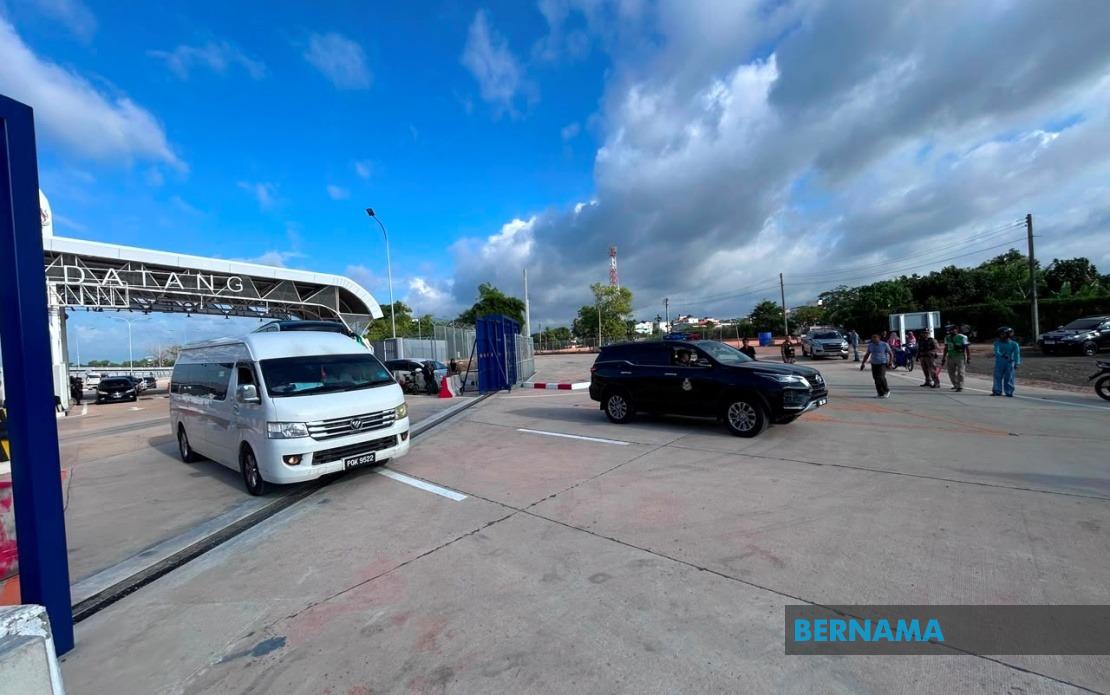
A new road linking Kedah's Bukit Kayu Hitam Immigration, Customs, Quarantine and Security Complex with Thailand's Sadao Customs, Immigration and Quarantine Complex commenced operations on July 11, marking a significant infrastructure milestone for regional connectivity. The route opened at 6 am and has already demonstrated the potential to reshape cross-border traffic patterns between two of Southeast Asia's most economically integrated neighbours. Prime Minister Datuk Seri Anwar Ibrahim and Thai counterpart Anutin Charnvirakul jointly inaugurated the facility the previous day, underscoring the bilateral commitment to enhancing operational efficiency at this critical gateway.
The corridor was conceived to address longstanding bottlenecks that have plagued the Bukit Kayu Hitam-Sadao corridor, particularly during peak travel periods. Weekends and public holidays have traditionally witnessed severe congestion as Malaysian tourists, traders, and business professionals attempt to cross into Thailand through a single, aged checkpoint infrastructure. Thai nationals and cross-border workers heading southbound have faced mirror delays. The new road represents an attempt to distribute traffic flows more strategically and provide additional processing capacity without requiring wholesale reconstruction of existing facilities. Initial observations on opening day showed smooth traffic movement, with motorists reporting improved navigation through the reformed crossing procedures.
Motorised traffic users expressed considerable satisfaction with the infrastructure improvements. Mohd Faizal Ahmad, a 42-year-old Penang resident, characterised the new route as substantially better organised than its predecessor, offering Malaysian travellers significantly improved convenience when heading into Thailand. He highlighted that school holiday periods had previously created severe congestion scenarios, and anticipated that the expanded route would materially reduce both queue times and overall journey duration. Such feedback reflects the genuine frustrations accumulated by regular cross-border commuters over many years of dealing with capacity constraints at the previous arrangement.
Commercial vehicle operators, whose livelihoods depend on efficient border crossing, offered particularly detailed observations about the infrastructure's benefits. Wan Muhammad Shahid Wan Mohd Desa, a 28-year-old lorry driver, explained that the widened road now implements systematic vehicle categorisation, maintaining separate streams for heavy and light traffic when entering the Sadao checkpoint. This separation directly addresses a previous systemic weakness where heavy commercial vehicles shared the same thoroughfare as private cars and motorcycles, creating compounding congestion effects as vehicles queued at different processing rates. The lorry driver directly attributed previous severe bottlenecks to this mixed-traffic arrangement on the route from Bukit Kayu Hitam ICQS to Danok, suggesting the new configuration should substantially ameliorate these inefficiencies.
The expanded and upgraded facilities on the Thai side have also generated positive impressions among regular border crossers. Mat Li Daman, a 59-year-old Thai national accustomed to frequent Malaysia visits, praised the new Sadao CIQ Complex for its markedly larger footprint and enhanced internal organisation compared to the previous cramped facility. He specifically noted improvements in documentation processing areas and vehicle declaration stations, fundamental functions that had previously contributed to checkpoint delays. His observation that the facility offers greater comfort alongside operational efficiency captures an often-overlooked dimension of border infrastructure: user experience matters alongside throughput metrics. Daman's characterisation of the two nations as longstanding neighbours whose populations merit quality infrastructure investments reflects the mutual recognition underlying this joint development.
The bilateral nature of this project carries significance extending beyond mere traffic management. Cross-border trade between Malaysia and Thailand represents billions of ringgit annually, encompassing agricultural products, manufactured goods, automotive components, and tourism services. Improved checkpoint efficiency translates directly into reduced logistics costs, faster supply chain cycles, and enhanced competitiveness for businesses spanning both nations. Malaysian manufacturers exporting through the Bukit Kayu Hitam crossing benefit from shorter lead times, while Thai exporters targeting Malaysian markets similarly gain operational advantages. Tourism flows in both directions should expand as journey times contract and the crossing experience becomes less frustrating.
The project also contextualises Malaysia's broader regional connectivity strategy. As ASEAN integration deepens and economic corridors like the Northern Corridor Economic Region expand, land-based border crossings become critical infrastructure for competitive advantage. While many Southeast Asian governments have invested in road corridors and special economic zones, actual border facilities have sometimes lagged in modernisation. Malaysia's investment in upgrading the Bukit Kayu Hitam-Sadao gateway demonstrates recognition that physical infrastructure investments must extend to regulatory interfaces where international commerce transitions between jurisdictions. Thailand's parallel commitment to upgrading the Sadao facility reflects mutual understanding that bottlenecks at entry points undermine broader connectivity objectives.
The initial period following the road's opening will likely reveal operational realities that early assessments cannot capture. Traffic engineers will monitor whether the new route achieves projected capacity improvements or whether unforeseen congestion points emerge. Customs and immigration authorities will assess whether their procedures can maintain speed without compromising security screening. Private sector operators will calculate whether congestion reductions translate into anticipated cost savings. Policymakers will eventually measure tourism and trade impacts to determine whether the infrastructure investment generated expected economic returns. These metrics will inform future border crossing upgrades throughout the region.
Beyond quantifiable improvements, the Bukit Kayu Hitam-Sadao link represents symbolic progress in bilateral relations. Border infrastructure reflects governmental commitment to cross-border cooperation and economic integration. When neighbouring countries jointly invest in removing impediments to movement and commerce, they signal confidence in mutual benefit and dispute-resolution through dialogue rather than confrontation. For Malaysian and Thai citizens conducting routine cross-border activities—commuting to work, visiting family, conducting business—improved infrastructure translates into tangible quality-of-life enhancements. These accumulated improvements to everyday experience sometimes matter more to ordinary citizens than grand geopolitical statements or high-level diplomatic declarations.
As the new corridor establishes operational rhythms over coming weeks, stakeholders will accumulate evidence about its actual performance against projections. Initial user feedback suggests the infrastructure delivers promised convenience and organisational improvements. Whether these translate into sustainable congestion relief and enhanced economic activity depends partly on factors beyond the road itself: regional economic conditions, cross-border trade volumes, tourism patterns, and the effectiveness of coordinated customs and immigration procedures. Nevertheless, the opening of the Bukit Kayu Hitam-Sadao road link represents concrete progress toward the seamless regional connectivity that remains aspirational for much of Southeast Asia.

