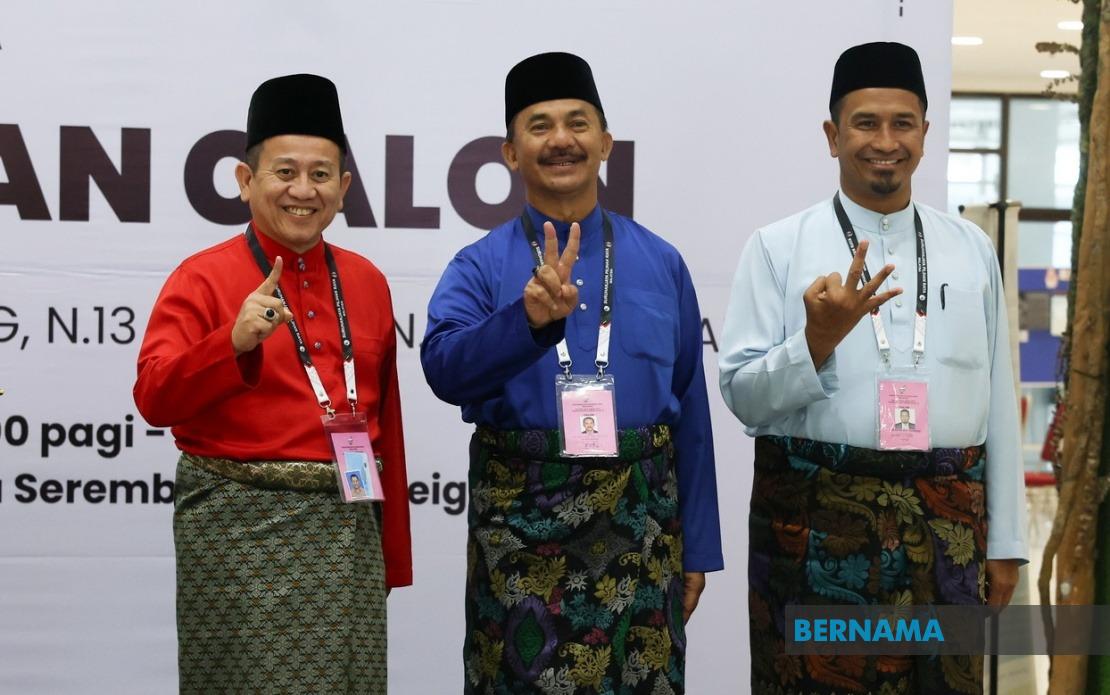
The 16th Negeri Sembilan State Election is shaping up as a contest marked by substantial candidate renewal, with political parties fielding unprecedented numbers of first-time contestants alongside established figures. This blend of experience and fresh perspectives comes as voters prepare to select representatives for all 36 State Legislative Assembly seats in what party strategists characterise as a pivotal moment for the state's political landscape. The Electoral Commission has confirmed 103 total candidates across various formations, with early voting set for July 28 and polling day scheduled for August 1.
Pakatan Harapan's dominance in the candidate numbers is evident in its decision to contest every available seat, yet the coalition has chosen to introduce 24 new faces into the electoral arena while retaining significant institutional experience through established names. This calculated approach reflects the opposition's attempt to demonstrate dynamism without abandoning the organisational knowledge that comes from long-serving legislators. The strategy appears designed to attract younger voters and those seeking alternatives while maintaining the credibility of proven administrators. By introducing new candidates across various districts, PH signals confidence in grassroots recruitment and an intention to reshape its electoral appeal beyond reliance on familiar personalities.
Within PH's lineup, however, strategic repositioning of senior figures remains noteworthy. Negeri Sembilan PH Chairman Datuk Seri Aminuddin Harun's decision to vacate the Sekamat seat in favour of contesting Linggi demonstrates tactical recalibration rather than withdrawal from frontline politics. Simultaneously, DAP Secretary-General and Transport Minister Anthony Loke maintains his presence in the assembly by defending his Chennah seat, anchoring PH's campaign with a minister-level voice. These movements suggest calculated deployment of senior leadership to maximise electoral advantage in competitive zones while rotating personnel to ensure organisational depth.
Barisan Nasional's approach shows comparable but distinct strategic thinking, with the coalition fielding 13 new candidates from its total 25 contested seats. This more conservative recruitment rate compared to PH suggests either stronger retention of incumbent confidence or more limited access to competitive new talent. The presence of UMNO Deputy President and Foreign Minister Datuk Seri Mohamad Hasan defending his Rantau stronghold provides BN with a comparable ministerial anchor to PH's Loke, embedding federal-level credibility into the state campaign. Negeri Sembilan BN Chairman Datuk Seri Jalaluddin Alias's recurrence as the Pertang candidate, having won that seat in the 2023 election, reflects the coalition's reliance on recently validated incumbents to maintain territorial control.
Disruption to traditional candidate patterns within BN is illustrated by Datuk Ismail Lasim's repositioning from Senaling to Juasseh, movements that suggest either incumbent strategic retreat or internal party reconfiguration responding to electoral performance analysis. These shifts signal ongoing tactical adjustments within BN's organisation as it navigates a political environment where past performance cannot guarantee future success. Such internal mobility often precedes broader organisational restructuring, particularly when senior figures alter electoral bases.
Perikatan Nasional's more limited presence across just 11 seats reflects the coalition's weaker organisational footprint in Negeri Sembilan compared to its stronger performances in other states. The inclusion of PAS, Gerakan, Wawasan, and MIPP within PN's Negeri Sembilan contingent demonstrates the coalition's dependence on multiple component parties to achieve even this limited contest level. This fragmentation contrasts sharply with PH and BN's more unified candidate presentations and suggests PN faces structural challenges in establishing cohesive state-level campaigns.
Parti Pribumi Bersatu Malaysia's decision to contest using its own electoral logo rather than the PN banner represents a significant organisational statement, signalling either independence from the broader coalition or confidence in its distinct brand identity within Negeri Sembilan. The presence of 24 Bersatu candidates, including Information Chief Datuk Tun Faisal Ismail Aziz as a new entrant, demonstrates the party's ambitions for state-level impact despite the logo change's operational complexity. Negeri Sembilan Bersatu Chairman Hanifah Abu Bakar's maintenance of her Labu seat defence indicates retention of trusted grassroots figures alongside newer faces.
The electoral candidate spectrum extends beyond the major coalitions into increasingly fragmented smaller party representation. Parti Berjasa, Parti Orang Asli Malaysia, and Parti Sosialis Malaysia each fielding single candidates, combined with four independent contestants, create a crowded ballot presenting Negeri Sembilan voters with unprecedented choice diversity. This atomisation of the candidate field may complicate voter navigation but simultaneously reflects democratic representation's expanding reach into previously marginalised political voices and communities.
Demographic analysis of the candidate field reveals interesting patterns about generational representation and electoral engagement. The contrast between the 70-year-old PH candidate for Gemencheh, Datuk Abd Latiff A Tambi, and the 23-year-old Bersatu candidate for Sri Tanjung, Leevineshwaraan Murugan, encapsulates the significant age range now competing for state assembly seats. This breadth suggests voters will encounter representations spanning multiple generational perspectives, potentially enriching policy debate while complicating consensus-building among elected representatives. The youngest candidate's party affiliation demonstrates even smaller political entities' willingness to invest in long-term cadre development.
For Malaysian observers, Negeri Sembilan's electoral dynamics offer microcosmic insights into broader national political evolution. The emphasis on new candidates across all major coalitions suggests parties nationwide are responding to voter fatigue with established faces and seeking to demonstrate generational renewal. The differential rates of new candidate introduction—with PH proportionally emphasising renewal more than BN—may indicate divergent assessments of incumbent strength and voter appetite for change. These patterns will likely influence national coalition strategies as major elections approach.
The election's significance extends beyond immediate state-level governance questions to encompass signals about coalition resilience and voter preferences. Negeri Sembilan's geographic proximity to Kuala Lumpur and its established position as a political bellwether means its electoral outcome will carry disproportionate weight in national political interpretation. The balance voters strike between embracing new candidates and retaining experienced representatives will offer important data about democratic appetite for renewal versus institutional continuity. As campaigning intensifies toward early voting and polling day, the interaction between these new faces and established figures will likely dominate electoral discourse.

