Parti Wawasan Negara has emerged as an unlikely mediator in the increasingly fractious landscape of Malay-Muslim politics, offering itself as an intermediary between the Islamist PAS and the nationalist UMNO. The party, which rebranded from its previous incarnation as Parti Cinta Malaysia, aims to address the widening ideological and political gulf between Malaysia's two dominant Malay-based movements at a time when their divergence threatens the stability of the ruling coalition structure that has governed the nation since independence.
The repositioning reflects broader anxieties within Malaysia's political establishment about the sustainability of current power-sharing arrangements. PAS, strengthened by its performance in the 2022 elections and growing influence within the federal government through its partnership with UMNO in the Perikatan Nasional framework, has increasingly asserted a more Islamist agenda. Meanwhile, UMNO, weakened by years of internal corruption scandals and electoral setbacks, finds itself in a precarious position of negotiating relevance within its own political family. The emergence of Parti Wawasan Negara as a self-appointed conciliator suggests that key political players recognize the potential for this rift to explode into open conflict that could destabilize the delicate balance of Malaysian governance.
The party's initiative carries particular significance because Malay political unity has long been considered foundational to Malaysia's power structure. When Malays divide their political allegiances across competing platforms, the mathematical advantage they hold within the electoral system diminishes, potentially allowing opposition coalitions to exploit fractures. This dynamic became apparent during the 2022 general election, when the split between PAS and UMNO nonetheless produced a hung parliament, requiring weeks of coalition negotiations to form a government. The persistence and deepening of Malay political fragmentation since then has only amplified concerns about the sustainability of any single-party dominance in future electoral cycles.
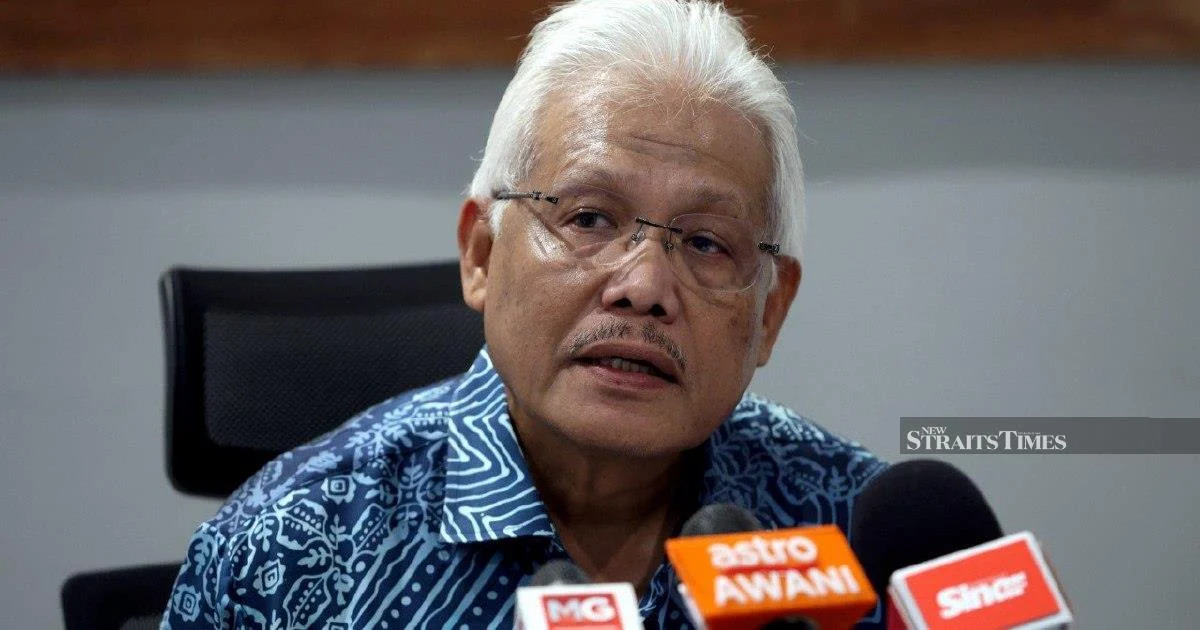
Hamzah Zainudin's personal involvement in this bridging effort underscores the seriousness with which he and his party view this mission. Rather than adopting an adversarial stance toward either PAS or UMNO, Parti Wawasan Negara has chosen the more delicate path of positioning itself as ideologically centrist—neither as religiously rigid as PAS nor as opportunistically secular as UMNO appears to many observers. This middle ground theoretically allows the party to appeal to Malay voters who feel alienated by the extremes of both movements while simultaneously creating space for legitimate criticism of both camps without appearing partisan.
The practical mechanisms through which such mediation might occur remain undefined, yet the very act of articulating a bridging ambition has symbolic value. In Malaysian politics, where perception and narrative frequently precede substance, a party willing to publicly acknowledge the problem of Malay political division and position itself as part of the solution gains moral authority regardless of its actual ability to influence events. This positioning may prove attractive to fence-sitting politicians and voters discomfited by the hardening lines between PAS and UMNO.
For ordinary Malaysians, the implications of continued Malay political fragmentation extend far beyond questions of which party holds ministerial portfolios. A government consumed by managing internal coalition tensions allocates less bandwidth to pressing issues affecting the broader population: economic growth, inflation, healthcare delivery, and education quality. The argument that preventing Malay political division benefits the people thus rests on the claim that stable governance produces better policy outcomes. Whether this holds in practice depends substantially on the quality of governance and the willingness of political leaders to prioritize national development over patronage networks and factional advantage.
The timing of Parti Wawasan Negara's outreach initiative corresponds with a period of heightened tension between PAS and UMNO. Recent months have witnessed escalating disagreements over Islamic law implementation, electoral strategy, and resource distribution within the federal government. PAS has grown emboldened by its parliamentary leverage and has not hesitated to challenge UMNO on matters ranging from Syariah court jurisdiction to the pace of Islamization in federal policy. UMNO, meanwhile, has increasingly resorted to public criticism of PAS positions, suggesting that the partnership between the two parties functions largely through obligation rather than genuine alignment of interests.
Sceptics contend that Parti Wawasan Negara's bridging mission may prove quixotic given the structural incentives driving PAS and UMNO apart. Both parties compete for the same voter base, both harbor ambitions to dominate Malay-Muslim politics, and both have invested substantial political capital in their current strategic positions. A party lacking significant parliamentary representation or extensive grassroots machinery cannot realistically impose compromise on movements with far deeper organizational entrenchment and historical legitimacy. Nevertheless, the attempt itself may shift discourse in productive directions by naming the problem and refusing to accept Malay political fragmentation as inevitable or irreversible.
The success of any mediation effort would ultimately depend on whether PAS and UMNO recognize sufficient mutual interest in accommodation. This recognition appears limited at present. PAS views itself as ascendant and thus has limited incentive to compromise with UMNO, while UMNO confronts the unenviable task of negotiating from a weakened position. Parties negotiating from imbalanced positions of strength rarely reach stable agreements. Yet the longer Malay political division persists, the greater the risk that institutional ruptures spread beyond the boardrooms of party headquarters into the broader systems of governance, with consequences that ripple across Malaysian society.

