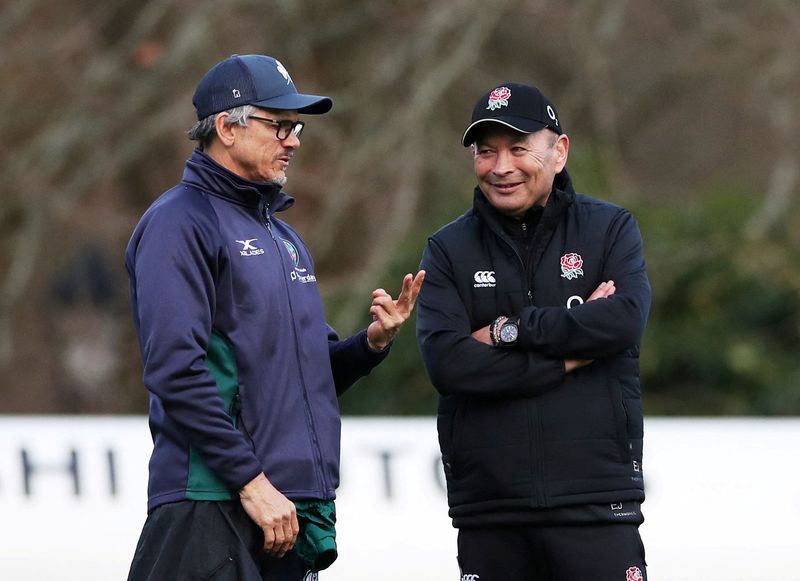
Les Kiss has taken the helm of Australian rugby with a markedly different philosophy from his predecessor, signalling that he will cast his net internationally if it strengthens the Wallabies' prospects in their World Cup campaign. The 61-year-old coach, who previously led Queensland Reds, unveiled his first squad on Thursday for next month's two-test series against Japan under Eddie Jones, but his appointment carries broader implications for how Australia will approach talent acquisition over the coming months.
The new coach's pragmatic stance represents a meaningful shift in Rugby Australia's historical reluctance to select offshore-based players. While formal policy continues to restrict Wallabies selectors from drawing heavily on overseas talent—a restriction designed to encourage players to remain competitive at home—Kiss made clear he would not be constrained by convention if circumstances demanded it. This flexibility could prove significant given Australia's recent struggles, with the team having lost nine of its past eleven tests and languishing eighth in the world rankings, a disappointing position for a side preparing to host the global championship.
Kiss outlined his philosophy during his first press conference in Sydney, emphasising that player effectiveness rather than geographical location would guide his selections. He articulated a vision focused on assembling talent capable of delivering victories, suggesting that both domestic and international options would be evaluated on merit. His predecessor Joe Schmidt, despite having similar discretionary powers, used them sparingly throughout his two years in charge, preferring to work predominantly with players competing in the Australian Super Rugby competition and other domestic pathways.
The outgoing approach under Schmidt involved retaining virtually all available fit players from the Nations Championship campaign, a competition that yielded mixed results including a narrow loss to Ireland, a heavy defeat by France, and a comfortable victory over Italy. Kiss has largely maintained this continuity for the Japan series, signalling respect for the existing squad while establishing his own direction. However, his comments about already engaging with several overseas-based players suggest he will pursue a more expansive recruitment strategy as his tenure progresses.
Among those already receiving attention is Jordan Petaia, an outside back and centre currently based in Japan who is managing a recovery from injury. The 61-year-old former Queensland Reds boss acknowledged these conversations publicly, indicating a willingness to operate outside traditional selection boundaries. This outreach suggests Kiss views the injury recovery timeline and location as secondary considerations to the quality a player can ultimately provide on the international stage.
Australian rugby has long operated within a narrative centered on rediscovering the nation's distinctive playing identity, often described as fast, creative, and ball-in-hand rugby that produced World Cup victories during the 1990s. Most incoming coaches invoke this mythology, promising to restore attacking flair and competitive spirit. Kiss adopted similar language, speaking of an Australian spirit characterised by innovation and creativity, though he acknowledged the team has struggled to maintain world-class consistency since Michael Cheika's team reached the 2015 World Cup final in England.
A critical test of Kiss's philosophy will emerge through his management of Joseph Suaalii, the 22-year-old centre for whom Rugby Australia spent A$5 million to secure from the National Rugby League. Suaalii made an impressive impression during the 2024 Northern Hemisphere tour, but has subsequently delivered only inconsistent performances in the gold jersey, prompting ongoing debate about his optimal position. Rugby Australia faced considerable scrutiny over the investment, with questions persisting about whether Suaalii's talents align more naturally with fullback or midfield positioning.
Kiss confirmed he would continue Schmidt's approach by persisting with Suaalii at outside centre, resisting the temptation to shift the young player to fullback despite acknowledging his potential in that position. This decision reflects confidence in a longer-term strategic placement rather than short-term positional experimentation. The coach's clarity on this point suggests he has already formed firm convictions about the player's role within his broader tactical framework, even as he remains flexible on other selection matters.
The broader context for Kiss's appointment involves Australia's need to reverse a concerning trajectory before hosting the World Cup. The recent test record of nine losses in eleven matches indicates systemic issues beyond individual player talent, suggesting that squad composition alone cannot resolve underlying strategic or conditioning concerns. Yet the coach's openness to international recruitment signals confidence that the right mix of personnel, wherever sourced, can catalyse improvement.
For Southeast Asian readers, Kiss's approach carries regional implications. Japan's position as an upcoming test opponent represents an opportunity for Australia to begin rebuilding momentum, while the prospect of occasional overseas recruitment could theoretically affect player flows throughout the region. Should Kiss prioritise offshore talent significantly, it might influence player availability within Asia-Pacific rugby more broadly, though the Wallabies' primary focus remains European and southern hemisphere-based professionals.
Kiss's tenure will ultimately be judged not on his rhetorical flexibility but on tangible results in the months ahead. The Japan series provides an immediate measuring stick, while the World Cup itself represents the definitive assessment. His willingness to embrace pragmatism rather than ideological rigidity about domestic-only selection suggests a coach willing to prioritise outcomes over tradition, a potentially significant advantage as Australia attempts to reclaim competitive relevance on rugby's global stage.

