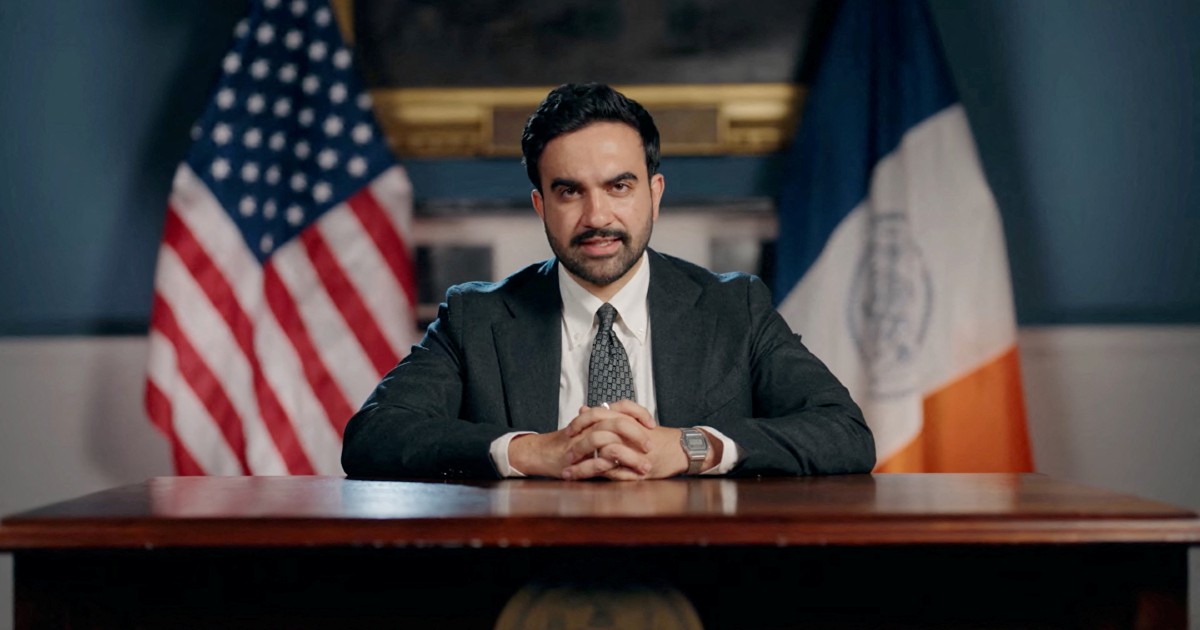
New York Mayor Zohran Mamdani stated on Tuesday that his city's law enforcement agencies do not possess the constitutional or jurisdictional authority to execute an International Criminal Court arrest warrant targeting Israeli Prime Minister Benjamin Netanyahu. The mayor's remarks signal a crucial distinction in how American federal structures handle such international legal instruments, and underscore the potential complications arising from overlapping jurisdictions when international warrants intersect with domestic governance.
Mamdani's comments represent an attempt to clarify the boundaries of municipal police power in the United States. City-level law enforcement operates under state and municipal statutes, which typically do not grant them independent authority to act on international judicial orders without federal coordination. The mayor effectively delineated that New York City's police department, while one of the nation's largest, functions within a defined legal framework that does not encompass the enforcement of ICC warrants. This distinction matters significantly because it prevents local authorities from being placed in an untenable position between international law and domestic governance structures.
The mayor's statement carries particular weight given New York City's global prominence and its role as host to the United Nations headquarters. The city frequently encounters international legal and diplomatic complexities, yet even in this cosmopolitan context, municipal authorities remain bound by American legal frameworks. Mamdani's acknowledgment of this limitation reflects a sober assessment of institutional boundaries rather than a position on the underlying ICC investigation or charges against Netanyahu. By explicitly declining to shoulder responsibility, the mayor effectively redirected the matter upward in the governmental hierarchy.
For Malaysian and Southeast Asian observers, this episode illustrates how federal systems navigate tensions between international legal obligations and domestic institutional arrangements. Many ASEAN nations have their own complex relationships with international courts and enforcement mechanisms, making this clarification about jurisdictional limits instructive. The inability of a major city to act unilaterally on international warrants mirrors challenges faced by other nations attempting to balance sovereignty with international legal commitments.
Mamdani's call for federal intervention represents a pragmatic approach to resolving what would otherwise become a prolonged municipal dilemma. By shifting the question to the United States Department of State and other federal agencies, the mayor acknowledged that such matters require coordination at the national level where diplomatic considerations, treaty obligations, and broader foreign policy concerns converge. Federal authorities possess both the legal standing and the policy discretion to determine how America should respond to ICC warrants involving foreign leaders.
The situation underscores the inherent tensions within the international criminal justice system. The ICC operates as an independent institution, yet its enforcement mechanisms depend upon cooperation from member states and their constituent institutions. When such cooperation is withheld or complicated by jurisdictional ambiguities, the court's effectiveness faces practical constraints. The American federal system, with its division of powers across multiple levels, presents particular challenges in this regard.
For Israel-Palestine observers and international law specialists, Mamdani's statement clarifies an important procedural point without resolving the deeper controversies surrounding Netanyahu's potential arrest. The mayor neither endorsed nor opposed the ICC warrant, focusing instead on institutional capacity. This measured approach allowed him to avoid becoming embroiled in the substantial diplomatic and political battles surrounding the case while still engaging with the question of whether New York City could serve as a venue for enforcement.
The broader context involves the ICC's investigation into alleged crimes during the Gaza conflict, which has generated significant international debate about the court's jurisdiction, impartiality, and the propriety of investigating Israeli officials. Netanyahu has dismissed the warrant as politically motivated, while supporters of the court argue that its independence must be respected. Mamdani's intervention did not settle these substantive disputes, but rather clarified who must address them.
From a Southeast Asian perspective, this situation resonates with ongoing regional discussions about international courts and accountability mechanisms. ASEAN nations have grappled with questions about how domestic courts and international bodies can coexist, and what obligations arise when states interact with the international criminal justice system. The American example, even in its complications, offers insights into how federal systems attempt to maintain coherence across multiple governance levels.
The response from US federal authorities will ultimately determine whether this remains an unresolved jurisdictional question or develops into a substantive policy decision. The Department of State, in particular, will face pressure to articulate America's position on the ICC warrant, taking into account diplomatic relations with Israel, American interests in the Middle East, and formal commitments regarding international law. Such decisions typically involve balancing treaty obligations with strategic considerations.
Mamdani's statement also highlighted the reality that American municipal governments, despite their significant autonomy in many areas, remain subordinate to federal authority in matters of foreign relations. This hierarchical arrangement, while sometimes limiting local action, prevents cities from inadvertently creating diplomatic crises through independent enforcement of international warrants. The mayor's explicit acknowledgment of these constraints reflects institutional maturity and recognition of proper governance boundaries.
Looking ahead, the matter may ultimately depend on whether Netanyahu visits New York and whether federal authorities decide that enforcement would be appropriate or feasible. Until such circumstances arise, the jurisdictional question remains largely theoretical, though one with substantial implications for how international warrants function within the American federal system and potentially for similar situations involving other foreign leaders.

