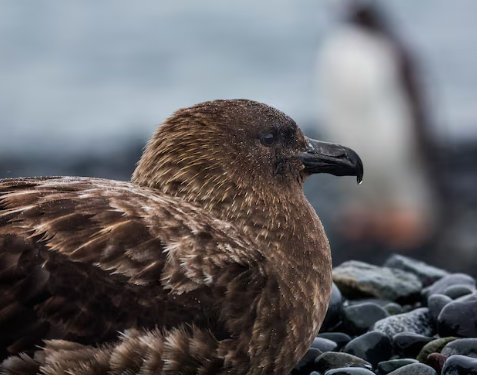
New Zealand has joined every other continent in confirming cases of H5N1 bird flu, with a brown skua seabird found on a Wellington beach testing positive for the highly contagious virus. Biosecurity Minister Andrew Hoggard announced the discovery on Wednesday, July 15, marking a significant moment for a country that had remained free of the pathogen until now. The detection came just weeks after Australia confirmed its own cases, making the virus's arrival in New Zealand almost inevitable given the region's interconnected ecosystems and migratory bird populations.
The arrival of H5N1 in New Zealand carries particular significance beyond the typical concerns associated with bird flu outbreaks. Unlike many countries where the virus has already spread through poultry operations and wild populations, New Zealand's unique biodiversity presents an unprecedented conservation challenge. The nation's avian species evolved in geographic isolation for millions of years without native terrestrial predators, resulting in an unusually high proportion of flightless birds and species with limited capacity to evade threats. This evolutionary advantage in a predator-free environment has become a vulnerability in the face of a pathogen capable of devastating wild bird populations across the globe.
Currently, the situation remains contained, with no evidence of wider transmission among New Zealand's wild bird communities or any confirmed cases in commercial poultry operations. Hoggard emphasised that detection protocols have found no signs of the mass bird mortality or inter-species spread that has characterised H5N1 outbreaks elsewhere. Officials expect the country may follow a similar trajectory to Australia, which has recorded 14 confirmed or presumed positive detections as of mid-July. However, New Zealand's response differs markedly from its neighbour's approach, reflecting the country's distinct ecological concerns.
New Zealand authorities have been preparing for this contingency for some time, having worked closely with the poultry industry to develop comprehensive biosecurity measures and resilience strategies. This preparatory groundwork has positioned the country to respond swiftly, though the real challenge lies not in protecting commercial operations but in safeguarding the nation's globally significant wild bird populations. Many of New Zealand's indigenous bird species exist nowhere else on Earth, with several remaining on the brink of extinction due to introduced predators such as stoats, rats, and feral cats, habitat destruction, and other conservation pressures. The arrival of H5N1 introduces a novel and potentially catastrophic threat to creatures already fighting for survival.
In response to this unique threat, New Zealand has launched an ambitious vaccination programme targeting 300 core breeding individuals from five of the country's most critically endangered avian species. The takahe, a large flightless rail rediscovered in 1948 after being presumed extinct, and the kakapo, a similarly endangered flightless parrot, represent only a fraction of the species facing existential risk should H5N1 become established in wild populations. These core breeding groups represent the genetic reservoirs upon which entire species' recovery depends, making their protection a matter of national conservation priority.
Brett Gartrell, a professor of wildlife health at Massey University, has articulated the genuine existential concern facing New Zealand's conservation community. His remarks to international media outlets underscore the unprecedented nature of the challenge: New Zealand's birds have never encountered a pathogen capable of causing mass mortality on the scale that H5N1 has demonstrated globally. Unlike bird populations in Europe, Asia, and the Americas, which have co-evolved with various viral and bacterial threats over millennia, New Zealand's avifauna presents a blank slate of vulnerability. The absence of natural resistance mechanisms in populations that have never previously encountered such diseases compounds the crisis.
The vaccination strategy, while innovative, carries inherent limitations that Gartrell and other specialists recognise. Even with a vaccination programme in place, the speed at which H5N1 could theoretically spread through wild bird populations in favourable conditions might outpace immunity development in vaccinated individuals. If the virus establishes itself in New Zealand's broader wild bird populations before vaccination provides sufficient protection, the carefully maintained core breeding groups could still face infection. This race against time characterises the fundamental vulnerability of New Zealand's approach: the nation is attempting to protect species with extremely small remaining populations against a pathogen that has proven devastatingly effective at jumping between species and spreading rapidly through naive bird communities.
The implications extend beyond New Zealand's borders and carry lessons for Southeast Asia's own bird conservation efforts. Many countries in the region maintain endemic bird species with limited geographic ranges and vulnerable populations, mirroring the conservation challenges New Zealand faces. The H5N1 pandemic has already reached Southeast Asian countries multiple times, with sporadic detections in wild birds prompting concerns from conservation authorities across Malaysia, Thailand, and Indonesia. New Zealand's experience in developing vaccination protocols for endangered species may ultimately inform regional conservation strategies and avian disease management approaches.
The detection of H5N1 in New Zealand also underscores the global interconnectedness of wildlife disease transmission. Migratory birds that traverse continents and oceans serve as vectors for pathogens, making it impossible for any island nation, regardless of geographic isolation or biosecurity measures, to remain indefinitely protected. New Zealand's case demonstrates that even advanced preparation and rigorous border controls cannot entirely prevent the arrival of such pathogens. The question shifting before conservation authorities is not whether endemic species will be exposed to H5N1, but whether protective measures can be implemented and scaled sufficiently quickly to minimise catastrophic population losses.
Looking forward, New Zealand's response will likely become a case study in pandemic preparedness for endangered species conservation. The country's decision to prioritise vaccination of core breeding populations rather than attempting blanket protection across wider ecosystems reflects pragmatic recognition of both the pathogen's transmissibility and the finite resources available for wildlife health interventions. Whether this strategy succeeds in preserving species like the takahe and kakapo through what may prove to be years of circulation of H5N1 in the environment remains uncertain. Success will depend on the virus not achieving rapid establishment in wild populations, on vaccination efficacy holding across the species targeted, and on continued commitment to the programme despite inevitable competing pressures on conservation budgets and personnel.

