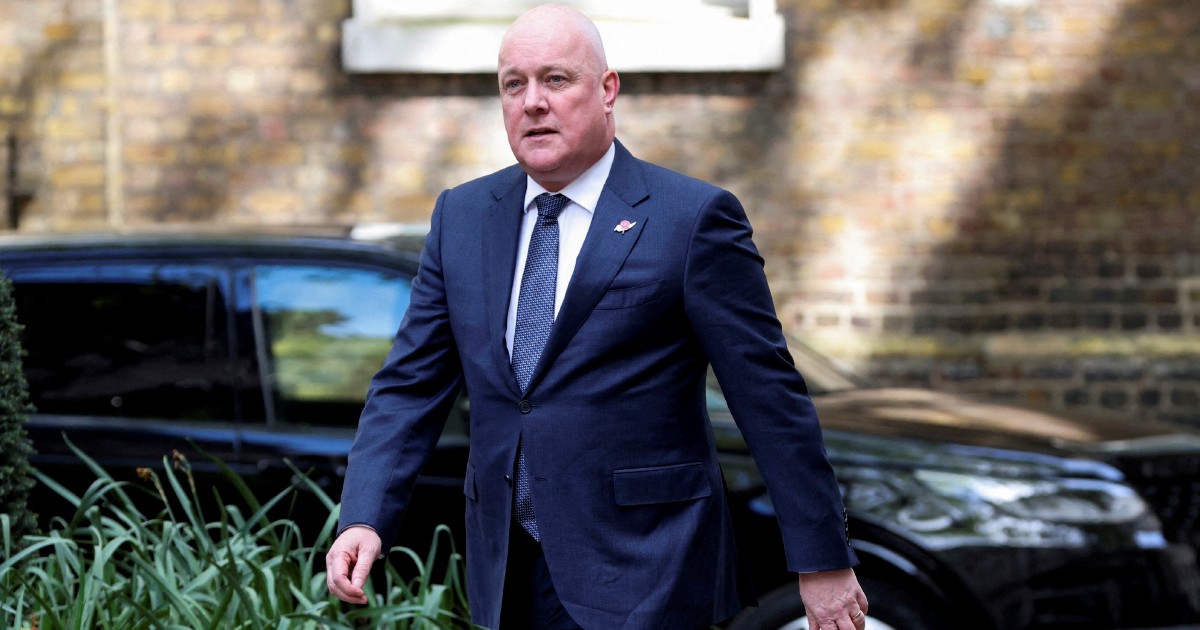
New Zealand Prime Minister Christopher Luxon has consolidated his grip on the National Party after successfully navigating a leadership challenge that emerged with the general election just weeks away. Speaking on Wednesday, Luxon asserted that he retained the "full support" of his coalition government's dominant party, signalling an end to internal doubts that had threatened to destabilise the administration at a critical moment in the political calendar.
The timing of the challenge represented an unusual move in New Zealand politics, with leadership contests typically reserved for periods of acute party dissatisfaction or electoral collapse. That such a contest proceeded less than three months before voters head to the polls underscores underlying tensions within the National Party rank-and-file, even as Luxon's position ultimately proved secure enough to withstand the test. For Malaysian observers, the episode illustrates how even stable Western democracies can experience sudden internal party turbulence, a phenomenon familiar across Southeast Asia where factional disputes regularly threaten government continuity.
The National Party, which has governed New Zealand since 2023, faces mounting electoral pressure as it prepares for a general election that polling suggests could prove highly competitive. Luxon's government has contended with persistent economic headwinds, including inflation concerns and public sector challenges, factors that have traditionally eroded governing party support in New Zealand elections. The emergence of a leadership challenge within this context suggests that some senior National figures may have harboured doubts about Luxon's capacity to lead the party to electoral victory or to retain voter confidence in the face of mounting domestic pressures.
Luxon's successful defence of his position reflects his retention of crucial support among National Party MPs, the decisive constituency in New Zealand's leadership contests. Under the party's rules, the leader requires backing from a defined threshold of parliamentary colleagues to secure their position. The fact that Luxon retained sufficient support demonstrates that despite discontent within certain party circles, he retains the backing of a parliamentary majority—a crucial distinction in Westminster-style democracies where party strength ultimately derives from legislative seats rather than broader membership opinion.
The challenge arrives at a particularly sensitive juncture in New Zealand's political cycle. Governments typically experience leadership crises either in their opening phase, when initial policy implementation generates backlash, or approaching the final stretches of their term, when electoral prospects appear increasingly grim. Luxon's challenge appeared to reflect anxiety about the latter scenario, with National Party figures apparently concerned that their leader might struggle to prevent a significant electoral reversal. Yet the successful resolution of this internal dispute may provide Luxon with renewed momentum and a narrative of party unity heading into the campaign proper.
For observers across Southeast Asia and the Asia-Pacific region, New Zealand's political dynamics carry particular relevance given shared Westminster institutional heritage and the region's interconnected security and economic frameworks. New Zealand's coalition government and its handling of internal party management offers lessons for governing parties elsewhere grappling with similar challenges of maintaining cohesion while pursuing ambitious policy agendas. The manner in which internal disputes are resolved—and the speed with which parties can move beyond them—significantly influences electoral outcomes and broader governance stability.
The successful resolution of Luxon's challenge also reflects the disciplined nature of New Zealand's parliamentary traditions, where leadership contests, while occasionally dramatic, typically conclude definitively and allow parties to regroup. This contrasts sharply with some other democracies where leadership struggles can fester unresolved for extended periods, poisoning party unity and diminishing electoral prospects. Luxon's capacity to consolidate support suggests that the National Party retains sufficient institutional discipline to present a united front to voters, potentially limiting the electoral advantage that opposition parties might otherwise derive from governing party turmoil.
Looking ahead to the general election campaign, Luxon's reinforced position as National Party leader positions him as the clear face of the government throughout the campaign period. This removes a layer of uncertainty that often complicates government messaging when leadership questions remain unresolved. Voters prefer to evaluate parties and their leaders on policy grounds rather than internal factional disputes, and the elimination of this distraction permits the election contest to crystallise around substantive issues affecting New Zealand households and businesses.
The National Party's decision to move past this challenge swiftly reflects pragmatic recognition that extended internal divisions would prove far more electorally damaging than the momentary disruption caused by a formal leadership contest. By resolving the matter through party processes, senior National figures have signalled that despite disagreements over strategy or approach, the party retains sufficient unity of purpose to function effectively. This sends an important signal to voters and international observers that the government remains focused on policy delivery rather than consumed by internal power struggles.
As New Zealand's campaign intensifies in the months ahead, Luxon can point to his successful navigation of this challenge as evidence of his standing within the party and his capacity to command confidence from parliamentary colleagues. While the underlying policy challenges that prompted the initial leadership doubts remain unresolved, the consolidation of party support provides Luxon with a clearer mandate to pursue his government's agenda through the final phase of its current term.

