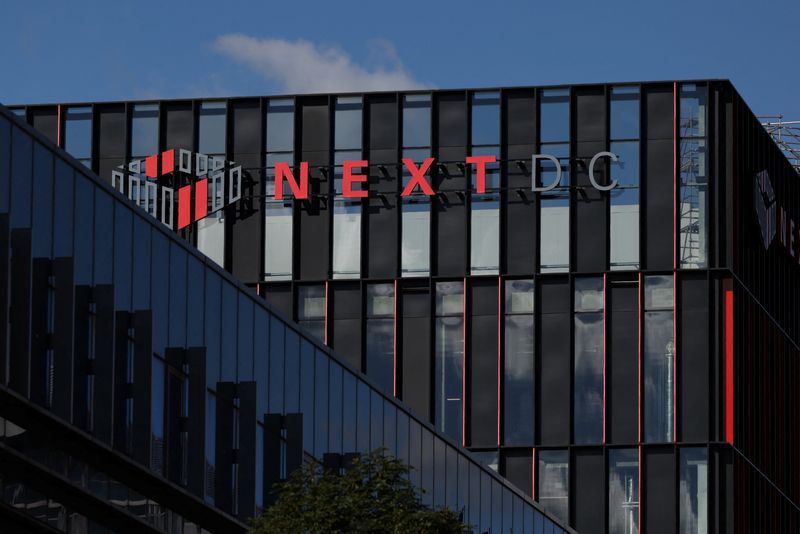
Australian data centre developer NextDC has disclosed a troubling trend in its operational efficiency metrics, revealing that both water and energy consumption intensified during the financial year ending June, even as the company delivered stronger-than-expected financial performance. The company's water usage effectiveness ratio worsened to 2.40 litres per kilowatt-hour from 2.25 the previous year, whilst its power usage effectiveness ratio climbed to 1.49 from 1.44, marking three consecutive years of deterioration in both environmental measures. These widening consumption patterns arrive at a critical juncture when policymakers and communities across the region are increasingly scrutinising the resource demands generated by the artificial intelligence infrastructure boom.
NextDC attributed the escalating consumption partly to newly activated capacity that operates cooling systems before full information technology deployment begins, as well as comprehensive reconciliation work that identified previously hidden leaks and measurement inconsistencies. The company acknowledged in its sustainability disclosure that significant investigation uncovered isolated water losses, utility meter anomalies and discrepancies between on-site monitoring and official utility records. This reconciliation effort suggests that actual consumption patterns may have been understated in prior periods, and raises questions about whether other operators in the sector face similar hidden inefficiencies that have gone undetected or unreported.
The financial performance, however, masked these environmental concerns. NextDC reported revenue growth of 16 per cent and swung to a profit of A$82.1 million for the year to end-June, reversing a A$60.5 million loss from the previous corresponding period, bolstered substantially by an accounting adjustment recognising property value gains. Underlying earnings before interest, tax, depreciation and amortisation rose 15 per cent to A$248.8 million, outperforming the average analyst consensus, and the company's share price gained 3.3 per cent when markets opened on Friday.
Yet this financial success narrative sits uneasily alongside the operational metrics that regulators and environmental advocates increasingly view as proxies for systemic strain. Water usage effectiveness and power usage effectiveness ratios have become closely monitored indicators because they signal how much scarce natural resources and grid capacity individual facilities demand. In a region where water stress already affects communities from Southeast Asia to Australia, and where electricity infrastructure is struggling to accommodate surging demand, these deteriorating ratios carry significant policy implications.
The tension between commercial success and resource sustainability has prompted governments across the Asia-Pacific region to reconsider their approach to data centre proliferation. Regulatory authorities and urban planners worldwide are implementing freezes, restrictions or outright bans on new data centre construction in response to mounting concerns about electricity costs, strained water supplies, pressure on land use and the cumulative burden on local communities. Several jurisdictions have linked data centre approvals to demonstrated commitments to build new renewable energy capacity, recognising that conventional grid connections cannot sustainably support explosive infrastructure growth.
Canberra is actively developing the regulatory framework that will govern this sector, contemplating mandatory, nationally consistent standards that would address data centres' energy consumption, water usage patterns and geographic location decisions. Recent policy proposals have signalled that rather than allowing data centres to source electricity from existing grid supplies, operators should be required to develop and finance new renewable energy infrastructure as a condition of expansion. Such measures signal Australia's determination to decouple data centre growth from increased demand on fossil fuel-dependent electricity systems and water-stressed regions.
NextDC operates within this increasingly stringent policy environment alongside significant competitors including Blackstone-controlled AirTrunk and Infratil-owned CDC, both of which face similar scrutiny regarding their environmental footprint. The competitive dynamics of the sector mean that each operator's disclosed metrics influence market expectations and regulatory calculations across the entire industry. Investors monitoring the company's efficiency trajectory will note that three years of consecutive deterioration in both metrics suggests structural challenges rather than temporary operational disruptions, particularly given management's attribution to commissioning activities that should theoretically be temporary phenomena.
The disclosure raises broader questions about whether current measurement methodologies adequately capture true resource consumption across the data centre industry. The water reconciliation work that uncovered leaks and meter anomalies indicates that previous reporting may have systematically understated actual usage, a finding with implications for how governments assess whether approving additional facilities remains environmentally sustainable. If operators across the region have been using similar measurement approaches, the environmental impact of the data centre boom may be substantially larger than officially reported figures suggest.
For Southeast Asian policymakers considering similar data centre expansion, NextDC's experience offers a cautionary lesson about the resource implications of rapid AI infrastructure deployment. The company's inability to improve efficiency metrics whilst scaling operations suggests that conventional operational optimisation alone may prove insufficient to address the sector's environmental demands. This realisation is prompting authorities from Singapore to Indonesia to demand greater transparency and binding efficiency standards before approving further projects, recognising that data centre approvals represent long-term commitments to resource consumption that will extend decades into the future.

