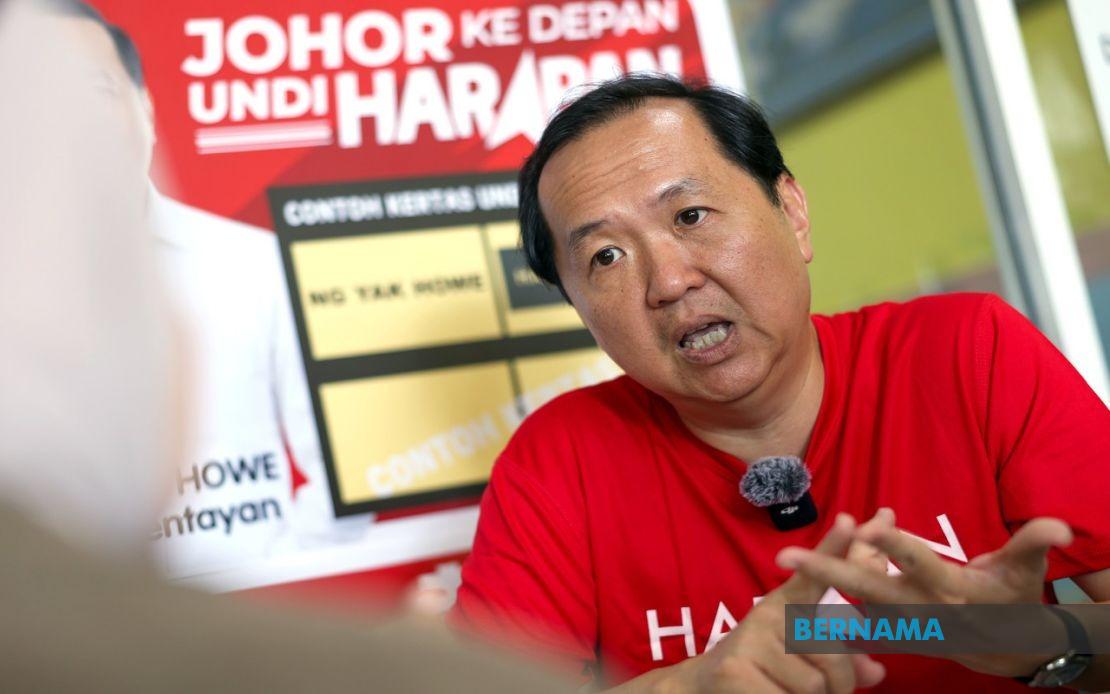
Pakatan Harapan's Ng Yak Howe has positioned the rehabilitation of Muar's urban core as the centrepiece of his campaign strategy for the Bentayan state seat in the upcoming Johor elections. The incumbent assemblyman argues that the town centre, which encompasses more than half of his constituency, has deteriorated into a hollow commercial district where business hours punctuate empty streets and shuttered storefronts dominate the landscape after sunset.
The challenge confronting Bentayan, Ng contends, stems from a broader pattern of urban flight common to Malaysian town centres. Residents have increasingly relocated to peripheral residential areas, draining the original commercial hubs of both population and economic vitality. During daylight, the Muar town centre maintains surface-level activity through routine commerce, yet transforms into a largely dormant zone once the workday concludes. This temporal divide between functional daytime activity and evening abandonment signals deeper structural problems that Ng believes require coordinated intervention.
Ng's diagnosis of the problem extends beyond mere nostalgia for a vibrant past. The constituency data reveals that approximately 18 per cent of commercial premises remain vacant, representing significant lost economic potential and visible blight that discourages further investment and activity. The incumbent has identified younger demographics as the crucial demographic to recapture, proposing that drawing this cohort back to the town centre through both entertainment and commercial opportunities could catalyse broader renewal. This generational approach recognises that urban revitalisation depends less on mandated policy and more on creating environments where younger populations naturally gravitate.
To operationalise this vision, Ng has collaborated with Bakri Member of Parliament Tan Hong Pin on a series of stimulus measures designed to stimulate consumer spending and business confidence among existing traders. Cash voucher schemes and lucky draw campaigns represent conventional but pragmatic tools for channelling purchasing power toward local enterprises. These initiatives acknowledge the psychological dimension of commercial revival—that merchants require visible signals of renewed demand before committing to expanded operations or improved premises, and consumers need incentives to redirect shopping habits toward struggling town centres.
Ng's background as a quality assurance engineer with more than a decade of industrial experience informs his operational approach to governance. Rather than proposing grand structural reforms, he emphasises tested mechanisms for incremental improvement and measurable outcomes. This technical orientation complements his substantial political tenure spanning over 25 years and his current position as a Johor DAP committee member, situating him as a pragmatist comfortable with both technical problem-solving and political coordination.
The Bentayan contest itself reflects broader competitive dynamics shaping the 16th Johor state election. Ng faces a direct confrontation with Barisan Nasional candidate Chua Lee Huat in what will be a binary choice for the seat's 34,205 registered voters. This one-on-one format eliminates the complications of three-cornered contests and focuses the campaign entirely on competing visions for the constituency's future. Neither candidate can rely on vote-splitting to secure victory, intensifying the stakes of platform differentiation.
The electoral context matters significantly for understanding Ng's messaging strategy. Across the 16th Johor state election, a total of 172 candidates are contesting 16 seats, with voting scheduled for July 11 and early voting opportunities available on July 7. The concentration of candidates in a relatively small number of constituencies indicates competitive battles across multiple seats, suggesting that Pakatan Harapan faces a genuinely contested electoral environment rather than a foregone conclusion. Within this landscape, Ng's emphasis on constituency-specific economic grievances and locally-tailored solutions serves as a counterweight to broader state-level narratives.
The Muar town centre revitalisation agenda carries implications beyond the immediate Bentayan contest. Malaysian urban planners and local administrators across the country grapple with similar patterns of town centre decline as suburban developments and shopping mall concentrations siphon commerce and residents from traditional commercial districts. The approaches Ng champions—targeted consumer incentives, merchant support, and demographic-specific attraction strategies—represent one model for addressing this nationwide phenomenon. Whether such initiatives can meaningfully reverse decades of decentralisation remains an open question, but the willingness to confront the problem directly distinguishes Ng's campaign platform from candidates offering only generic promises of development.
For Malaysian voters evaluating the Bentayan choice, the town centre proposal encapsulates a broader philosophical difference between incremental problem-solving and alternative approaches that may prioritise different constituencies or strategies. Ng's focus on reversing migration patterns and restoring commercial vibrancy to established urban centres reflects a particular vision of development that privileges existing communities and infrastructure over expansion into new areas. This orientation resonates with residents who view their traditional town centres as repositories of social cohesion and economic opportunity worth defending against the centralising forces reshaping Malaysian urbanism.
The Bentayan seat thus emerges as a microcosm of contests playing out across Johor and Malaysia more broadly, where local economic struggles intersect with partisan competition and fundamental questions about regional development priorities. Ng's candidacy ultimately rests not merely on technical competence or political experience, but on whether voters believe that systematic attention to town centre rehabilitation represents the right policy direction for their constituency's future.

